The Magic of Corn Seed Germination and Emergence

I think nearly every corn planter in Wisconsin was planting this past week. There are some wet areas in northeastern Wisconsin that have prevented planting, but a significant jump in planted acreage should be measured by USDA-NASS in next Monday’s progress report.
Now the magic begins when dry seed imbibes water and bare or brown fields turn greener every day across the landscape. The germination process and the success of the seed in emerging and establishing is key and the first yield component determined for the growing season.
Protected within the seed coat is an embryonic plant that remains dormant until germination is initiated by the physical process of imbibing water. The white starchy endosperm is the main energy source until the young seedling is established. After planting, water and oxygen are imbibed into the seed for 24-48 hours activating the growth hormones and enzymes. Starch is broken down supplying the embryo with energy for metabolism and cell division.
Within the embryo is a miniature corn plant that already has a primary shoot, leaves and root system protected by rigid sheaths called the coleoptile (above-ground) and coleorhiza (below-ground). The first structure to emerge from the seed is the radicle root, followed by the coleoptile and seminal roots.
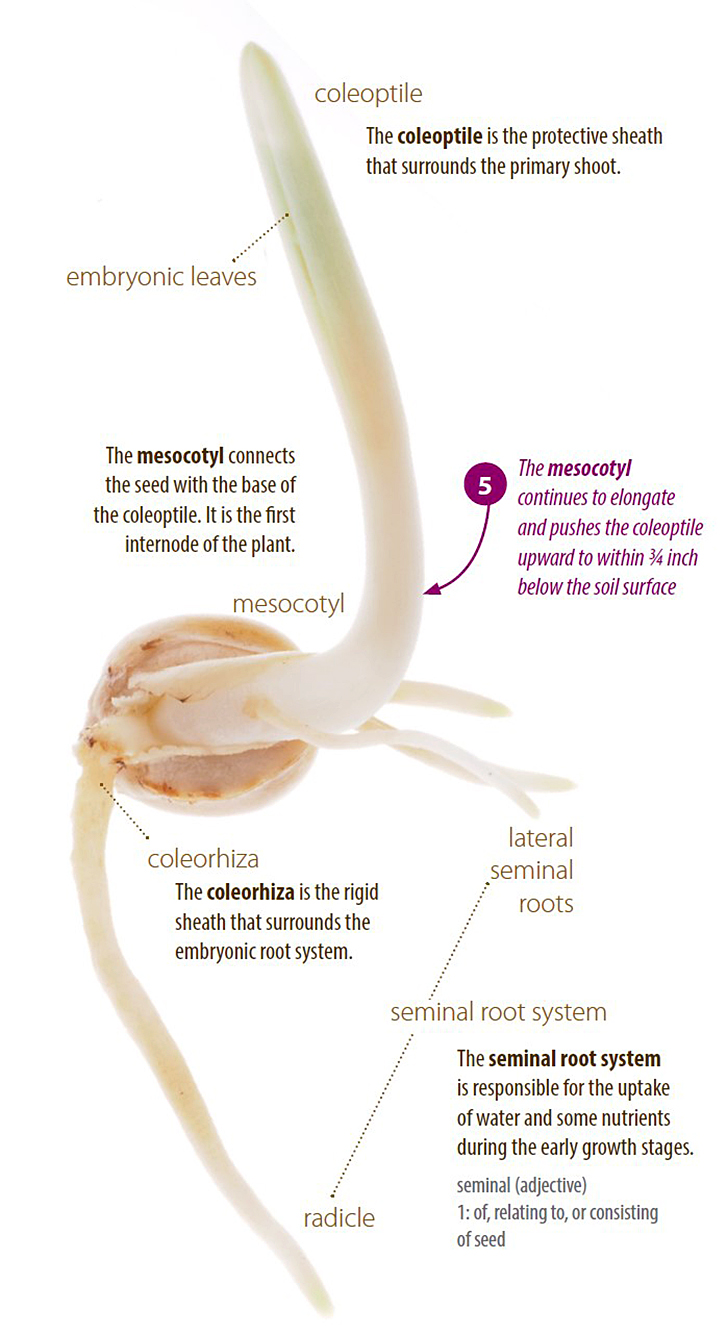
Figure 1. Diagram of germinating corn. Photo and graphic by Mimi Broeske.
The coleoptile is pushed to the soil surface by the mesocotyl. When sunlight falls on the coleoptile tip, enzymes are activated that soften the tip allowing the first true leaf of the plant to break through. The growing point of corn is 3/4 of an inch below the soil surface and will remain below-ground until the plant has 5 to 6 leaves.
The germination process from dry seed to seedling emergence requires about 125 Growing Degree Units (GDUs). Normally in the beginning of May, we accumulate about 10 GDUs per day, so emergence takes about 12 to 13 days. The 2022 growing season is starting out fast with record high temperatures, and I have seen some recently planted fields already emerged. Emergence GDUs may need to be adjusted:
- If conservation tillage is implemented, add 30-60 GDUs.
- If planting date is before April 25, add 10-25 GDUs.
- If planting date is after May 15, subtract 50-70 GDUs
- If seeding depth is below 2 inches, add 15 GDUs for each inch below.
- If seed-bed condition has soil crusting or massive clods, add 30 GDUs.
- If seed-zone soil moisture is below optimum, add 30 GDUs.
There might be many reasons why a seedling does not emerge in a stand of corn. The germination process is really a race between pest pressure (diseases and insects) and the ability of the seedling to outgrow the pest. Seed treatments protect the seedling from disease and insects for the first 30 to 45 days of the growing season. Planting into cloddy/crusted or cold soils can result in seedling leaves unfurling below-ground, reducing plant stand and yield potential. Imbibitional chilling can result in plant death.
This one of my favorite times of the year in Wisconsin. I wonder what the growing season has in store for these developing plants. As you drive around the state, enjoy the landscape and all the different greens that develop over the month of May.
Seeding Depth Affects Corn Plant Emergence Uniformity and Grain Yield

Rarely do we see a paper published on corn seeding depth and the subsequent impact on grain yield. Precision technologies have allowed for capabilities of variable rate seeding, multi-hybrid planting on the go, and the ability to vary planting depth in real time in response to real-time soil moisture data. In a paper published by Nemergut et al. (2021), corn seed was planted at 1-, 2-, and 3-inch depths on two soil types in Ohio over three growing season (2017 to 2019). Shallow planting resulted in less uniform more extended emergence periods than 2- and 3-inch planting depths. If a plant emerged within 3 days of the first emerged neighboring plants, then there was no effect on plant grain yield. Any plant that emerged more than 3 days after the first emerged plant had a 5% decrease in kernel weight per day. Grain yield per plant increased as planting depth increased. Grain yield per acre was significantly increased by planting depth with seed planted at 2- and 3-inches yielding 8 or 10% more than the 1-inch seeding depth on one of the two soils. Other researchers have also shown improving emergence uniformity can positively increase yield, and that optimum planting depth may vary by field.
Further Reading
Nemergut KT, Thomison PR, Carter PR, Lindsey AJ. Planting depth affects corn emergence, growth and development, and yield. Agronomy Journal. 2021;113:3351–3360. https://doi.org/10.1002/agj2.2070
No post found

No post found
No post found
No post found
No post found
No post found
No post found
No post found
No post found