
Cold Soils, Slow GDUs, and Frost
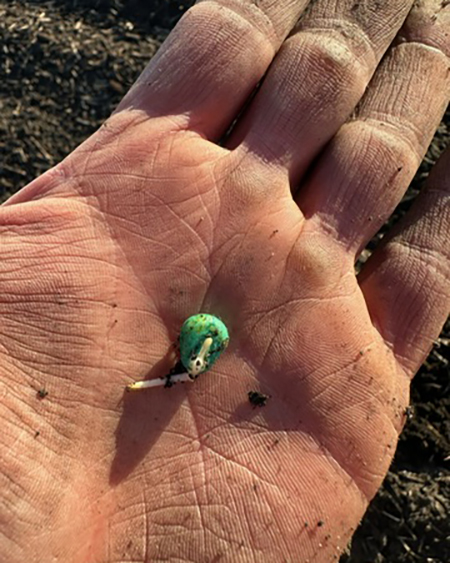
The last week has not given us many GDUs, and that changes the conversation for a lot of fields. Instead of focusing only on frost burn to emerged plants, the bigger concern in many acres is seed and seedlings sitting in cold soils, waiting for heat. Corn emergence is strongly tied to temperature, and Extension guidance shows that corn typically needs about 90 to 120 GDUs from planting to emergence, with around 125 GDUs often used as a practical benchmark in the Upper Midwest. Residue, fine-textured soils, deeper planting depth, crusting, and cool seed-zone conditions can all stretch that window further.
That matters this spring because many planted fields likely are not far enough along to have much exposed tissue yet. A lot of the risk is still below ground. Fields planted earliest, fields on lighter ground, or fields with warmer seedbeds may have some emerged corn or soybeans, but broad acres are more likely sitting in a delayed emergence pattern than in a true frost-leaf-burn situation. That is why this week is a good time to remind us that a slow start does not automatically equal a failed start.
For fields that have not emerged, the first step is to dig, not guess. Check seed and seedlings in several spots across the field, especially where soils differ. Healthy seedlings should still be firm, light colored, and progressing normally. Trouble signs include seed that is soft, discolored, or leaking; mesocotyls or hypocotyls that are brown, water-soaked, or collapsed; and seedlings that are twisted, leafed out underground, or simply not progressing toward emergence. Cold conditions do not always kill a stand, but they do raise the odds of uneven emergence, wider variation in plant size, and more plant-to-plant competition later in the season.
For acres that emerged, crop stage is everything. In corn, leaf tissue may turn brown or black after a frost and still not mean the plant is dead. Corn’s growing point stays below ground until about V5, which gives the crop a level of protection from simple frost. If temperatures fall to truly lethal levels, around 28 degrees or lower for several hours, injury can move beyond leaf tissue and affect the growing point even though it remains below the soil surface. That is the difference between cosmetic injury and real stand loss.
Soybeans are more exposed once emerged because their growing points are above ground much earlier. Frost injury to cotyledons and upper tissue can be more serious in beans than in corn, but soybean recovery is still possible if living buds remain at nodes above the point of fatal injury. If freeze damage extends below the cotyledons, that plant usually will not recover. This is why soybeans often require more careful plant-by-plant inspection after a cold event instead of a quick visual estimate from the field edge.
The main message for this week is straightforward. A lot of fields have not had enough heat to be judged from the road. Dig seedlings, know your stage, and give frosted acres a few days before deciding. Slow emergence is frustrating, but slow does not always mean dead. In many cases, the best management choice is not speed, but patience and accurate scouting.
Pre-Emerge Weed Control
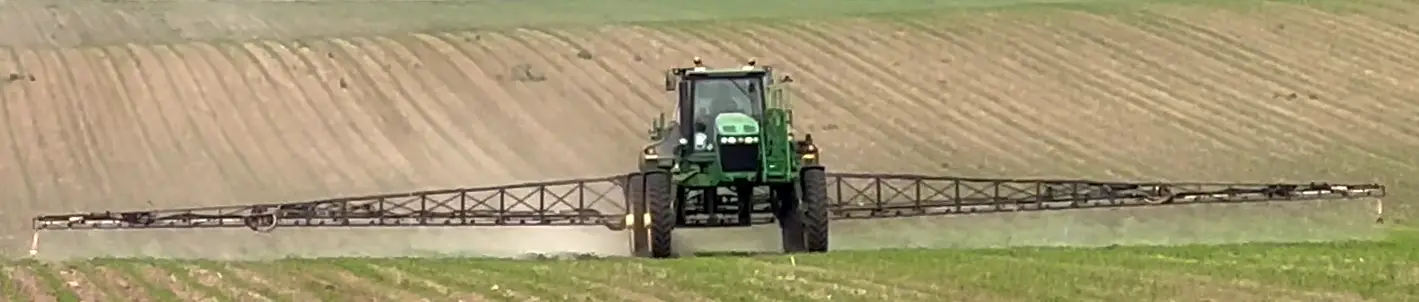
In a spring with slow GDUs and uneven crop emergence, pre-emergence (PRE) herbicides become even more important. Weeds do not need a fully developed crop to create problems, and they often take advantage of slow-starting corn and soybeans before the crop can compete. A strong PRE herbicide program remains one of the most important tools for managing weeds and protecting soybean yield potential, especially as resistance to key post-emergence chemistries continues to spread.
The weather forecast is a major part of whether a PRE program performs the way it should. PRE herbicides generally need rainfall for activation so the active ingredient can move into the soil zone where weed seeds germinate. Most need about 0.25 to 1 inch of rainfall to activate soil-applied herbicides. Many products can remain effective on the soil surface for about 7 to 10 days, with some lasting up to 14 days before activation.
On the other side, too much rain can also create issues. Heavy rainfall near crop emergence can increase the chance of crop response, especially in soybeans and with products or soil conditions already prone to temporary injury. Cool, wet conditions can increase the chance of early-season soybean response from some PRE herbicides, particularly on coarse-textured soils with low organic matter or higher pH. Even though soybeans often recover from minor injury without lasting yield loss, this is still a good reminder that product choice, soil type, and timing all matter.
That is why PRE timing should be connected to both planting date and the short-term forecast. In a cool spring like this one, there may be a little more flexibility in some fields because the crop is moving slowly. But that flexibility can disappear quickly once a warmer stretch arrives. A field that looked several days away from emergence can move faster than expected once soils warm, and that changes both crop safety considerations and the value of getting the herbicide applied before the next activating rain.
In a year like this, good weed control will come from matching the PRE program to the field by field forecast. Put the strongest focus on fields most likely to emerge quickly or fields with the toughest weed history. Then follow with a timely post pass rather than expecting the PRE to solve the entire season by itself. In short, a slow spring does not reduce the importance of pre-emerge herbicides. It probably increases it.
Sources
- Purdue University Agronomy. “Early Season Frost & Low Temperature Damage to Corn and Soybean.” Accessed April 30, 2026.
https://www.agry.purdue.edu/ext/corn/news/articles.02/frost_freeze-0520.html - University of Nebraska–Lincoln CropWatch. “Growing Degree Units and Corn Emergence.” Accessed April 30, 2026
https://cropwatch.unl.edu/growing-degree-units-and-corn-emergence/ - University of Minnesota Extension. “Start clean, stay clean: Why pre-emergence herbicides are essential for soybean weed control in Minnesota.” Accessed April 30, 2026. https://blog-crop-news.extension.umn.edu/2026/04/start-clean-stay-clean-why-pre.html