2026 Harvest Wrap-Up: What This Year Revealed About Your Seed
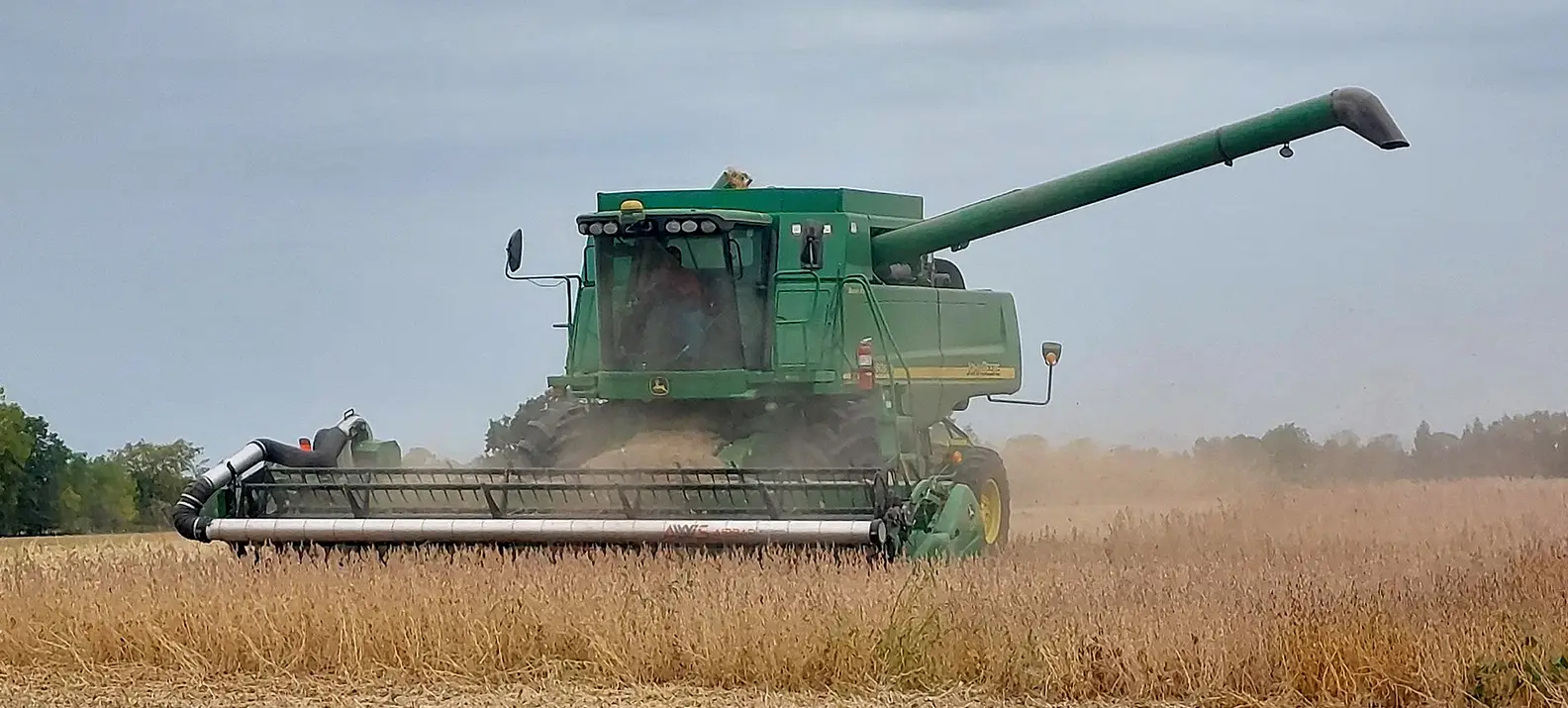
Trait Management: Mixing and Rotating for the Future
Given the risk of disease and insect “blow through,” the importance of trait rotation is important. Renk is expanding its lineup to offer more options, including SmartStax Pro, VT4P, Chrome, and PowerCore, to help growers better manage below- and above-ground threats. Rotating traits and integrating biologicals and insecticides are key strategies to stay ahead of resistance issues and protect yields.
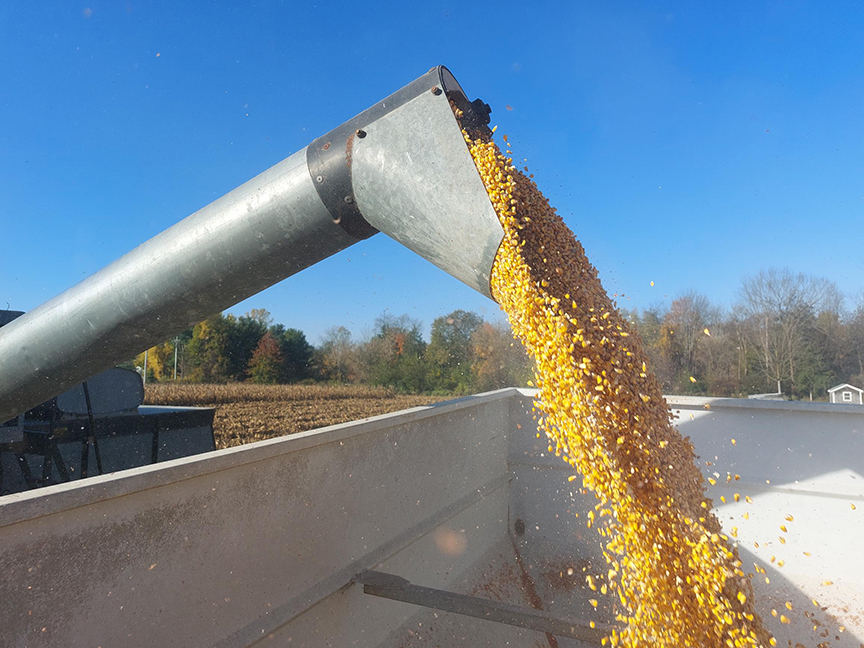
Harvest Timing, Moisture, and Yield Variability
Late season moisture delayed soybean and, in turn, corn harvests, resulting in drier than usual corn and some phantom yield loss from shelling in the head. However, the delay also gave researchers more time to assess disease and stalk integrity, providing valuable data for product selection. The variability in rainfall and temperatures across regions led to a wide range of yield outcomes, reminding growers to spread risk with a mix of maturities and products.
Product Highlights and Lessons Learned
Renk introduced 24 new corn products this year, with strong performances across maturities, especially in full-season varieties like RK9601SSPRO and RK8616SSPRO. Soybean results were also impressive in high-moisture zones. The main takeaway: no single product can guarantee success in every field or season. A diversified approach—mixing maturities, traits, and technologies—remains the best path forward.
The Earfull November 16, 2026
Renk Corn Lineup: What We Saw in 2026
A look back at our 2026 corn research and what it means for your 2027 acres.
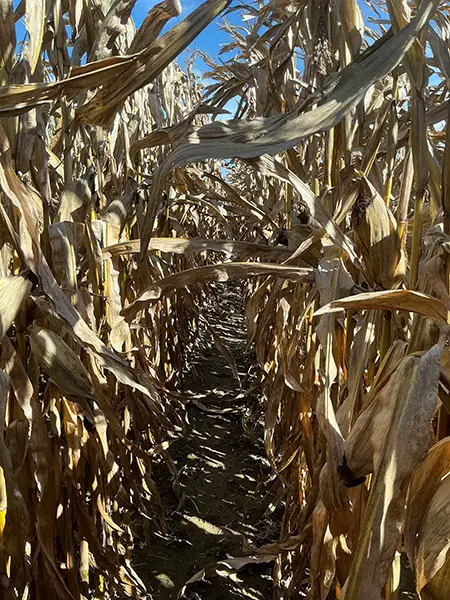
After covering Silage Choice and soybeans the last two weeks, this week we turn to grain corn. We’ve pulled together all the Renk Research data harvested this fall. It was our biggest research year yet, and it gives growers and dealers a lot to work with as seed orders come together. Here is a quick update on what we saw and where new products fit.
What We Saw in 2026
- A bigger research footprint. We tested products in our lineup and experimental products from 78 to 116 RM at 53 locations across eight states, with 6,387 reps harvested. For the first time, we built population into the plan. At 22 locations, we planted the same entries above and below the standard seeding rate, so every product now has a population response alongside yield, moisture, and standability.
- A tough finish. Summer heat stress gave way to heavy September rain, and crown rot and late stalk stress showed up at many locations. Stalk lodging averaged 1.4% and root lodging 0.9% across all plots, with some sites running much higher. That made 2026 a good year to see which products hold up full season.
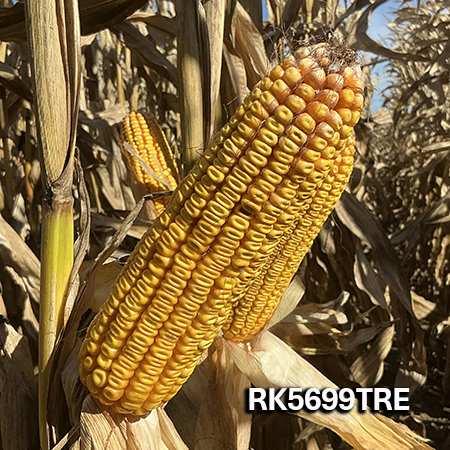
- New products delivered. 15 of the 23 launch products with 2026 data finished above their set average, and seven ranked in the top five of their set. RK5699TRE led the way, finishing first in the 96–101 RM set.
- Population response depends on maturity. Products from 96 to 105 RM paid for higher rates, about 26 bu/a on average from the low to the high third. Earlier products peaked near 28,500–32,500, and the 106–110 RM group was the flattest population response.
- The performance bar. Most comparisons were against established Renk products, plus DEKALB and Pioneer entries in the same sets, so each new product was measured against genetics growers already know.
Lineup Highlights
Early (82–90 RM). RK258PCE and RK2577PCE ranked third and fourth in the 78–85 RM set, each about 11 bu/a above average, and both were strong across the last two years. New RK2622PCE was one of the driest products in its set, a good fit where an early harvest and dry grain carry the most value. New RK2645RR and conventional RK2645 bring standability, an 8 for Goss’s wilt and good grain quality, and RK2645RR beat both outside checks by about 14 bu/a. At 90 RM, new RK3678VT4PRO and RK3678TRE finished second and third in their set in their first year of Renk trials.
Mid-season (91–101 RM). This group had the deepest new-product class we have tested. RK5699TRE finished about 19 bu/a above the set average, with Wisconsin nearly 26 bu/a ahead, and it was just as strong in 2025. RK6610PCE ranked second and has a two-year edge over the DEKALB check across 104 reps. RK5652PCE, RK5670VT4PRO and RK4656PCE all ranked in the top five of their sets, and RK4656PCE was above average in every state but one. RK4696SSPRO adds an 8 corn-on-corn rating and a strong disease package, and RK5600RR, RK6600RR and RK4545GT/LL give growers more herbicide-trait choices in this maturity.
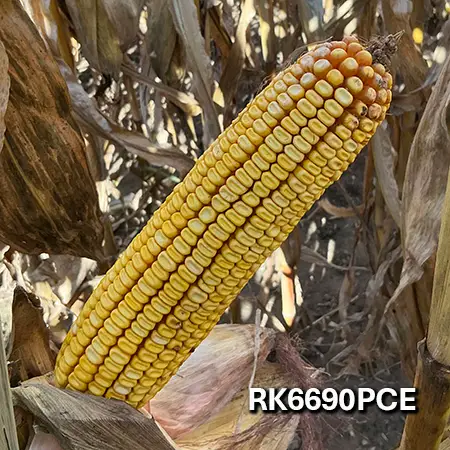
Full-season (102–110 RM). RK630TRE and RK6555VT4PRO remain the core of this range. New RK6690PCE ranked sixth in the 102–105 RM set and was about 13 bu/a above average in 2025, with very good late health and good ear set under stress. New RK7688SSPRO ranked eighth in the 106–110 RM set and stood out in Nebraska, Illinois and Iowa for the most productive acres. New RK6640TRE and RK6671SSPRO each finished 4 to 5 bu/a above their set average, and RK7600RR and RK7626SSPRO round out the new options.
Long-season (111–116 RM). RK889PCE ranked third in the 111–116 RM set, about 10 bu/a above average, with Iowa more than 24 bu/a ahead. RK8501PCE and RK8585TRE gave steady results, with Nebraska their strongest area. New for 2027, RK9601SSPRO and RK9601TRE showed good promise as full-season options at 116 RM. Both ranked near the top of their set in 2025, and over two years RK9601TRE out-yielded RK958VT2P in 36 of 41 reps.
Two Years Tell the Story
A single season can mislead, so we lean on products that held up in both 2025 and 2026. Several of the 2027 launch products and established hybrids did just that:
- RK5699TRE: about 18 bu/a above its set average in 2025 and 19 bu/a in 2026, and about 14 bu/a ahead of the DEKALB check over two years across 90 reps.
- RK2577PCE and RK4656PCE: both repeated at least 10 bu/a above their set average, and RK2577PCE out-yielded both outside checks by 21 to 23 bu/a over two years.
- RK6610PCE and RK6690PCE: 10 and 13 bu/a above their sets in 2025, and performed strongly in our testing over the last two years, with 67% win rates.
- RK889PCE: about 7 bu/a above its set in 2025 and 10 bu/a in 2026, with Illinois and Iowa leading.
Picking the Right Fit
The population sets were the biggest new piece of this year’s research, and they showed that one seeding rate does not fit every product. Some, like RK4656PCE, RK4696SSPRO, RK5652PCE, and RK6610PCE, still gained yield at the top of the tested range and fit higher rates on productive ground. Others, like RK2622PCE and RK2577PCE, did their best at moderate rates, and RK9601SSPRO and RK9601TRE showed little gain from going higher. Your Renk DSM can share the 2026 population response for each product so you can set rates product by product.
The late-season stalk stress in 2026 also gives us better placement notes. Products that showed crown rot or late stalks at a few stressed sites belong on well-drained fields, earlier in the harvest order, with stalks checked in September. Products with a tar spot rating of 5 and a strong fungicide response pay back a planned fungicide pass where disease shows up. These are management notes, not red flags, and they help each product show what it can do.
Planning Your 2027 Corn Acres
- Look for consistency. Lean on results across many locations and both years, not one plot. Hybrids that hold up across locations are the ones most likely to repeat next year.
- Plant more than one maturity. Spreading acres across two or three maturities spreads out pollination and weather risk and gives you a better harvest window.
- Set seeding rate by hybrid. Hybrid genetics affect the best seeding rate. Ask about each product’s 2026 population response and match rates to field productivity.
- Match traits to the field. Use corn-on-corn ratings, disease scores, and trait packages to put each product where it fits, and keep products without below-ground traits on rotated ground.
Looking Ahead to 2027
With a strong new class of products and population data behind each one, 2027 is a great year to try something new on your farm. Talk with your Renk DSM about where these products fit on your acres. They can walk you through the full 2026 results for any product, including head-to-head comparisons and population response.
The Earfull November 9, 2026
Renk Soybean Lineup: What We Saw in 2026
Yield, disease packages, and placement: tested where soybeans are grown.
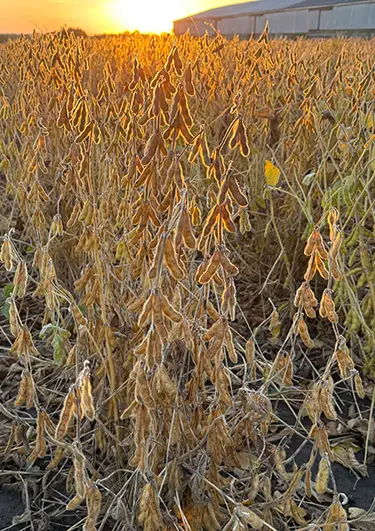
Most of the beans are in the bin, and plot data is rolling in; now is a good time to review 2026 and start lining up soybean acres for next spring. The Renk soybean lineup runs from 0.1 to 3.9 maturity, with 27 Enlist E3® products and 7 XtendFlex® products, and 14 of them carry the new tag on the chart.
Every soybean on the chart has to earn its spot in the plots. Renk research, dealer, and grower plots across Wisconsin, Minnesota, Michigan, Iowa, Illinois, and the Dakotas put these varieties side by side with each other and with competitive beans.
2026 Observations
Renk soybean plots were harvested at 92 locations in 2026, from North Dakota and western Minnesota down through Wisconsin, northeast Iowa, northern Illinois and Michigan’s Thumb. Across all those plots, yields averaged about 66 bushels with harvest moisture right around 12%. The best numbers came from southern Wisconsin, northern Illinois, and Iowa, where several plots averaged more than 80 bushels, with the top Renk entries pushing past 90. Western Minnesota, the Dakotas and parts of Michigan had a tougher year, with a few plots finishing in the 30s and 40s.
The headline is that the new varieties stormed into the lineup. We’ve never had a rookie class as high performing.
G0710E: Brings G0800E-type yield with a class-leading IDC rating.
G1110E: Brought on to deliver yields in line with G1260E, the yield champion. It did just that, showing an advantage in the Red River Valley and liking the eastern plots. It is best in class IDC and carries the Peking gene for cyst issues.
RS167E: Its numbers are not as flashy as expected; it shows a very clear advantage in Wisconsin and Michigan over G1560E, the maturity yield leader.
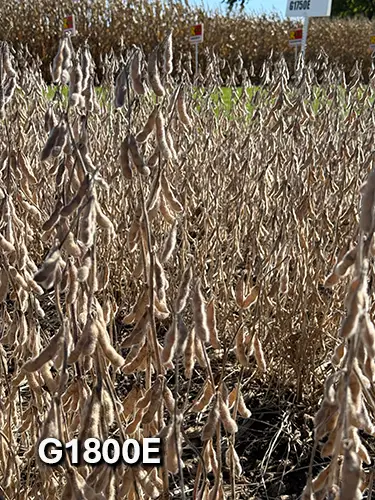
G1800E: Put up giant yield numbers as an experimental last year and matched them this year. We are seeing +3bu/acre over G1980E and G2150E. Couple this with elite white mold tolerance and this will be a hard one to ignore.
G1910E: Put up stronger numbers than G1800E the prior year in research but was slightly behind it this year. Still head and shoulders above older products. IDC and SDS scores make it compelling for western acres.
G2210E: Yield is coming in at +4.9 bushels over G2150E in plots! It’s holding its ground against G2300E in Iowa and Minnesota.
G2410E: Is the big gorilla for yield. It is 31W-17L versus G2300E, which had another outstanding year. +4.4 bushels against RS2480E. A must have for this maturity group.
G2710E: Yield data is slightly better than G2900E, RS266E, and G2480E. A tough trifecta to beat.
G3000E: Very strong when planted in its proper maturity. Many of our plots are on the early side for it.
G3210E: The one to beat in the early- to mid-group 3 lineup. Dominates competitors.
G3610ES, G0200E, and G0510E: Not enough plot data at this writing.
Maturity Placement
Early (0.1 to 0.9): G0180E brings a bulletproof disease package, and the new G0200E adds about a bushel and a half on top of it. New G0510E packs a lot of yield for a 0.5 and is a salt excluder, and new G0710E is the iron deficiency chlorosis leader in the group. G0750E dominates western acres, and G0800E brings strong white mold and brown stem rot tolerance for Wisconsin and Michigan, plus chlorosis and sudden death syndrome tolerance for the west. These fit northern Minnesota, North Dakota, and northern Wisconsin.
Early to mid 1s (1.0 to 1.6): G1110E is putting up a strong case to be the “go to” bean on the early side, especially in IDC and cyst-prone soils. G1260E will not go quietly since many people love it for its ability to move south and its proven yield track record. G1560E is strongest west of the Mississippi, and RS166E is expected to shine east of it.
Late 1s (1.7 to 1.9): G1800E and G1910E are vying for dominance in this maturity group. We carry both varieties and can be the 1-2 punch on customer acres. G1800E has shown consistent yield east to west in both years of our own testing. G1910E was more dominant west in 2025 but more dominant east in 2026. My hypothesis for this is that the G1910E performs best under drier conditions.
Each has specific acres where it’s the clear choice. White mold resistance is G1800E’s calling card, while IDC and sudden death-prone acres should use G1910E.
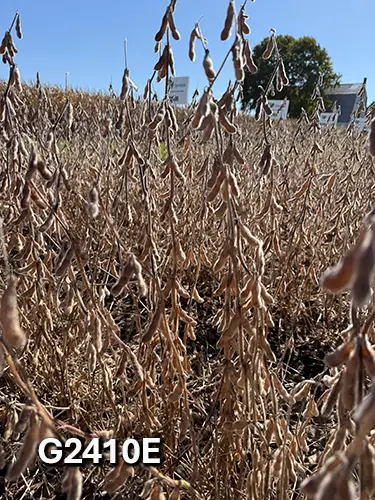 Early to Mid 2s (2.0 to 2.4): This is such a high-yielding group that it’s hard to go wrong with any of them. Hard to ignore the dominance of G2300E the last two years, but G2410Es are showing even better numbers with improved scores on SDS and white mold. G2210E is on the early side, with the bonus of the Peking gene for those high-cyst soils.
Late 2s (2.5 to 2.9): This group is very tight in yield across the board. I still like RS266E a lot on the early side until we get a longer track record with G2710E. The caution with RS266E is for known white mold acres. G2710E can be worked into the lineup in acres where G2900E is too late.
Group 3s (3-3.8): The choice here will be driven more by actual maturity wanted. G3000E is an exceptional product when in its proper maturity. G3210Es may have the most yield potential among G3000E, G3210E, and G3610ES. G3610ES adds the STS option, and G3890E still looks like the one to beat on the late side.
Picking the Right Fit
Start with maturity. The adaptability map in the seed guide shows each zone, and a variety moved north or south of its zone will change how it matures and how tall it gets. From there, look at what has limited yield on that field and match it to the disease ratings and Phytophthora gene on the chart.
Soybean cyst nematode deserves a closer look this winter. Iowa State reports that nematode populations across the Midwest have adapted to PI 81788 resistance, and recommends rotating PI 81788 varieties with Peking varieties rather than using one source every time. The Renk lineup has Peking options in G1110E, G1980E, G2210E, and G3000E. Then pick the herbicide system, Enlist E3® or XtendFlex®, and the seed treatment, either the Defender Package or the SDS Package on fields with a sudden death syndrome or nematode history.
Planning Your 2027 Soybean Acres
- Plant more than one variety. Spreading maturities lowers risk and widens the harvest window.
- Pull soil samples for soybean cyst nematode this fall. Knowing the numbers makes it easier to decide when to switch to Peking.
- Put white mold tolerance where the canopy closes fast. Narrow rows, high populations, irrigation and fields with a history of white mold are where it matters most.
- Match chlorosis tolerance to high-pH ground. On western acres, this rating often decides the field before yield does.
Looking Ahead to 2027
From far-north 0s to full-season 3s, the Renk soybean lineup has a bean for nearly every acre. Talk with your Renk dealer or DSM to match products to your fields and your field history.
References
- Iowa State University Extension and Outreach, Integrated Crop Management. Soybean Cyst Nematode-resistant Soybean Varieties for Iowa in 2027.
https://crops.extension.iastate.edu/cropnews/2026/10/soybean-cyst-nematode-resistant-soybean-varieties-iowa-2027 - University of Wisconsin Division of Extension, Nutrient and Pest Management. Integrated Approaches to White Mold Management.
https://extension.soils.wisc.edu/wcmc/integrated-approaches-to-white-mold-management/ - Michigan State University Extension. Bulletin E-3431: How to Read a Seed Guide (Soybean Edition).
https://www.canr.msu.edu/resources/bulletin-e-3431-how-to-read-a-seed-guide-soybean-edition
The Earfull November 2, 2026
2027 Renk Silage Choice Lineup
Tons, starch and digestibility, tested where silage gets made
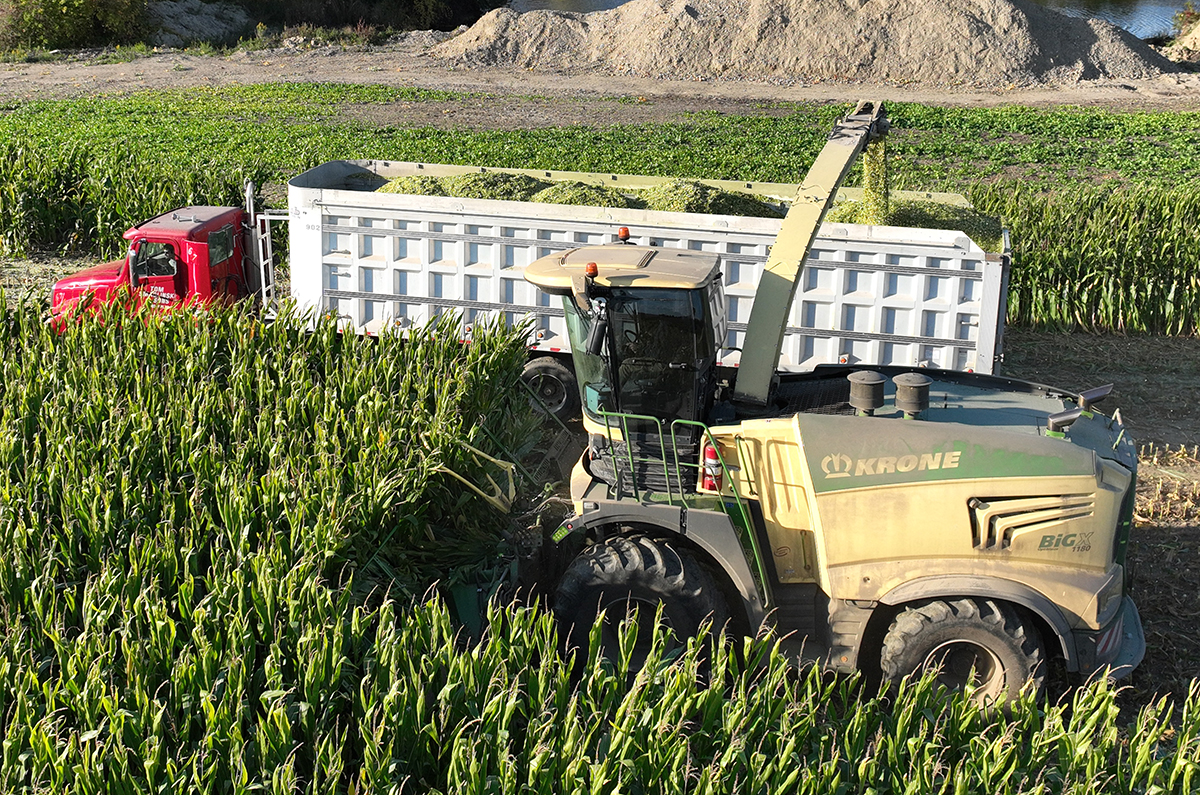
With silage harvest wrapped up and forage samples back from the lab, now is a good time to plan next year’s silage acres. The 2027 Renk Silage Choice lineup has 30 offerings from 89 to 116 RM, including 10 new products.
Every product on the Silage Choice chart earned its spot in silage plots, not just grain plots. Over the seasons, Renk research and dealer silage plots across our sales area measured these hybrids for tonnage and feed value, so growers and nutritionists can choose a hybrid based on how the silage will be fed.
What We Saw in 2026
Renk silage plots were at 17 locations in 2026, including four research sites in Wisconsin and 13 dealer and grower plots in Wisconsin, northeast Iowa, and Michigan. Tonnage held steady at about 25 tons per acre at 65% moisture, right in line with the last two years. The bigger story was starch. Plot averages ran about 38% starch, two to three points higher than in 2024 and 2025, which means good ear fill and more energy in the bunker this winter. Fiber digestibility was similar to 2025, so most of the quality gain came from the grain.
A few products stood out:
- RK571PCE and RK889PCE were again the top tonnage hybrids in their maturity groups.
- RK630TRE and RK6555VT4PRO delivered high milk per ton and milk per acre in the mid-season plots.
- RK4696SSPRO, RK7688SSPRO and RK6671SSPRO were among the highest-starch hybrids in the plots in their first year.
- RK5670VT4PRO and RK9601SSPRO/RK9601TRE finished above the plot average at most of their first-year sites.
First-year results are an early look, so we will keep adding silage sites for the new products in 2027.
What Is New for 2027
The new products fill in the lineup from 95 to 116 RM:
- RK4696SSPRO and RK5652PCE/RK5652 add yield and quality options in the early group.
- RK5670VT4PRO brings starch and digestible fiber together in a mid-season package.
- RK6640TRE, RK6671SSPRO and RK6690PCE add tonnage and milk per acre choices.
- RK7626SSPRO and RK7688SSPRO give full-season dairies more options for milk per acre.
- RK8616SSPRO and RK9601SSPRO/RK9601TRE round out the top end for long-season silage acres.
Lineup Highlights
Early (89 to 96 RM): RK571PCE remains the dependable tonnage choice in this group. RK444 adds starch with three trait options. RK4545AV and RK4545GT/LL give a steady early option with more trait choices, and RK296AA is the earliest product on the chart. These fit northern dairies and growers who want to start chopping early and spread out harvest.
Mid-season (97 to 102 RM): RK6555VT4PRO is the choice for tons and energy together, and it has been one of the most consistent silage hybrids in our plots. RK630TRE is the quality pick for high-producing herds that want energy in every ton. RK582SSTX leads for fiber digestibility, and RK583PCE, RK579DGVT2P and RK5518TRE give balanced, proven options. RK600SSTX rounds out the group with starch and milk per ton.
Full-season (103 to 110 RM): RK773TRE and RK785PCE are proven tonnage hybrids with strong milk per acre. RK7590SSPRO adds protein, and RK7577SSPRO/RK7577TRE offers two trait choices. Four new products give this group more depth than ever, with RK7688SSPRO and RK6690PCE leading on milk per acre.
Long-season (111 to 116 RM): RK889PCE has been the standout long-season silage hybrid, with top milk per acre in our plots. RK8501PCE combines yield with fiber digestibility, RK876VT2P brings energy, and RK8585TRE is a strong fit for beef rations. New for 2027, RK9601SSPRO and RK9601TRE showed good promise, giving growers who want a full-maturity product in their plans a strong option at 116 RM. These hybrids need the full season, so place them on productive, well-drained fields that can be planted early.
Picking the Right Fit
Start with the number that matters most to the operation. Milk per acre is the best single number when acres are limited. Milk per ton, starch and fiber digestibility matter most for high-producing herds. Beef per ton and per acre are the numbers for feedlots. The chart rates each product from 9 (excellent) to 1 (poor) against hybrids of similar maturity.
Silage hybrids can run up to 10 days longer in RM than a full-season grain hybrid for your area, according to Penn State Extension. Harvest still decides how much of that potential reaches the cow. Target 32% to 38% dry matter, keep the kernel processor tight, and use Renk Advantage Inoculant for best results.
Planning Your 2027 Silage Acres
- Spread the maturities. Planting two or three RMs widens the harvest window and makes it easier to hit the right moisture on every field.
- Match the hybrid to the feeding plan. If the silage goes to high-producing cows, lean toward starch and digestibility. If acres or inventory are tight, lean toward tonnage and milk per acre.
- Bring the nutritionist in early. Share the Silage Choice ratings and your 2026 forage tests when picking hybrids, not after the seed is delivered.
- Plan storage by hybrid. Keeping high-quality silage in its own bunker or bag lets you feed it where it pays the most.
Looking Ahead to 2027
The Silage Choice lineup has a hybrid for nearly every goal: tons, starch, fiber digestibility, beef output or a balance of all of them. Talk with your Renk dealer or DSM to match products to your fields and feeding program.
References
- Penn State Extension. Corn Silage Production and Management. https://extension.psu.edu/corn-silage-production-and-management
- Penn State Extension. Key Forage Quality Metrics for Corn Silage. https://extension.psu.edu/key-forage-quality-metrics-for-corn-silage
- University of Wisconsin Division of Extension, Crops and Soils. Practices to Optimize the Nutritive Value of Corn Silage.
https://cropsandsoils.extension.wisc.edu/articles/practices-to-optimize-the-nutritive-value-of-corn-silage/
The Earfull October 26, 2026
RK2622PCE — 82 RM
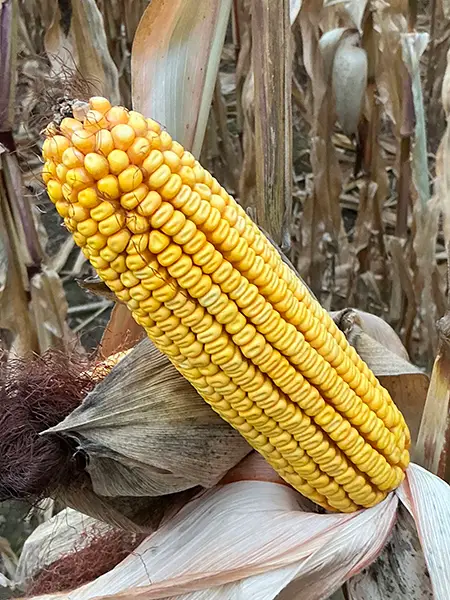
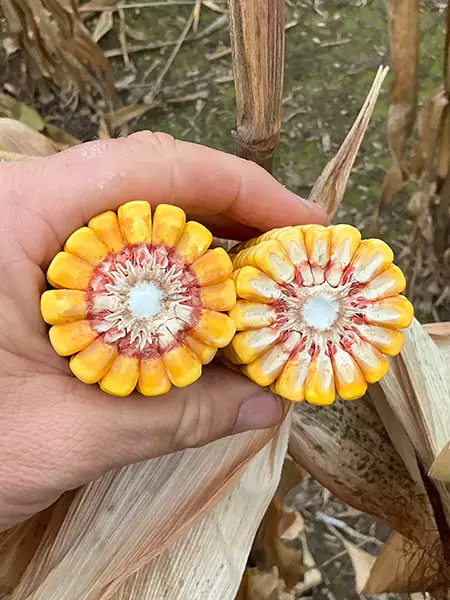 RK2622PCE is a new 82 RM PowerCore® Enlist® Refuge Advanced® hybrid with strong drydown and broad east-to-west adaptability. Its official profile carries 8 ratings across high-, medium-, and low-yield environments, as well as coarse and fine soils. Emergence, vigor, stalks, roots, and drydown are also rated 8. Recommended population is 30,000–34,000+ plants per acre, fitting its semi-determinate ear type and early-maturity positioning.
The 2026 notes highlight its early finish, with an ultra-early appearance at Staples, MN, and a sharp early-product look in Menomonie, WI. Kernel rows are commonly 14 to 16 around, although row number is lower at an extreme-stress location. Gary, MN, shows limited ear flex, while several locations maintain favorable stalk and root condition. These observations support using an appropriate stand rather than depending on large ear flex to compensate.
The season also sharpened the stress-placement discussion. Buffalo, ND, shows declining late-season intactness under extreme stress, while Kinde, MI, notes substantial tip-back and a less favorable stress response. These observations warrant more caution on the toughest acres than the broad official ratings alone might suggest. Short or loose husks and exposed tips are also noted. Tar spot, northern leaf blight, and southern rust are rated 6, with fungicide response rated 8.
Best fit: Early-maturity rotated acres across coarse and fine soils, with particular attention to fields that support establishment and a dependable finish.
Management focus: Use 30,000–34,000+ plants per acre, match population to field potential, and avoid assuming large ear flex will offset a reduced stand. Favor favorable-pH fields, scout disease, and monitor ear finish and plant condition on extreme-stress acres.
RK2645RR / RK2645 — 83 RM
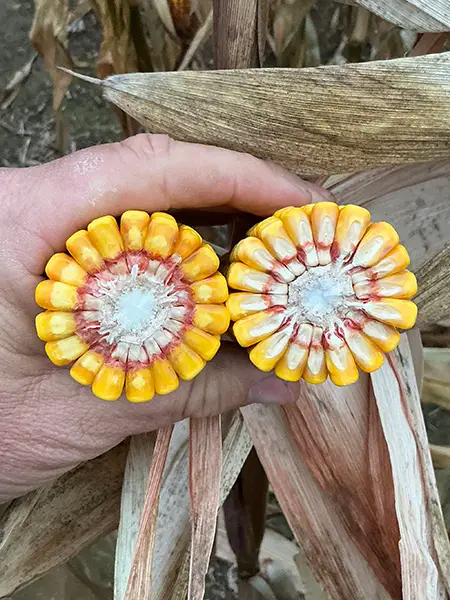
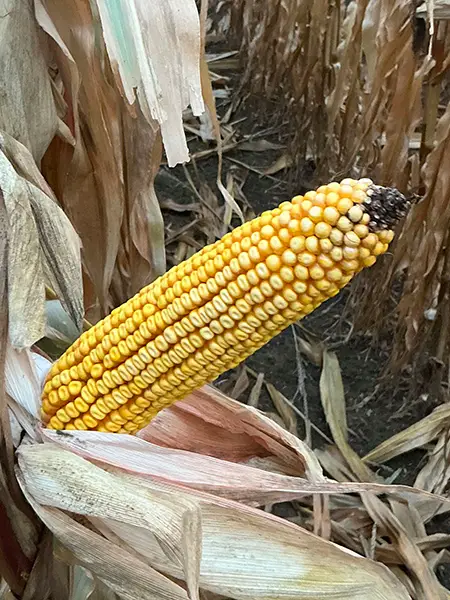
RK2645RR and RK2645 bring flexible ears, good grain quality, and dependable standability to the 83 RM range, available as a Roundup Ready® Corn 2 hybrid or conventional hybrid. In 2025 research,
both averaged 185.5 bu/ac at 20.0% moisture across 16 locations, with 56.1 lb/bu test weight and no measured stalk or root lodging. Medium- and low-yield environments are rated 8, as are coarse and fine soils. Recommended population
is 28,000–34,000 plants per acre.
The 2026 observations repeatedly support the early-product and grain-quality story. RK2645RR shows a sharp appearance and good ear size and flex at Manitowoc, WI, with favorable row appearance in Marshfield, WI. RK2645 is noted as a strong early option at Gary, MN, and shows good ear size for its maturity at Tigerton, WI. Commonly 16 kernel rows, and stalk and root condition are favorable across many entries.
Ear expression varies with stress and location. Zippering and tip-back are noted for the conventional entry at
the Marshfield, WI location. Tar spot and southern rust are rated 5, with fungicide response rated 8, supporting
a timely disease-management plan on risk acres.
Best fit: Early-maturity rotated acres, especially medium- to lower-yield environments across coarse and fine soils, where a Roundup Ready® Corn 2 or conventional offering fits the operation.
Management focus: Use 28,000–34,000 plants per acre, match population to field potential, and scout tar spot and southern rust. Monitor exposed tips, ear finish, and field condition, and keep harvest timely where needed.
RK3678VT4PRO / RK3678TRE — 90 RM
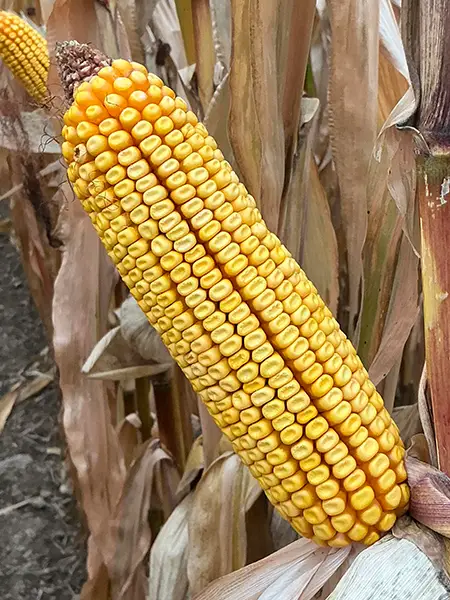
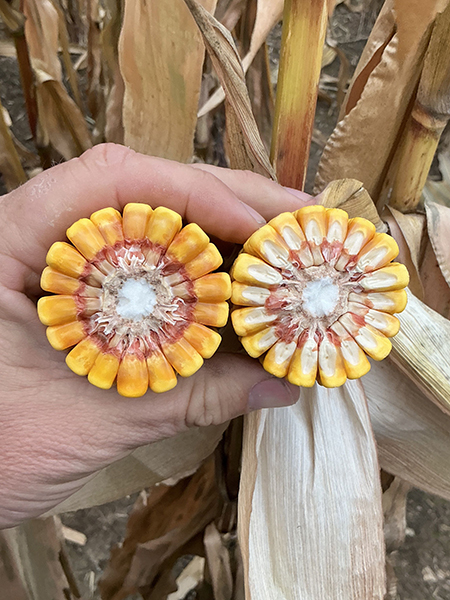
RK3678VT4PRO and RK3678TRE bring strong yield potential and reliable early-season growth to the 90 RM range, available as a VT4PRO™ RIB Complete® corn blend or Trecepta® RIB Complete® corn blend. A compact to moderate plant with lower ear placement and broad soil adaptability supports northern Corn Belt placement. High- and medium-yield environments are rated 9, with coarse and fine soils rated 8. Recommended population is 30,000–34,000+ plants per acre. VT4PRO provides an early below-ground trait option and carries a corn-on-corn rating of 8, compared with 6 for the Trecepta offering.
The 2026 observations highlight favorable row appearance, consistent ear placement, and commonly 16-row ears in both offerings. An important callout is the improved plant health and finish observed with RK3678VT4PRO in selected comparisons. At Menomonie, WI, its stay-green rating is 8 compared with 6 for RK3678TRE. At New Effington, SD, the VT4PRO entry is described as looking strong, while the Trecepta entry shows poor ear size. These observations point to a useful health-and-finish advantage in these environments, rather than a uniform response at every location.
Both offerings should be managed through the finish. Their official stay-green ratings are the same at 7, and tar spot and northern leaf blight are rated 6, with fungicide response rated 8. The observed VT4PRO improvement should be treated as field feedback—not proof that the trait directly increases disease tolerance.
Best fit: Productive northern acres across coarse and fine soils, especially medium- to high-yield environments. Favor rotated acres for RK3678TRE; include select managed corn-on-corn fields for RK3678VT4PRO.
Management focus: Use 30,000–34,000+ plants per acre, match the trait offering to field needs, and consider the observed VT4PRO health-and-finish improvement in placement discussions. Scout leaf disease, monitor stalks and ear retention, and maintain a timely harvest plan.
RK4656PCE — 93 RM
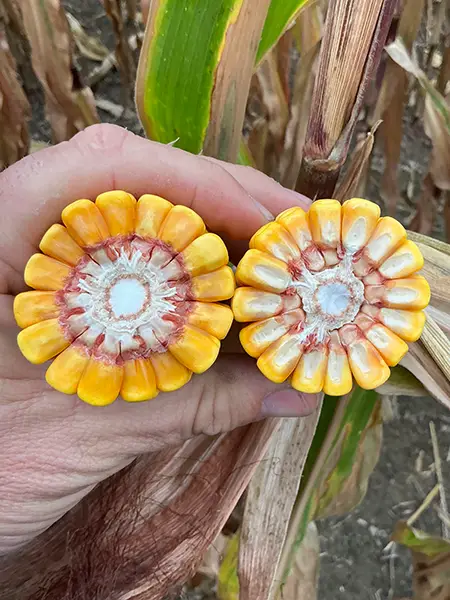
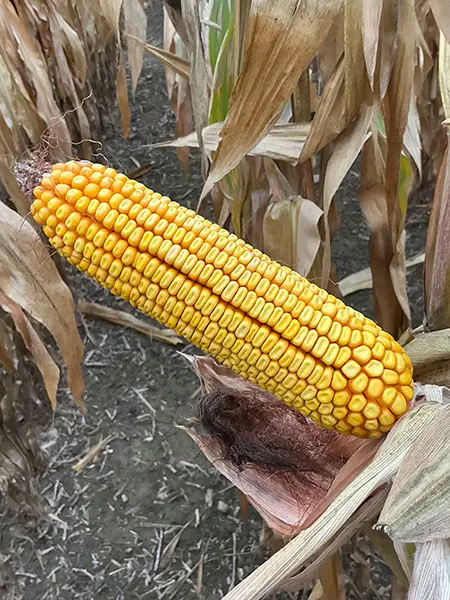 RK4656PCE is a new 93 RM PowerCore® Enlist® Refuge Advanced® hybrid with large, girthy ears and excellent flex. In 2025 research, it averaged 213.4 bu/ac at 20.9% moisture across 23 locations and ranked fourth in its set, with low measured stalk and root lodging. Medium- and low-yield environments are rated 9, while coarse and fine soils are rated 8. Recommended population is 28,000–34,000 plants per acre, allowing growers to match its flexible ear type to field potential. It also offers grain-and-silage use.
The 2026 notes repeatedly supports the ear-size and flex story. Several locations show large, girthy ears, commonly with 18 rows and occasionally 20. Sherburn, MN, and New Effington, SD, highlight strong ear flex, while Stewartville, MN, shows a sharp late-season appearance. Plants often express a moderate to bulky structure, a wide canopy, and lower ear placement. Many locations show favorable stalk conditions through
the finish.
Stress affected ear finish at some locations, with tip-back or zippering noted where heat or moisture stress intensified. These observations support keeping population matched to field potential rather than pushing
the ear-flex advantage too hard. Southern rust is rated 6 and fungicide response 7, while the high-pH rating
of 5 reinforces favorable-pH placement.
Best fit: Rotated grain or silage acres across coarse and fine soils, especially medium- to lower-yield environments where ear flex and moderate populations fit the operation.
Management focus: Use 28,000–34,000 plants per acre, match population to field potential, and favor favorable-pH ground. Scout southern rust, monitor ear shanks and husk condition, and check root support where wind or late-season conditions challenge harvestability.
Looking Ahead to 2027
These four product options complete our new-product series with distinct choices in the 82–93 RM range.
The opportunity is to combine the product profile and research foundation with this season’s field observations to place each hybrid where it can express its potential.
Use the 2026 learnings to refine population, match trait offerings to field needs, target disease management, and plan harvest around field conditions. One difficult season adds perspective—it does not replace the broader placement picture.
The Earfull October 19, 2026
RK4696SSPRO — 95 RM
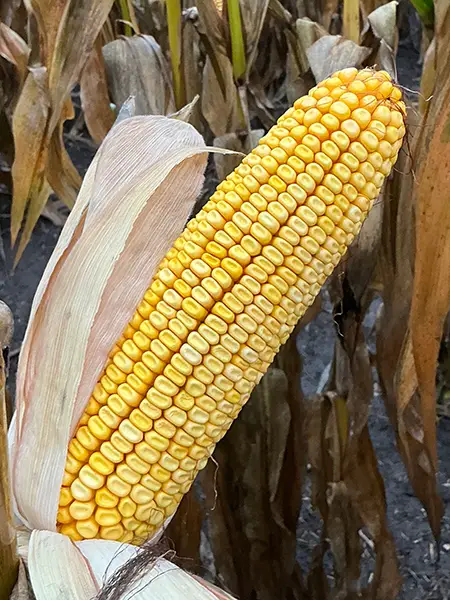
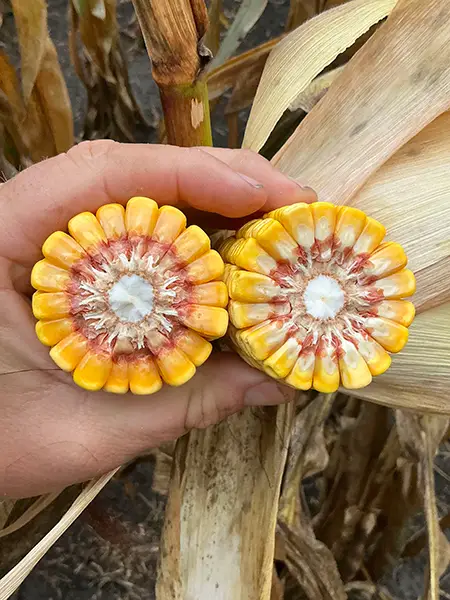
RK4696SSPRO is a new 95 RM SmartStax® PRO RIB Complete® corn blend with strong yield potential, good ear flex, and a balanced agronomic package. Stalks, roots, emergence, vigor, and drought tolerance are rated 8. Its strongest fit is productive acres, with high-yield environments rated 9 and fine soils rated 8. Corn-on-corn fit is rated 8, and it also offers grain-and-silage flexibility. Recommended population is 32,000–36,000 plants per acre.
The 2026 notes highlight a substantial plant with good ear-size potential. Several locations show large, girthy ears and good ear flex, with recorded kernel rows commonly ranging from 16 to 20. Observations include a sharp appearance under stress at Hankinson, ND, and a strong overall look at Olivia, MN. Plants often express a taller stature and higher ear placement than the medium-tall description might suggest, with some willowy appearance in certain environments.
Late-season response varied by location. Some sites show declining tops or reduced intactness, while
individual locations note some crown rot, causing some weaker stalks. These observations reinforce the value
of monitoring the taller plant through the finish rather than changing its placement based on isolated concerns.
Tar spot is rated 5 and southern rust 6, with fungicide response rated 8, supporting a timely disease-management plan on risk acres.
Best fit: Productive grain or silage acres, especially finer-textured soils, including select managed corn-on-corn fields.
Management focus: Use 32,000–36,000 plants per acre, plan tar spot management where risk is known, and monitor late-season stalk integrity and harvestability.
RK5652PCE / RK5652 — 96 RM
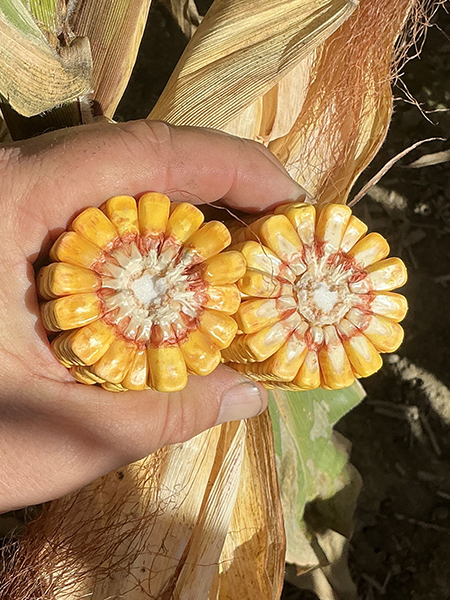
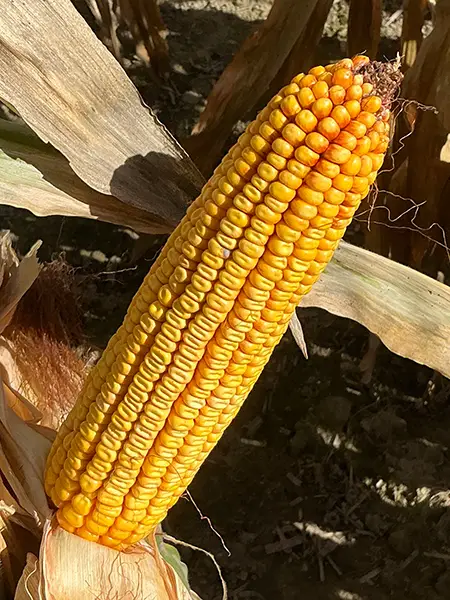
RK5652PCE and RK5652 bring excellent top-end yield potential and good ear flex to the 96 RM range, available as a PowerCore® Enlist® Refuge Advanced® hybrid or conventional hybrid. A moderate plant with lower ear placement supports population flexibility. High-yield environments are rated 9, fine soils 8, and Goss’s wilt tolerance 8. Greensnap tolerance is a strength at 9. Recommended population is 30,000–34,000 plants per acre.
The 2026 observations support the ear-flex and attractive-plant story, particularly for RK5652PCE. Several locations note favorable plant height, lower ear placement, large or girthy ears, and good late-season appearance. Hayfield, MN, has large ears and a decent overall plant look, while Olivia, MN, and Columbus, WI, have strong visual notes.
Ear size varied across environments, with some tip-back, zippering, or shorter plants under stress.
Establishment was another useful lesson from this season. Emergence is rated 7 for both offerings, supporting attention to seedbed conditions. Southern rust is rated 6 and fungicide response 8, while the high-pH rating of
5 reinforces favorable-pH placement.
Best fit: Productive rotated grain or silage acres, especially finer-textured soils with favorable pH, where either
a PowerCore® Enlist® or conventional offering fits the operation.
Management focus: Use 30,000–34,000 plants per acre, plant into a fit seedbed, verify establishment, and match population to field potential. Scout disease and monitor ear finish and late-season plant condition.
RK5670VT4PRO — 99 RM
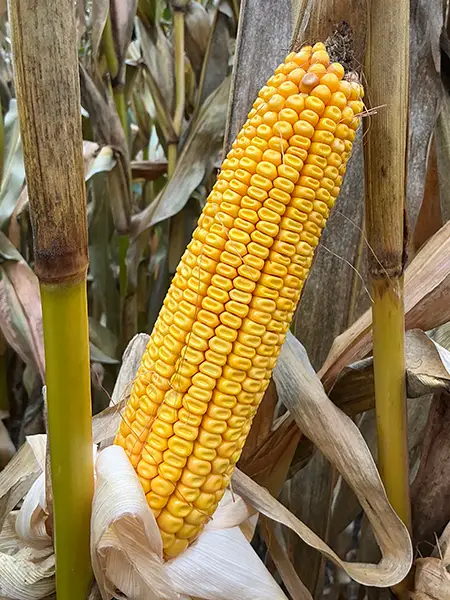
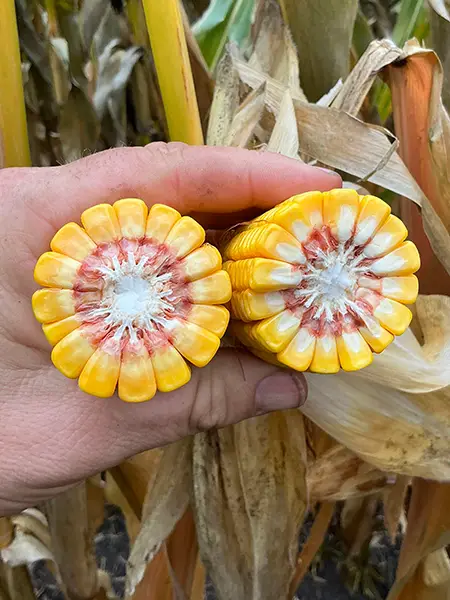
RK5670VT4PRO is a new 99 RM VT4PRO® RIB Complete® corn blend with strong yield potential, broad east-to-west adaptability, and a substantial plant type. High-, medium-, and low-yield environments are all rated 8, supporting flexible placement. Emergence, vigor, stalks, and drydown are rated 8, with corn-on-corn fit also rated 8. Southern rust tolerance is a notable strength at 9. Recommended population is 30,000–34,000 plants per acre.
The 2026 notes repeatedly describe a tall plant with higher ear placement and commonly 16-row ears. Several locations show good ear size or consistent ear development, including Hayfield, MN, while Grafton, IA, highlights a sharp appearance in a challenging location. At some stress locations, the product maintained ear development but showed smaller or shallower kernels, illustrating how ear expression changed with the environment.
The season reinforced the importance of managing late-season plant health and harvestability. Some locations show root leaners, declining tops, weaker late stalk strength. These observations should be balanced against the broader product profile and differences among locations. Tar spot and stay-green are rated 6, with fungicide response rated 8, supporting a deliberate disease-management plan where pressure warrants protection.
Best fit: Managed grain or silage acres across a range of yield environments, especially finer-textured soils and select corn-on-corn fields within its adaptation zone.
Management focus: Use 30,000–34,000 plants per acre, favor favorable-pH fields, scout tar spot, and monitor roots, stalks, and ear retention. Maintain a timely harvest plan where late-season condition begins to decline.
RK5699TRE — 100 RM
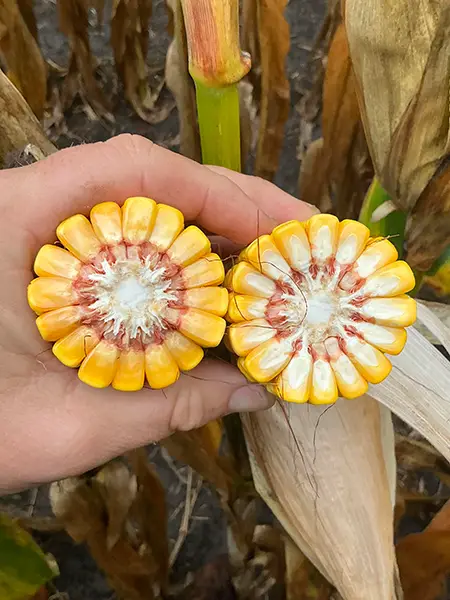
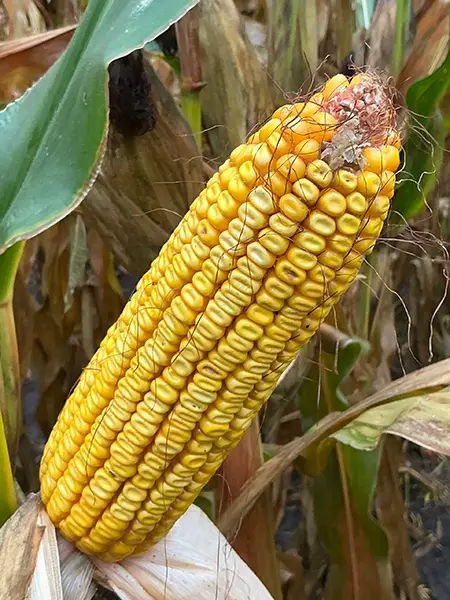
RK5699TRE is a new 100 RM Trecepta® RIB Complete® corn blend with high yield potential, large, girthy ears, and useful ear flex. In 2025 research, it averaged 238.8 bu/ac at 19.9% moisture across 24 locations and ranked first in its set, with low measured stalk and root lodging. High-yield environments are rated 9, while coarse and fine soils are both rated 8. Recommended population is 30,000–34,000 plants per acre.
The 2026 observations support its big-ear profile, with multiple notes on girthy or blocky ears and large kernels. Several locations show consistent ear development or a favorable overall look. Bryant, SD, highlights very good late health, large blocky ears, and lower ear placement. Kernel rows were frequently 16 to 18, with variation in ear size and expression across environments.
Late-season plant integrity is an important management consideration. Some locations show crown rot, declining stalk strength, or root leaning, while others maintain better health and held stalks. These observations add perspective to placement and harvest planning without replacing the strong multi-location research foundation. Tar spot is rated 5 and fungicide response 8, supporting timely leaf-disease management on risk acres, alongside continued checks of crown and stalk condition.
Best fit: Productive rotated acres across coarse and fine soils, especially favorable-pH fields with sound fertility and a practical harvest plan.
Management focus: Use 30,000–34,000 plants per acre, prioritize rotated and favorable-pH fields, plan tar spot management where needed, and move fields forward in the harvest order if crown or stalk integrity declines.
Looking Ahead to 2027
These four product options give growers distinct choices for building a balanced lineup in the 95–100 RM range. The opportunity is to combine the product profile and research foundation with this season’s field observations to place each hybrid where it can express its potential.
Use the 2026 learnings to refine population, target disease management, and plan harvest around field conditions. One difficult season adds perspective—it does not replace the broader placement picture.
The Earfull October 12, 2026
RK6610PCE — 101 RM
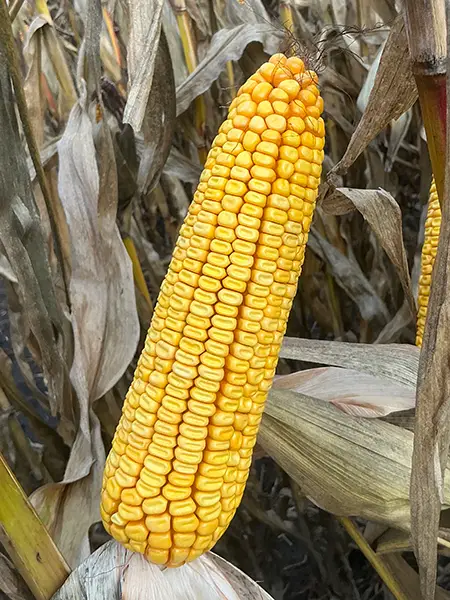
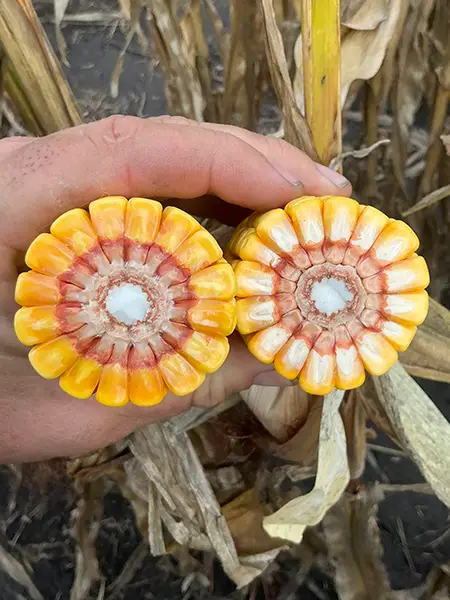
RK6610PCE is a new 101 RM PowerCore® Enlist® Refuge Advanced® hybrid that pairs strong yield potential with useful ear flex on a medium-tall, broad-leafed plant. In 2025 research, it averaged 229.2 bu/ac at 20.2% moisture across 26 locations and ranked third in its set. Adaptation to both coarse and fine soils is rated 8. Recommended population is 28,000–32,000 plants per acre, allowing growers to use its ear flex without pushing populations excessively high.
The 2026 notes support its substantial plant type and population-flexibility story. Observations highlight broad leaves, lower ear placement in some environments, and strong ear flex. Several locations note well-filled ears or favorable appearance under stress. Ears are commonly 16 rows, with longer, slender or tapered ear expression in some locations and variation in ear size across environments.
The season reinforced the value of matching population to field potential and keeping a sound disease-management plan. Open or loose husks, some ear bounce, and eyespot were noted at an individual location. Southern rust is rated 6 and fungicide response 8, providing a management opportunity where disease pressure warrants protection.
Best fit: Productive rotated acres across coarse and fine soils, especially where ear flex and moderate populations fit the operation.
Management focus: Use 28,000–32,000 plants per acre, favor favorable-pH ground, scout for southern rust and other leaf diseases, and monitor ear finish and late-season plant condition.
RK6640TRE — 103 RM
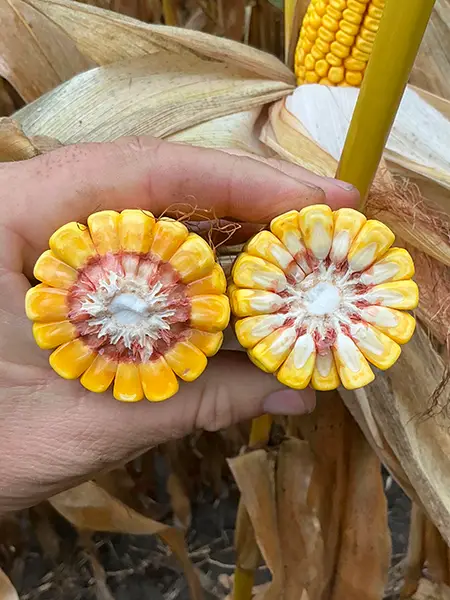
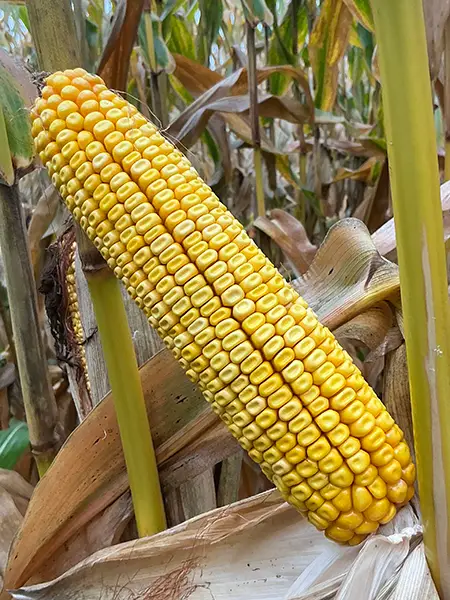
RK6640TRE is a new 103 RM Trecepta® RIB Complete® corn blend with strong yield potential, reliable emergence, and an upright plant appearance. In 2025 research, it averaged 243.3 bu/ac at 18.2% moisture across 23 locations and ranked first in its set, with low measured stalk and root lodging. It fits especially well in-zone and north on moderate- to high-yield acres. Recommended population is 30,000–34,000 plants per acre.
In 2026, several locations showcase consistent ear development and favorable late-season appearance. Notes also highlight stalks holding late and a good appearance at a wind-affected location. The field observations support its productive-acre positioning, while visual comments should be interpreted alongside each location’s management program.
Late-season response varied by environment. Improved crown tolerance compared to other current products; some ear bounce is noted at Hayfield, MN, adding another placement and harvest-management consideration from a challenging season. Tar spot is rated 5, with fungicide response rated 8, making timely disease management a good fit on higher-pressure acres.
Best fit: Medium- to high-yield rotated acres, particularly finer-textured soils in in-zone and northern placements.
Management focus: Use 30,000–34,000 plants per acre, favor favorable-pH fields, plan tar spot management where risk is known, and monitor late-season plant integrity through harvest.
RK6671SSPRO — 104 RM
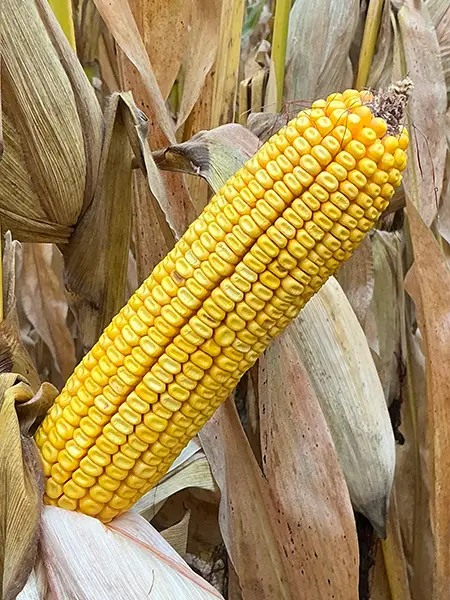
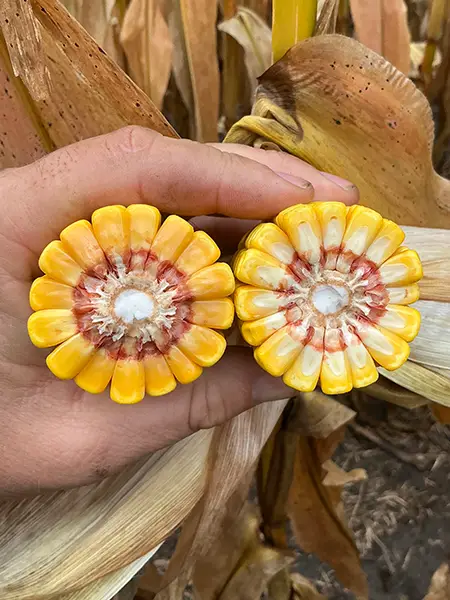
RK6671SSPRO is a new 104 RM SmartStax® PRO RIB Complete® corn blend with competitive yield potential, useful ear flex, and reliable early-season establishment. It carries 8 ratings across high-, medium-, and low-yield environments, as well as coarse and fine soils. Corn-on-corn fit is rated 8, and its fungicide-response rating of 9 is a key management strength. Recommended population is 30,000–34,000 plants per acre.
The 2026 observations highlight upright upper leaves, a fuller middle canopy, and favorable ear height and consistency in several environments. Notes include large ears and stable stalks where tops began to decline, with some root lean.
These observations would place this product more toward medium- to high-yielding environments and less toward low-yielding environments. Some locations show ear bounce, root lean, or declining tops, reinforcing the value of managing the crop through the finish. Tar spot is rated 5 and stay-green 6, while the strong fungicide-response rating (9) supports a deliberate disease-management plan on risk acres.
Best fit: A range of managed acres across coarse and fine soils, including select corn-on-corn fields.
Management focus: Use 30,000–34,000 plants per acre, favor favorable-pH fields, use its strong fungicide response where disease pressure warrants, and maintain a timely harvest plan.
RK6690PCE — 105 RM
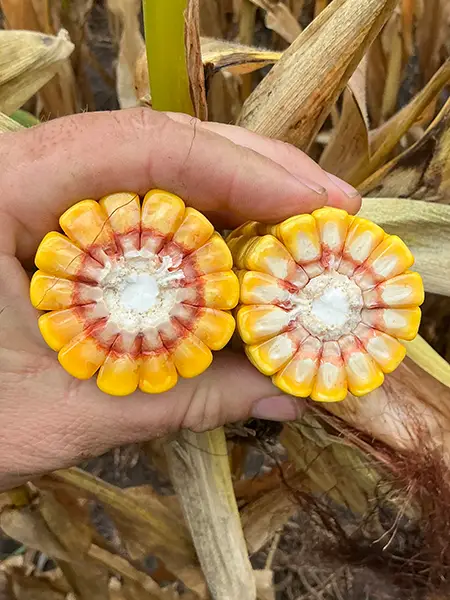
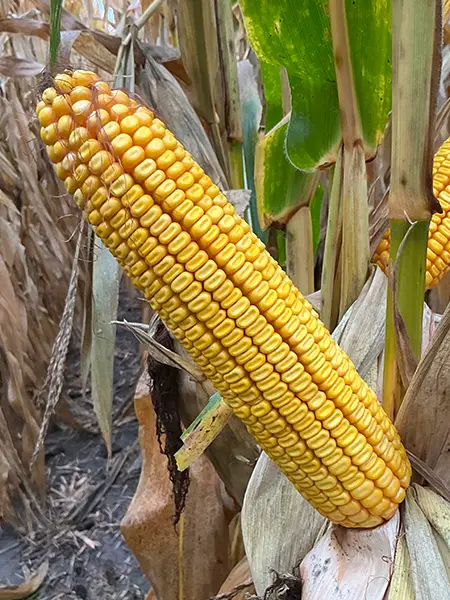
RK6690PCE is a new 105 RM PowerCore® Enlist® Refuge Advanced® hybrid with strong yield potential, useful ear flex, and consistent ear placement. In 2025 research, it averaged 242.4 bu/ac at 19.1% moisture across 23 locations and ranked second in its set. Its strongest fit is moderate- to higher-yielding ground with dependable fertility and favorable soil pH. Recommended population is 30,000–34,000 plants per acre.
The 2026 notes repeatedly describe a substantial, wide-leafed plant with favorable late-season appearance. Several locations note consistent ear height and good canopy retention. At one stress location, it expresses a shorter plant while maintaining a good ear set, showing how plant expression varied with the environment. Consider these visual observations alongside potential fungicide use at individual sites.
Ear finish is another useful detail from this season. Husk coverage varied, with open or loose husks at some locations and longer coverage at another, with isolated tip-back. Tar spot, southern rust, and fungicide response are rated 7, 7, and 8, respectively, supporting management based on local disease risk.
Best fit: Medium- to high-yield rotated acres, especially fine soils with favorable pH and dependable fertility.
Management focus: Use 30,000–34,000 plants per acre, prioritize favorable-pH ground, scout disease and ear health, and match fungicide use and harvest timing to field conditions.
Looking Ahead to 2027
These four products give growers distinct options for building a balanced lineup in the 101–105 RM range.
The opportunity is to place each hybrid where it can express its potential by combining the product profile
and research foundation with this season’s field observations.
Use the 2026 learnings to refine population, target disease management, and plan harvest around field conditions. One difficult season adds perspective—it does not replace the broader placement picture.
The Earfull October 5, 2026
RK7626SSPRO — 108 RM
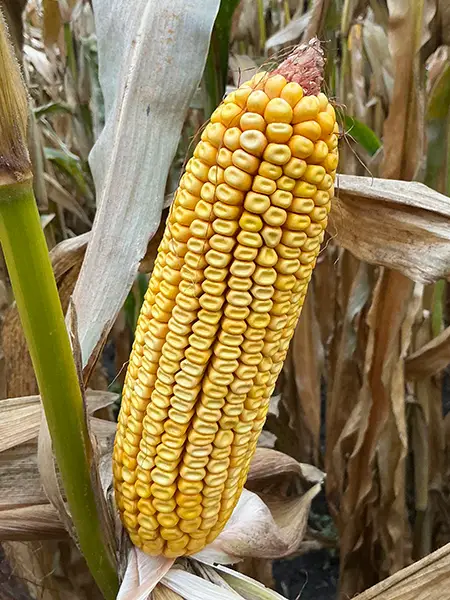
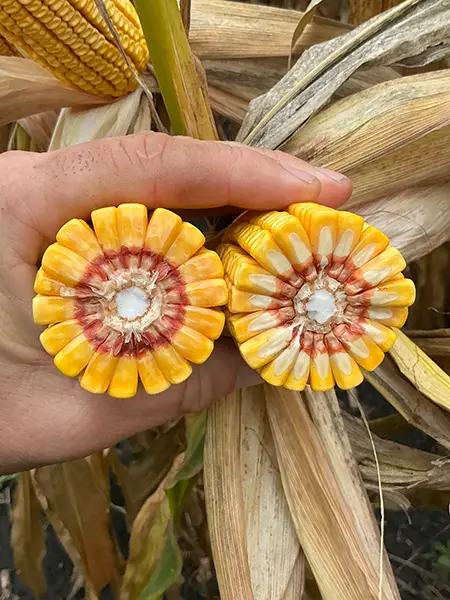
RK7626SSPRO is a new 108 RM SmartStax® PRO product that offers excellent yield potential, strong drydown, and grain-and-silage flexibility. It is a taller, upright-leaf product with its strongest placement on high-yield environments and fine soils. It is also a solid corn-on-corn fit. In 2025 research, it averaged 234.4 bu/ac at 20.1% moisture across 24 locations, with low measured stalk and root lodging. Recommended population is 32,000–36,000 seeds per acre.
In 2026 observations, RK7626SSPRO generally shows a tall to bulky plant type with consistent ear set, commonly 16-row ears. Ear type leans more towards slender than girthy in several locations, which fits its semi-determinate profile. It also shows the visual presence and plant structure expected from a dual-purpose product.
Where weather and disease pressure intensified late, some locations showed tar spot, southern rust, root lean, and declining late-season plant health. These notes reinforce the importance of managing this hybrid as a high-opportunity product: it has a 9 fungicide-response rating, while tar spot is rated 5 and southern rust 6.
A planned disease-management program is a good fit where risk is known.
Best fit: Productive grain or silage acres, especially fine-textured and selected corn-on-corn fields.
Management focus: Use 32,000–36,000 population, avoid high-pH fields where possible, watch tar spot and southern rust, and use a timely fungicide plan on responsive acres. Growth-regulator herbicides have a caution rating.
RK7688SSPRO — 110 RM
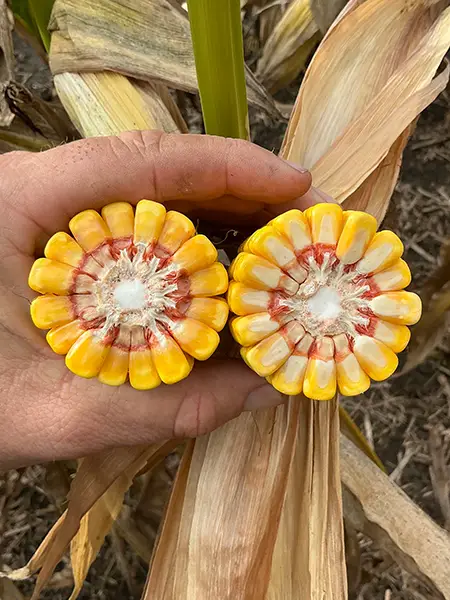
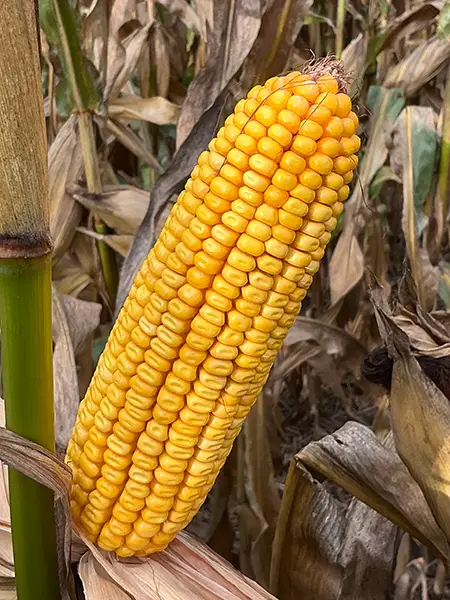
RK7688SSPRO is a new 110 RM SmartStax® PRO hybrid built for productive, high-management acres. It brings reliable emergence and early vigor, a taller plant type, strong stay-green, and the potential for large, girthy ears. It is especially suited to high- and medium-yield environments, fine soils, and selected corn-on-corn acres. Recommended population is 32,000–36,000 seeds per acre.
The 2026 field notes support this positioning. RK7688SSPRO repeatedly shows a tall, bulky plant type, typically with 16- to 18-row ears. Several observations highlight good emergence, a strong overall appearance, and large or girthy ears. In its best environments, it has visual appeal down the row.
The season also underscored the importance of field selection. A few locations noted late root lean, ear bounce, and some crown rot stress under the year’s challenging weather pattern. This aligns with its official drought-tolerance rating of 6: this is not a product to force onto marginal or moisture-limited acres. Its official tar-spot rating is 8 and southern-rust rating is 7, but fungicide response is also rated 8, providing a useful management tool where disease pressure develops.
Best fit: Productive, fertile acres with dependable moisture; a strong option for managed corn-on-corn acres.
Management focus: Keep it on good soils with dependable moisture, maintain fertility, use 32,000–36,000 population, and keep an eye on late-season root and disease pressure.
RK8616SSPRO — 113 RM
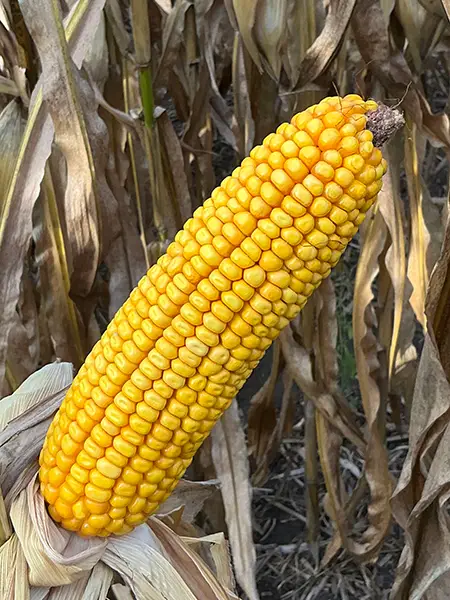
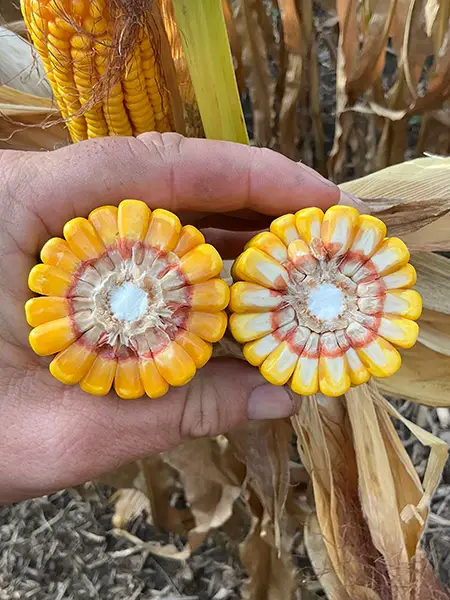
RK8616SSPRO is a new 113 RM SmartStax® PRO hybrid with standout yield potential, very good grain quality, and broad adaptation. In 2025 research, it averaged 255.9 bu/ac at 20.0% moisture across 17 locations, ranked third in its set, and recorded only 0.21% stalk lodging. It has a strong high-yield-environment rating of 9, a population-response rating of 9, and a strong fit for fine soils and corn-on-corn acres.
The 2026 notes repeatedly support its grain-quality and plant-appearance story. RK8616SSPRO is among the more consistently attractive products in the group, with good late-season canopy retention in many locations, strong grain quality, good ear set, and a generally uniform appearance. Notes commonly reflect 16- to 18-row ears, tighter husks in some locations, and good tip fill. Its semi-determinate ear type is noted, and a 32,000–36,000 range is recommended.
Some sites showed crown-root stress, occasional root lean, and some snap this year. Those observations were not consistent across all locations and should be viewed within the season’s difficult late-weather conditions. Its southern-rust rating of 9 is a major strength, while its tar-spot rating of 6 supports scouting and a timely fungicide plan on risk acres. Consider strong visual notes from locations where fungicide was used as evidence of good response to active management rather than an untreated disease-tolerance claim.
Best fit: Broad-acre high-yield placement, and select corn-on-corn fields.
Management focus: Use 32,000–36,000 population, with flexibility to moderate population where appropriate. Avoid high-pH acres, scout for tar spot, and prioritize a fungicide plan in disease-prone fields.
RK9601SSPRO — 116 RM
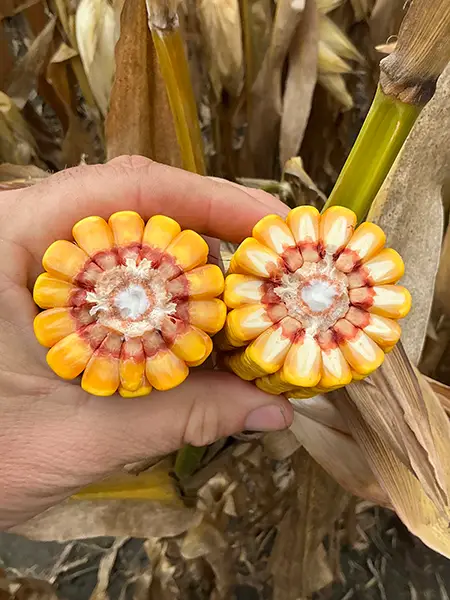
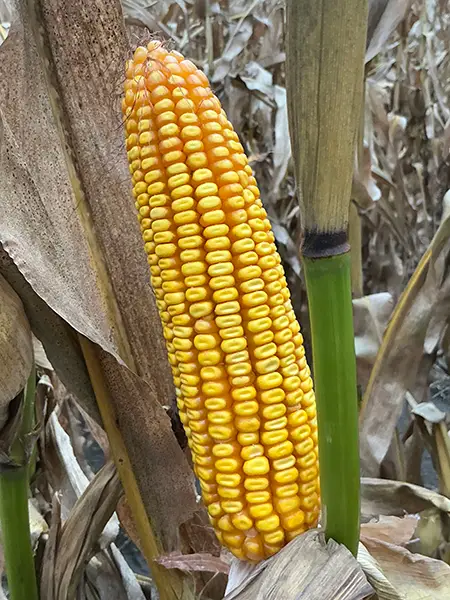
RK9601SSPRO is a new 116 RM SmartStax® PRO hybrid with excellent yield potential and grain-or-silage flexibility. It is a tall, wide-leafed, high-output product for full-season. In 2025 research, it averaged 257.5 bu/ac at 20.0% moisture across 16 locations and ranked second in its test set. It also recorded 57.5 lb/bu test weight, 0.30% stalk lodging, and 0.82% root lodging.
The recommended population range is 32,000–36,000 seeds per acre. The product has good emergence, vigor, stalks, roots, greensnap, drydown, test weight, and stay-green ratings, all at 8.
The 2026 observations show an attractive, substantial plant type with good grain quality and ear potential. In stronger environments, notes describe large, girthy ears, a more consistent ear set, and favorable husk cover. It also shows the plant stature expected from a full-season grain-or-silage option.
Some locations experienced root lean, variable root support, and late-season stalk concerns after the season shifted from stress to substantial late rainfall. This is an important management observation, but it should be balanced against the hybrid’s strong multi-location research performance and official 8 ratings for both stalks and roots. Tar spot is rated 6 and southern rust 7, while fungicide response is 8—making disease protection a logical tool where pressure is expected.
Best fit: High-yield, full-season grain or silage acres and select corn-on-corn fields.
Management focus: Use 32,000–36,000 population, keep it on favorable-pH ground, scout tar spot and southern rust, and protect its high yield potential with fungicide where field risk warrants it.
RK9601TRE — 116 RM
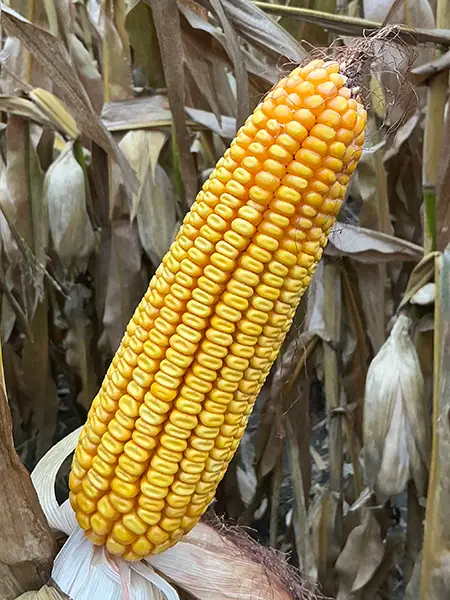
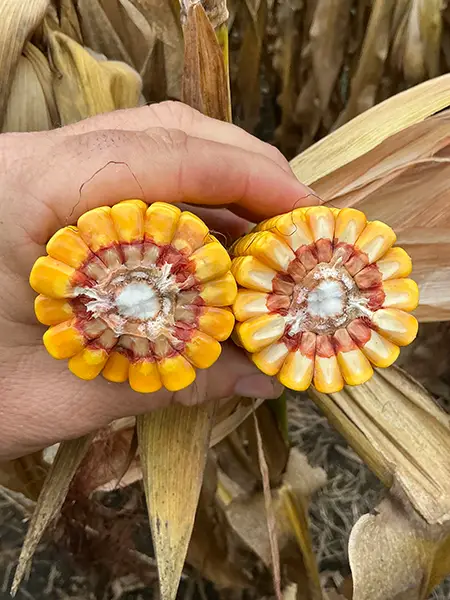
RK9601TRE brings the same high-yielding RK9601 genetic platform in a TRECEPTA® trait package. It is a full-season, 116 RM option for Zones 6–7, built for grain or silage use. In 2025 research, it averaged 255.5 bu/ac at 19.5% moisture across 17 locations and ranked fourth in its set. It produced a 56.6 lb/bu test weight, with low measured stalk lodging and no reported root lodging in that research set.
This hybrid fits high-yield environments particularly well, with a 9 rating in that category, and also carries 8 ratings for medium- and low-yield environments. It is best positioned on fine soils, favorable-pH ground, and rotated acres. Its corn-on-corn rating is 6, so rotation and residue management should be part of placement decisions. Recommended population is 32,000–36,000 seeds per acre.
2026 observations note consistent ear development, strong ear potential, and 18- to 20-row ears in some of the better environments. Several locations also note good row appearance and tighter husks. Under the most difficult late-season conditions, some fields show crown-root stress, ghosted plants, reduced stalk integrity, and more variable plant health. These are meaningful observations, but the weather pattern was unusually demanding, and the results varied by location. They should be used to direct field selection and harvest planning—not to overshadow the strong yield and agronomic foundation shown in multi-location research.
Best fit: Full-season, especially rotated acres with favorable pH, strong fertility, and good moisture-holding capacity.
Management focus: Use 32,000–36,000 population, favor rotated fields, avoid high-pH ground, monitor tar spot, and plan timely harvest when late-season conditions favor crown-root or stalk stress. Its fungicide-response rating of 8 provides another useful management lever on disease-prone fields.
Looking Ahead to 2027
The opportunity for 2027 is to match these high-yielding products to the acres where they can express their full potential. The 2026 season tested late-maturity corn with summer stress, disease pressure, and a sharp shift to wet conditions in many areas. Even with those challenges, the group demonstrated strong ear quality, grain quality, plant type, and yield potential.
Use these observations to strengthen placement, prioritize disease management where appropriate, and build
a harvest plan that protects performance through the finish.
The Earfull September 28, 2026
2026 Season in Review: From a Slow Start to the Finish Line
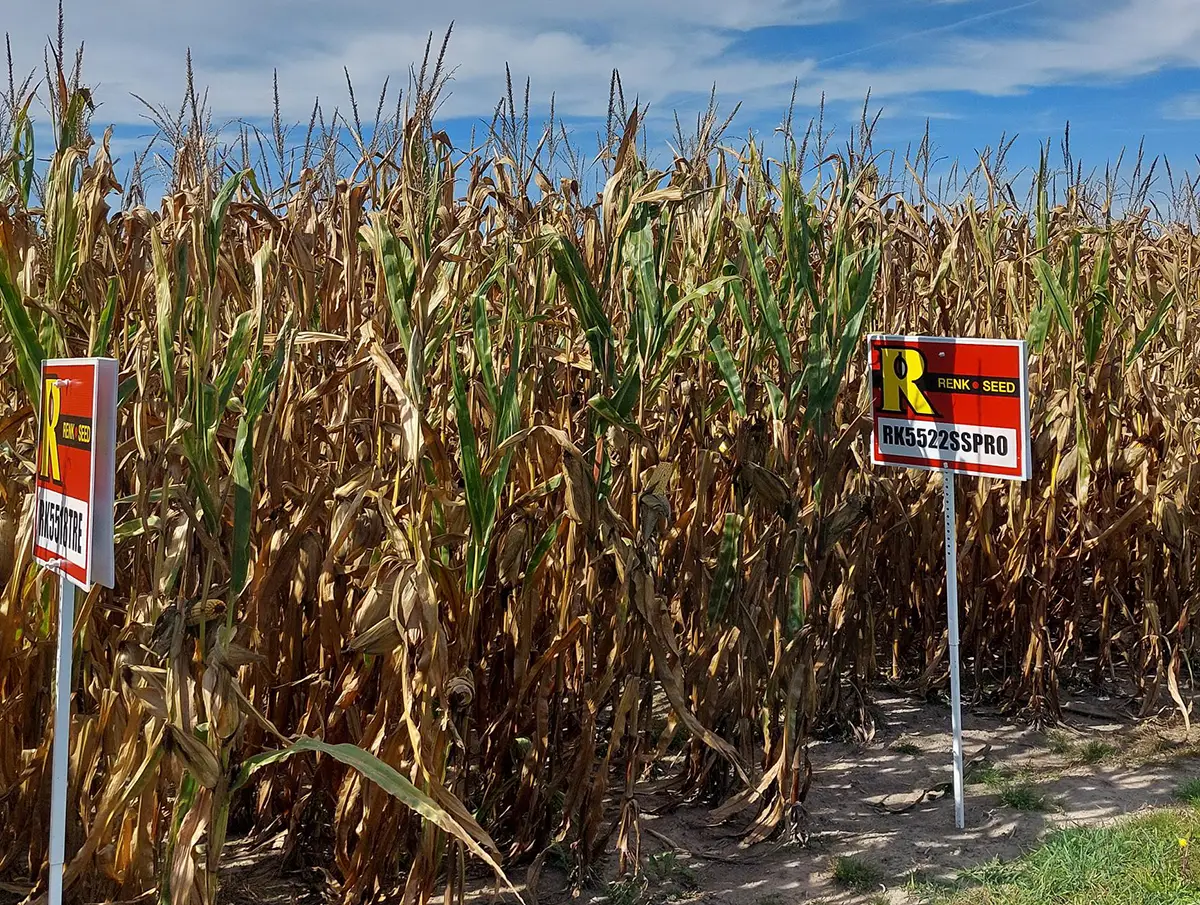
Every growing season has a story. The 2026 story started with cold soils and slow accumulation of growing degree units, moved through a timely planting push, shifted into a summer of field-by-field disease and stress management, and now finishes with the decisions that protect yield and grain quality at harvest.
It is tempting to judge a season only by the final yield monitor number. That number matters, but it does not explain the full outcome. The best post-season learning comes from connecting what happened at planting, through vegetative growth, during pollination and grain fill, and finally at harvest. Observations along the way help explain the data that will soon come off the combine.
Spring: Patience Paid Off
The season opened with cool soils, limited early heat, and questions about emergence. In many areas, the crop was planted in a timely manner, but early growth did not always look fast or uniform from the road. Corn and soybeans needed time for the seed zone to warm, and the year’s first management lesson was simple: dig plants and evaluate them before making decisions.
Those early checks mattered. Stand counts were important, but stand uniformity mattered just as much. Uneven emergence, variable planting depth, sidewall compaction, crusting, wet spots, and cold-stress effects often showed up first as differences in plant size. Some fields grew through those concerns with little consequence. Others carried subtle variability well into the season.
The other spring priority was weed control. Timely pre-emergence programs and follow-up post applications helped preserve early crop competitiveness. Where rainfall activated residual programs and growers stayed ahead of weed growth, the crop was better positioned to use light, water, and nutrients once warmer conditions arrived.
Summer: Field Risk Became the Story
By late June, the crop had shifted from establishment to protecting yield potential. Canopies closed, the crop approached tassel, and disease conversations became more important. The familiar disease triangle—susceptible host, inoculum, and favorable environment—helped frame the decisions.
Tar spot, northern corn leaf blight, gray leaf spot, and other foliar diseases were not equal in every field. Field history, corn-on-corn rotation, residue, hybrid response, irrigation, canopy density, and repeated periods of leaf wetness separated lower-risk acres from fields that deserved closer attention. The best management decisions were not blanket decisions. They came from ranking fields, scouting them at tighter intervals, and focusing protection around the periods that mattered most for grain fill.
The season also reminded us that stress rarely travels alone. Root restrictions, variable soils, saturated areas, droughty ridges, nutrient limitations, insect injury, and weather all influence how a plant finishes. A field can look good in July and still tell a more complicated story in August or September when kernel depth, stalk quality, and ear health are evaluated.
Fall: Protect What Is Left
As the crop reached black layer, yield was largely set and the conversation shifted to retaining the crop that had been built. Weather drives drydown, but it should not be the only factor that determines harvest order.
Strong-standing fields with healthy ears may have time to wait for a favorable drying window. Fields with weak stalks, root or crown rot, ear drop, lodging, ear molds, or significant wildlife and insect injury do not have the same luxury. The cost of drying corn is visible. Waiting can be costly, as seen in ears on the ground, harvest loss, lower test weight, grain-quality discounts, and more difficult combining.
Ear molds deserve particular attention in the final stretch. Pink or red mold near the ear tip can suggest Gibberella ear rot; scattered discolored or starburst kernels can suggest Fusarium ear rot; dense white mold beginning near the ear base may be Diplodia; and olive-green growth can indicate Aspergillus. Mold appearance helps direct scouting and testing, but it does not determine mycotoxin level. Representative grain sampling and laboratory testing are the right way to make feed and marketing decisions when toxin-producing molds are suspected.
Harvest priorities
- Walk fields before harvest and use stalk pinch and push tests to help set harvest order.
- Prioritize fields with lodging risk, ear retention concerns, or ear mold before stronger fields.
- Pull representative ear samples; completely remove husks rather than judging ear health from the field edge.
- Keep mold-affected or suspect grain separate whenever possible and avoid blending it with clean corn.
- Adjust the combine to manage fines and lightweight material, while monitoring for excessive grain loss.
- Dry wet or mold-affected grain promptly, cool it for storage, and monitor bins closely.
- Capture field notes before the visual evidence disappears: hybrid, soil type, population, drainage, disease, insect injury, stress patterns, and harvest observations.
The Data Will Tell the Rest
Harvest is the final field-scale evaluation, but yield data is only as useful as the questions we ask of it.
A yield map can show where the field performed differently. Notes from the season help explain why.
When the combine starts rolling, keep an eye on more than bushels per acre:
Observation | Question to ask after harvest |
Yield pattern | Did low- and high-yield zones match spring emergence, drainage, soil texture, or in-season stress patterns? |
Moisture pattern | Did maturity, planting date, hybrid placement, or late-season stress influence drydown across the field? |
Test weight and grain condition | Were low-test-weight or moldy areas connected to ear disease, premature death, insect injury, or weather stress? |
Standability | Did stalk or root issues align with population, fertility, disease history, compaction, or saturated areas? |
Hybrid response | Which products were the most consistent across soils, management zones, and stress environments? |
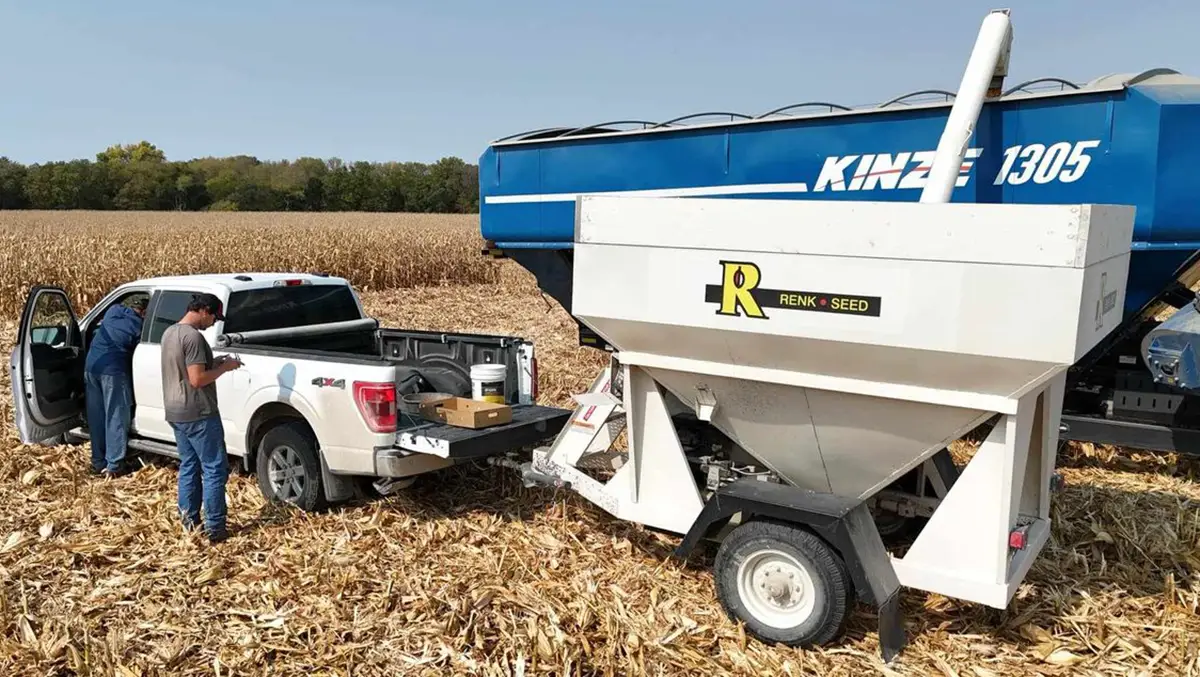
The best time to begin a 2027 plan is while the 2026 crop is still fresh in your mind. Mark problem areas, save yield and moisture layers, retain representative grain-quality results. Then, compare those records with planting maps, fertility history, drone imagery, soil maps, and scouting notes. The goal is not to overreact to one difficult spot or one unusual weather event. The goal is to build a clearer placement and management strategy field by field.
Take Home
The 2026 season asked growers to be patient in the spring, disciplined with scouting in the summer, and deliberate as harvest approaches. Many acres had a slow start but strong potential. Final results will still depend on protecting standability, grain quality, and harvest efficiency in the weeks ahead.
Bring on the yield data—and a safe harvest season to everyone in the field, on the road, and at the bin.
The Earfull September 21, 2026
Ear Molds in Corn: Identify the Risk, Protect Grain Quality
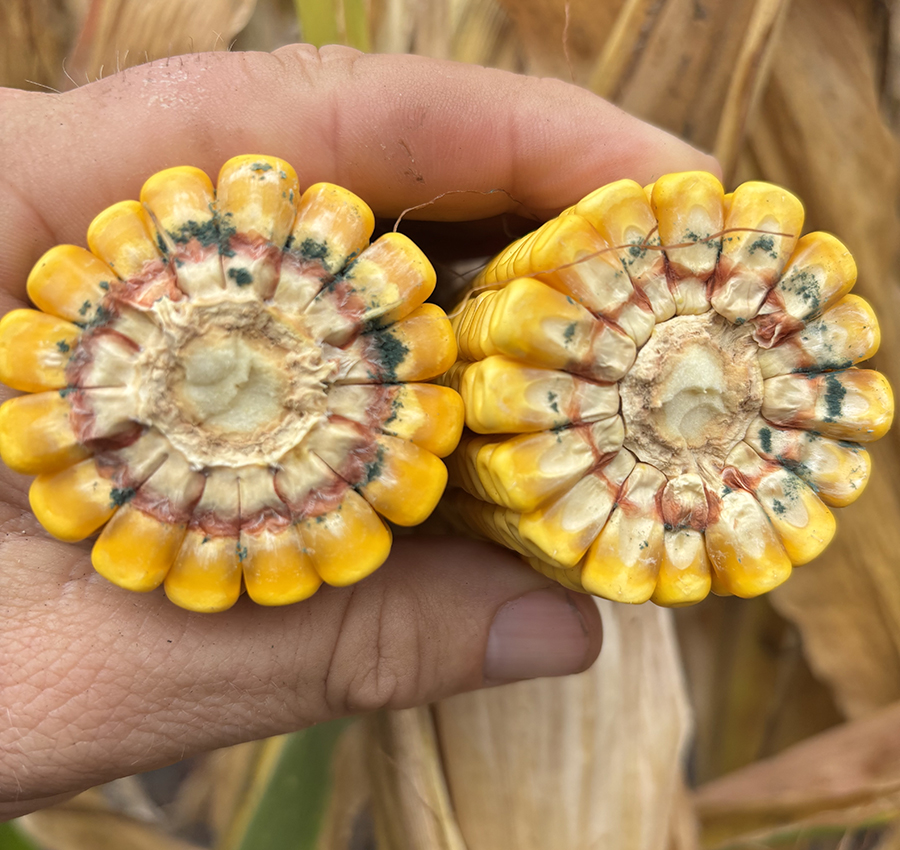
A few moldy ears can be easy to dismiss. They should not be.
Ear-rotting fungi can reduce test weight, create harvest and storage challenges, and—depending on the organism—produce mycotoxins that affect grain marketing and livestock feed use. The practical question is not simply, “Is there mold?” It is: “Which ear mold is present, how widespread is it, and how should harvest and storage change?”
Late-season weather, hybrid response, residue, insect injury, and crop stress all influence ear-mold risk. There is no curative treatment once mold is present at this stage. The immediate work is to scout accurately, prioritize affected fields, segregate suspect grain, dry it promptly, and test representative grain when toxin-producing ear rots are possible.
Ear mold | Field clues | Conditions and entry points | Primary toxin concern |
Gibberella ear | Pink to red mold, commonly beginning at the ear tip and moving toward the base; husks may stick tightly to severely affected ears | Cool, wet conditions during early silking; inoculum survives in corn and small-grain residue. Risk is often greater in continuous corn or where Fusarium head blight has occurred in wheat | DON (vomitoxin) and zearalenone; particularly important for swine |
Fusarium ear rot | Scattered or patchy tan, brown, purple, white, or pink kernels; white “starburst” streaks can radiate from the silk attachment point | Warm conditions, especially with ear injury from insects, birds, hail, or other damage | Fumonisins; important concern for horses and swine |
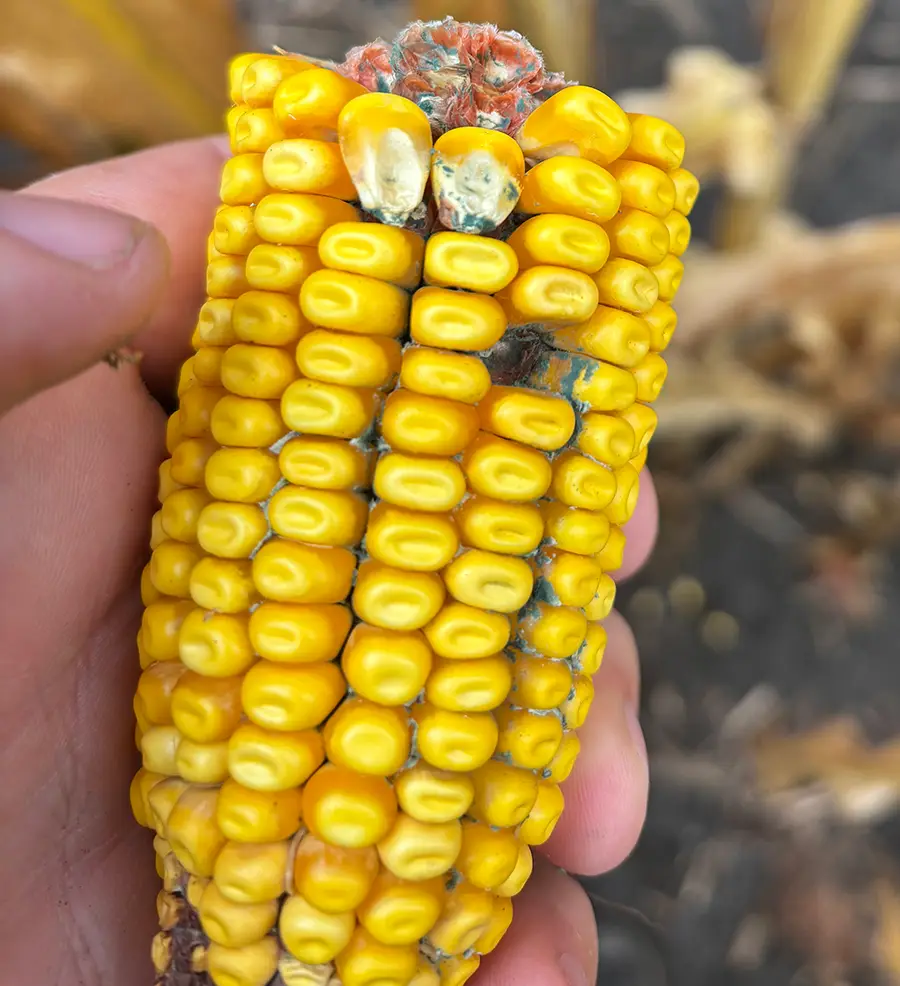
Diplodia ear rot (Stenocarpella spp.) | Dense white to gray mold often begins at the ear base and moves toward the tip; black, embedded pycnidia may occur on kernels, cob, husks, or shank | Dry weather before silking followed by wet conditions; corn residue, continuous corn, and susceptible hybrids increase risk | No mycotoxins currently associated with Diplodia ear rot in the United States and Canada, but grain quality and test weight can suffer |
Aspergillus ear rot (Aspergillus flavus) | Powdery olive-green mold, often at the tip or near an injury site | Hot, dry stress; insect, bird, hail, or other ear injury can increase risk | Aflatoxin |
Know What You Are Seeing
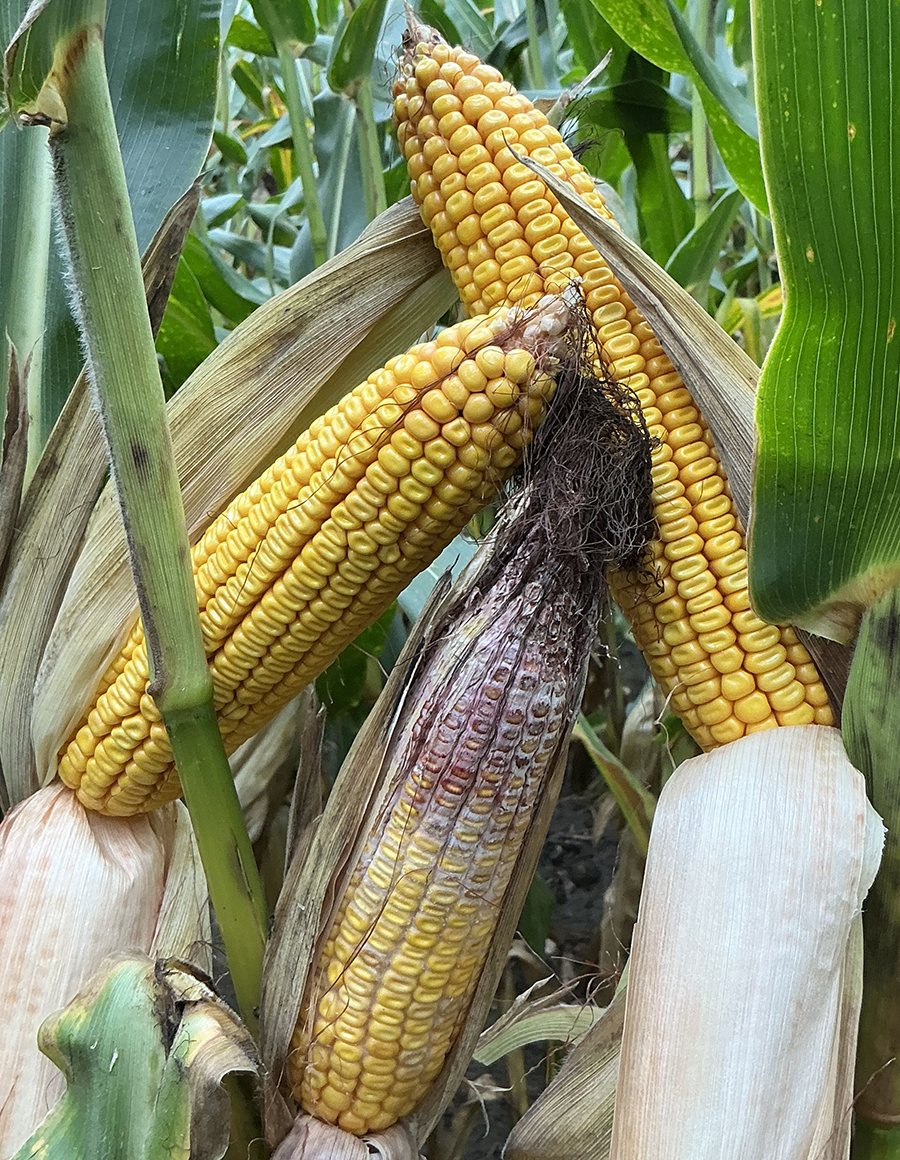
Peel husks back completely. Mold color, where it begins on the ear, and whether it occurs in patches or as a dense mat are useful field clues. Field diagnosis is a screening tool—not proof of a particular mycotoxin level.
Why It Shows Up
Ear molds begin with a susceptible ear and a favorable infection window. Spores can come from crop residue, soil, or wind. They infect through silks, the ear shank, or wounds. Insect feeding, bird damage, hail, and mechanical injury provide openings for pathogens and often worsen a moderate mold problem.
Weather drives which mold gains the advantage:
- Cool, humid weather around silking favors Gibberella.
- Warm conditions and ear injury favor Fusarium.
- A dry period before silking followed by wet conditions afterward favors Diplodia.
- Hot, dry stress—especially with damaged ears—favors Aspergillus and aflatoxin risk.
Continuous corn, surface residue, uneven stress, nutrient limitations, drainage issues, and delayed harvest can add to risk. Mold development and toxin accumulation can continue when grain remains wet in the field or in storage. Drying stops additional fungal activity; it does not remove toxins already present.
What To Do Now
Put affected fields first
Harvest fields with significant ear mold early. Waiting for additional field drydown can increase mold severity, toxin risk, dropped ears, and quality loss. In a high-risk field, taking corn a few points wetter and drying it promptly is often the lower-risk decision.
Set the combine to remove poor material
Work with the operator to minimize kernel breakage and use settings that remove lightweight, damaged kernels and fines where practical. Those fractions may carry disproportionately more mold and mycotoxin. Balance cleaning against excessive grain loss and monitor the sample at the combine and delivery point.
Dry and cool immediately
Dry affected grain to below 15% moisture as soon as possible to limit further fungal growth and toxin production.
For longer-term storage, dry to 13% moisture or less and cool grain; Crop Protection Network identifies 30°F as a long-term storage target for contaminated grain when feasible.
Avoid slow handling of warm, wet grain. Monitor bins closely for crusting, heating, odor, insects,
or worsening mold.
Remember: heating, freezing, and drying do not destroy mycotoxins that are already in the grain.
Take Home
Ear mold is a harvest-management issue first and a next-season placement issue second. Identify the pattern, scout enough ears to understand the field, harvest affected acres early, keep suspect grain separate, dry and cool it quickly, and test grain whenever toxin-producing molds are possible. A clean, representative sample and a deliberate harvest plan are far more valuable than guessing from mold color alone.
References
- Crop Protection Network. 2024. An Overview of Ear Rots (CPN-2001, updated).
https://cropprotectionnetwork.org/publications/an-overview-of-ear-rots - Smith, D. L., and Goeser, J. 2019. Corn Stalk Rots and Ear Rots: A Double Whammy for Wisconsin Corn Farmers Again This Year. University of Wisconsin–Madison Integrated Pest and Crop Management.
https://ipcm.wisc.edu/blog/2019/10/corn-stalk-rots-and-ear-rots-a-double-whammy-for-wisconsin-corn-farmers-again-this-year/ - Murillo-Williams, A., Collins, A., and Esker, P. 2025. Corn Ear Rots and Mycotoxins. Penn State Extension.
https://extension.psu.edu/corn-ear-rots-and-mycotoxins - Ohio State University Extension. Corn Ear Rots: Identification, Quantification and Testing for Mycotoxins.
https://agcrops.osu.edu/newsletter/corn-newsletter/2016-32/corn-ear-rots-identification-quantification-and-testing
No post found

No post found
No post found
No post found
No post found
No post found
No post found
No post found
No post found