2026 Season in Review: From a Slow Start to the Finish Line
Every growing season has a story. The 2026 story started with cold soils and slow accumulation of growing degree units, moved through a timely planting push, shifted into a summer of field-by-field disease and stress management, and now finishes with the decisions that protect yield and grain quality at harvest.
It is tempting to judge a season only by the final yield monitor number. That number matters, but it does not explain the full outcome. The best post-season learning comes from connecting what happened at planting, through vegetative growth, during pollination and grain fill, and finally at harvest. Observations along the way help explain the data that will soon come off the combine.
Spring: Patience Paid Off
The season opened with cool soils, limited early heat, and questions about emergence. In many areas, the crop was planted in a timely manner, but early growth did not always look fast or uniform from the road. Corn and soybeans needed time for the seed zone to warm, and the year’s first management lesson was simple: dig plants and evaluate them before making decisions.
Those early checks mattered. Stand counts were important, but stand uniformity mattered just as much. Uneven emergence, variable planting depth, sidewall compaction, crusting, wet spots, and cold-stress effects often showed up first as differences in plant size. Some fields grew through those concerns with little consequence. Others carried subtle variability well into the season.
The other spring priority was weed control. Timely pre-emergence programs and follow-up post applications helped preserve early crop competitiveness. Where rainfall activated residual programs and growers stayed ahead of weed growth, the crop was better positioned to use light, water, and nutrients once warmer conditions arrived.
Summer: Field Risk Became the Story
By late June, the crop had shifted from establishment to protecting yield potential. Canopies closed, the crop approached tassel, and disease conversations became more important. The familiar disease triangle—susceptible host, inoculum, and favorable environment—helped frame the decisions.
Tar spot, northern corn leaf blight, gray leaf spot, and other foliar diseases were not equal in every field. Field history, corn-on-corn rotation, residue, hybrid response, irrigation, canopy density, and repeated periods of leaf wetness separated lower-risk acres from fields that deserved closer attention. The best management decisions were not blanket decisions. They came from ranking fields, scouting them at tighter intervals, and focusing protection around the periods that mattered most for grain fill.
The season also reminded us that stress rarely travels alone. Root restrictions, variable soils, saturated areas, droughty ridges, nutrient limitations, insect injury, and weather all influence how a plant finishes. A field can look good in July and still tell a more complicated story in August or September when kernel depth, stalk quality, and ear health are evaluated.
Fall: Protect What Is Left
As the crop reached black layer, yield was largely set and the conversation shifted to retaining the crop that had been built. Weather drives drydown, but it should not be the only factor that determines harvest order.
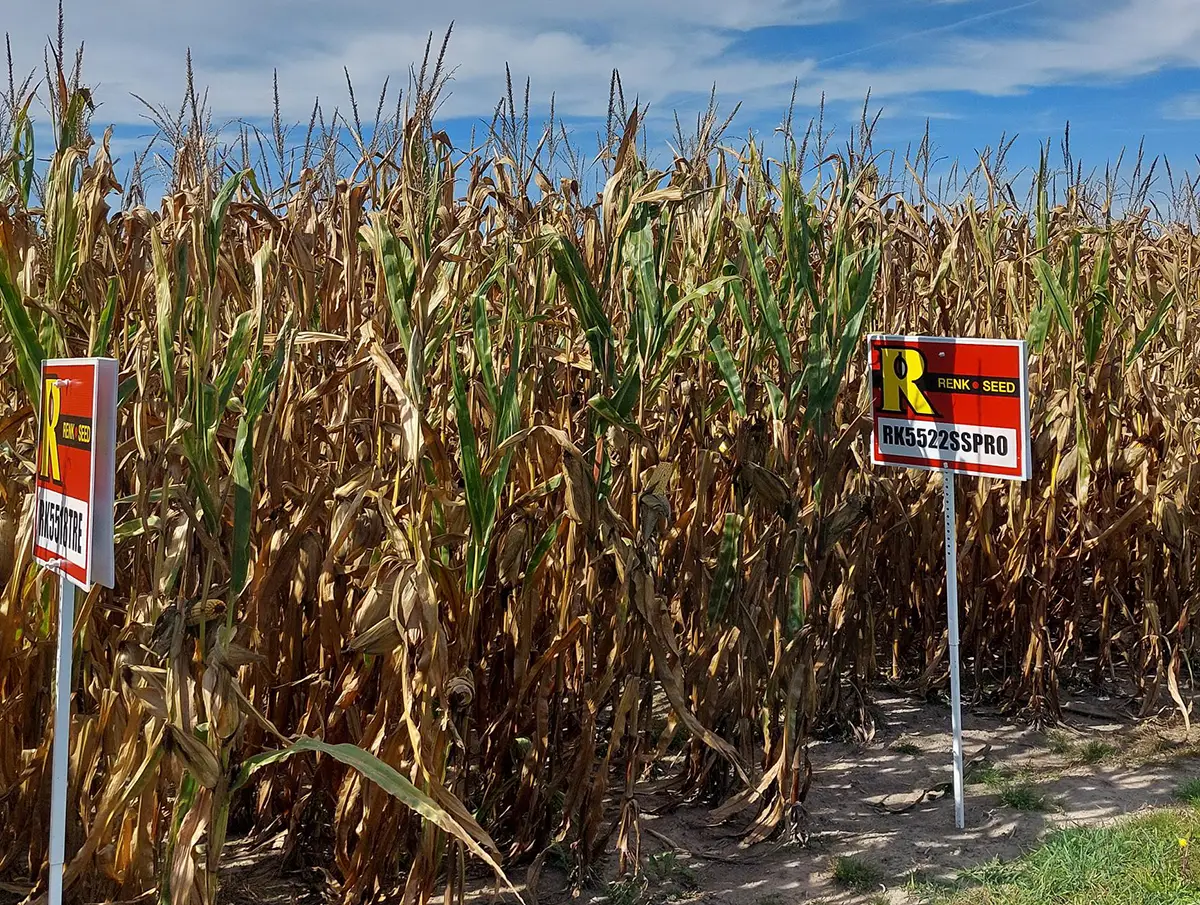
Strong-standing fields with healthy ears may have time to wait for a favorable drying window. Fields with weak stalks, root or crown rot, ear drop, lodging, ear molds, or significant wildlife and insect injury do not have the same luxury. The cost of drying corn is visible. Waiting can be costly, as seen in ears on the ground, harvest loss, lower test weight, grain-quality discounts, and more difficult combining.
Ear molds deserve particular attention in the final stretch. Pink or red mold near the ear tip can suggest Gibberella ear rot; scattered discolored or starburst kernels can suggest Fusarium ear rot; dense white mold beginning near the ear base may be Diplodia; and olive-green growth can indicate Aspergillus. Mold appearance helps direct scouting and testing, but it does not determine mycotoxin level. Representative grain sampling and laboratory testing are the right way to make feed and marketing decisions when toxin-producing molds are suspected.
Harvest priorities
- Walk fields before harvest and use stalk pinch and push tests to help set harvest order.
- Prioritize fields with lodging risk, ear retention concerns, or ear mold before stronger fields.
- Pull representative ear samples; completely remove husks rather than judging ear health from the field edge.
- Keep mold-affected or suspect grain separate whenever possible and avoid blending it with clean corn.
- Adjust the combine to manage fines and lightweight material, while monitoring for excessive grain loss.
- Dry wet or mold-affected grain promptly, cool it for storage, and monitor bins closely.
- Capture field notes before the visual evidence disappears: hybrid, soil type, population, drainage, disease, insect injury, stress patterns, and harvest observations.
The Data Will Tell the Rest
Harvest is the final field-scale evaluation, but yield data is only as useful as the questions we ask of it.
A yield map can show where the field performed differently. Notes from the season help explain why.
When the combine starts rolling, keep an eye on more than bushels per acre:
Observation | Question to ask after harvest |
Yield pattern | Did low- and high-yield zones match spring emergence, drainage, soil texture, or in-season stress patterns? |
Moisture pattern | Did maturity, planting date, hybrid placement, or late-season stress influence drydown across the field? |
Test weight and grain condition | Were low-test-weight or moldy areas connected to ear disease, premature death, insect injury, or weather stress? |
Standability | Did stalk or root issues align with population, fertility, disease history, compaction, or saturated areas? |
Hybrid response | Which products were the most consistent across soils, management zones, and stress environments? |
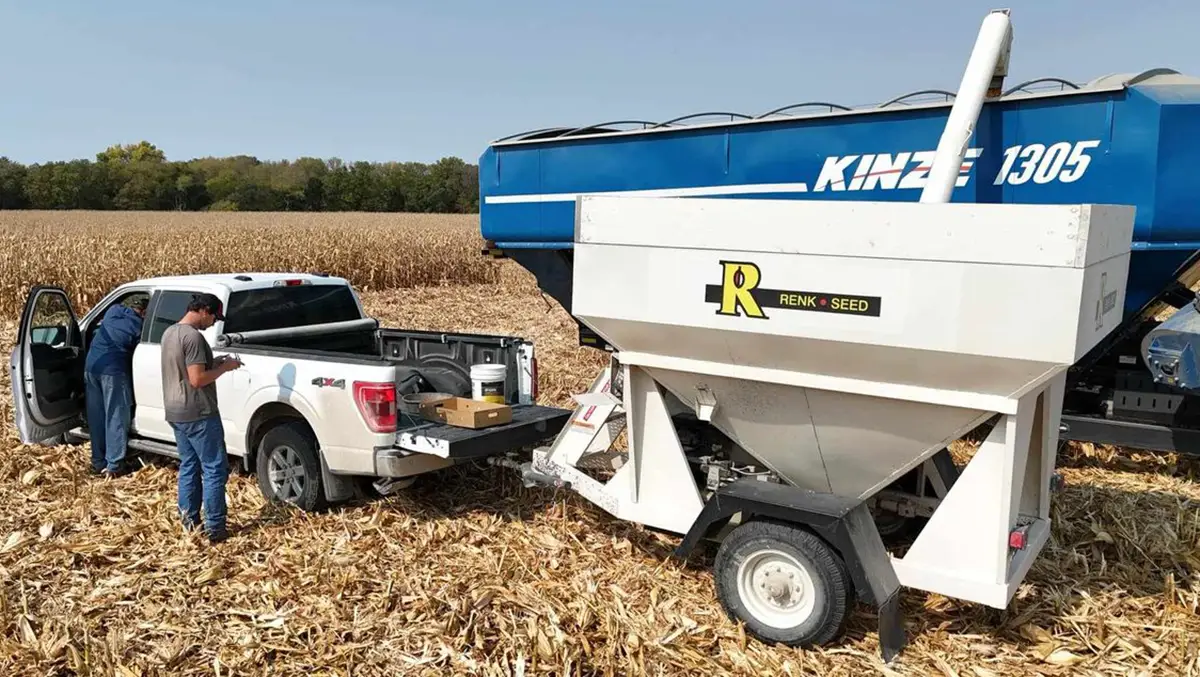
The best time to begin a 2027 plan is while the 2026 crop is still fresh in your mind. Mark problem areas, save yield and moisture layers, retain representative grain-quality results. Then, compare those records with planting maps, fertility history, drone imagery, soil maps, and scouting notes. The goal is not to overreact to one difficult spot or one unusual weather event. The goal is to build a clearer placement and management strategy field by field.
Take Home
The 2026 season asked growers to be patient in the spring, disciplined with scouting in the summer, and deliberate as harvest approaches. Many acres had a slow start but strong potential. Final results will still depend on protecting standability, grain quality, and harvest efficiency in the weeks ahead.
Bring on the yield data—and a safe harvest season to everyone in the field, on the road, and at the bin.