
RK7626SSPRO — 108 RM
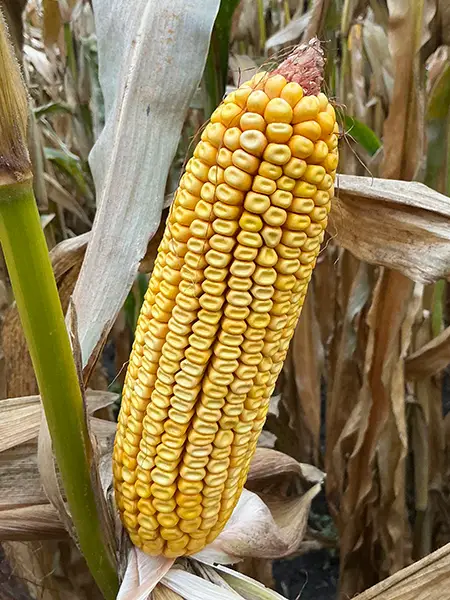
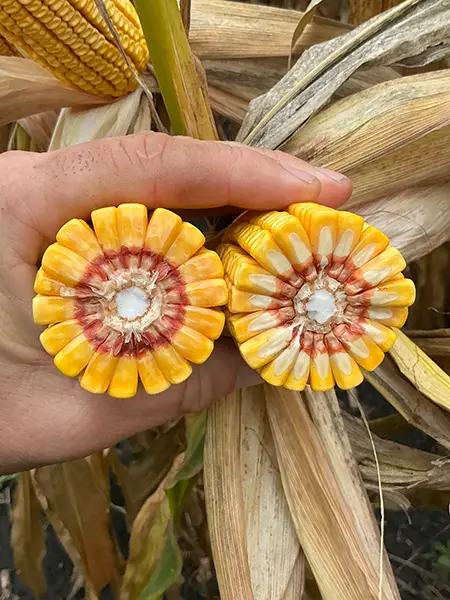
RK7626SSPRO is a new 108 RM SmartStax® PRO product that offers excellent yield potential, strong drydown, and grain-and-silage flexibility. It is a taller, upright-leaf product with its strongest placement on high-yield environments and fine soils. It is also a solid corn-on-corn fit. In 2025 research, it averaged 234.4 bu/ac at 20.1% moisture across 24 locations, with low measured stalk and root lodging. Recommended population is 32,000–36,000 seeds per acre.
In 2026 observations, RK7626SSPRO generally shows a tall to bulky plant type with consistent ear set, commonly 16-row ears. Ear type leans more towards slender than girthy in several locations, which fits its semi-determinate profile. It also shows the visual presence and plant structure expected from a dual-purpose product.
Where weather and disease pressure intensified late, some locations showed tar spot, southern rust, root lean, and declining late-season plant health. These notes reinforce the importance of managing this hybrid as a high-opportunity product: it has a 9 fungicide-response rating, while tar spot is rated 5 and southern rust 6.
A planned disease-management program is a good fit where risk is known.
Best fit: Productive grain or silage acres, especially fine-textured and selected corn-on-corn fields.
Management focus: Use 32,000–36,000 population, avoid high-pH fields where possible, watch tar spot and southern rust, and use a timely fungicide plan on responsive acres. Growth-regulator herbicides have a caution rating.
RK7688SSPRO — 110 RM
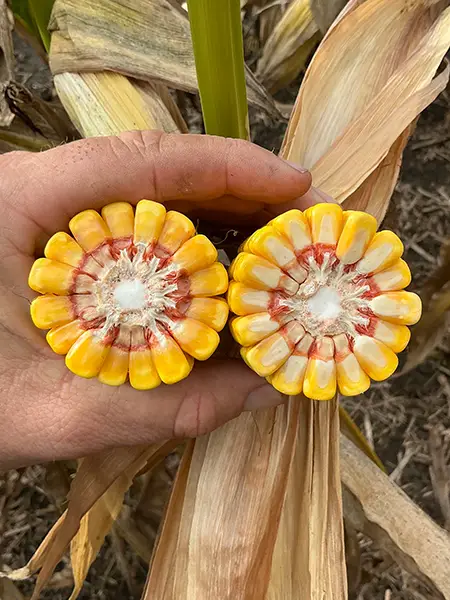
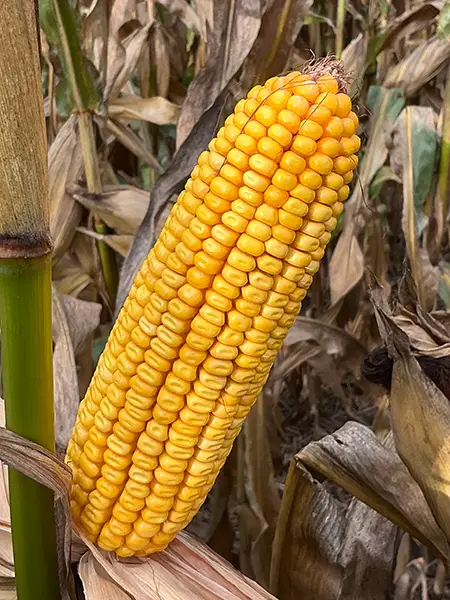
RK7688SSPRO is a new 110 RM SmartStax® PRO hybrid built for productive, high-management acres. It brings reliable emergence and early vigor, a taller plant type, strong stay-green, and the potential for large, girthy ears. It is especially suited to high- and medium-yield environments, fine soils, and selected corn-on-corn acres. Recommended population is 32,000–36,000 seeds per acre.
The 2026 field notes support this positioning. RK7688SSPRO repeatedly shows a tall, bulky plant type, typically with 16- to 18-row ears. Several observations highlight good emergence, a strong overall appearance, and large or girthy ears. In its best environments, it has visual appeal down the row.
The season also underscored the importance of field selection. A few locations noted late root lean, ear bounce, and some crown rot stress under the year’s challenging weather pattern. This aligns with its official drought-tolerance rating of 6: this is not a product to force onto marginal or moisture-limited acres. Its official tar-spot rating is 8 and southern-rust rating is 7, but fungicide response is also rated 8, providing a useful management tool where disease pressure develops.
Best fit: Productive, fertile acres with dependable moisture; a strong option for managed corn-on-corn acres.
Management focus: Keep it on good soils with dependable moisture, maintain fertility, use 32,000–36,000 population, and keep an eye on late-season root and disease pressure.
RK8616SSPRO — 113 RM
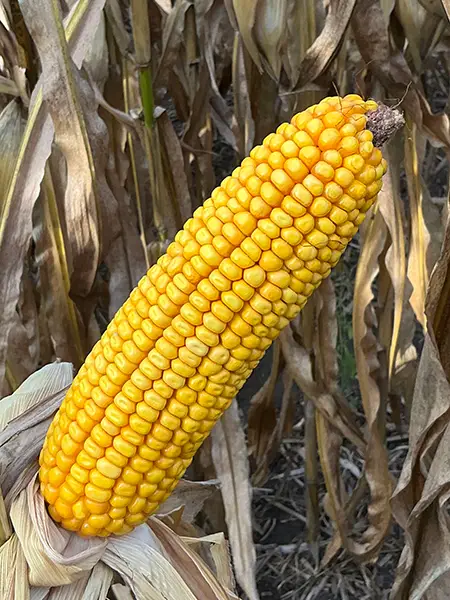
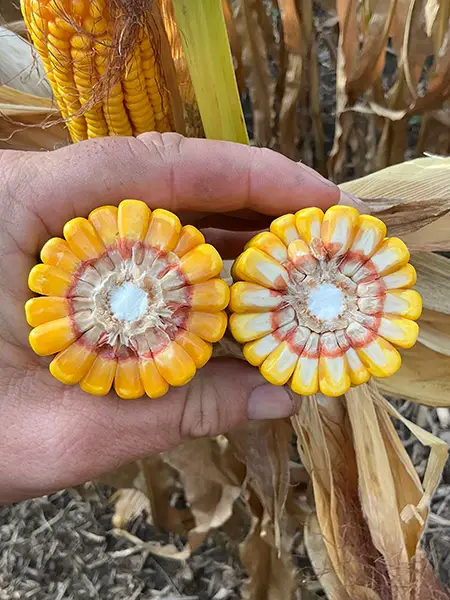
RK8616SSPRO is a new 113 RM SmartStax® PRO hybrid with standout yield potential, very good grain quality, and broad adaptation. In 2025 research, it averaged 255.9 bu/ac at 20.0% moisture across 17 locations, ranked third in its set, and recorded only 0.21% stalk lodging. It has a strong high-yield-environment rating of 9, a population-response rating of 9, and a strong fit for fine soils and corn-on-corn acres.
The 2026 notes repeatedly support its grain-quality and plant-appearance story. RK8616SSPRO is among the more consistently attractive products in the group, with good late-season canopy retention in many locations, strong grain quality, good ear set, and a generally uniform appearance. Notes commonly reflect 16- to 18-row ears, tighter husks in some locations, and good tip fill. Its semi-determinate ear type is noted, and a 32,000–36,000 range is recommended.
Some sites showed crown-root stress, occasional root lean, and some snap this year. Those observations were not consistent across all locations and should be viewed within the season’s difficult late-weather conditions. Its southern-rust rating of 9 is a major strength, while its tar-spot rating of 6 supports scouting and a timely fungicide plan on risk acres. Consider strong visual notes from locations where fungicide was used as evidence of good response to active management rather than an untreated disease-tolerance claim.
Best fit: Broad-acre high-yield placement, and select corn-on-corn fields.
Management focus: Use 32,000–36,000 population, with flexibility to moderate population where appropriate. Avoid high-pH acres, scout for tar spot, and prioritize a fungicide plan in disease-prone fields.
RK9601SSPRO — 116 RM
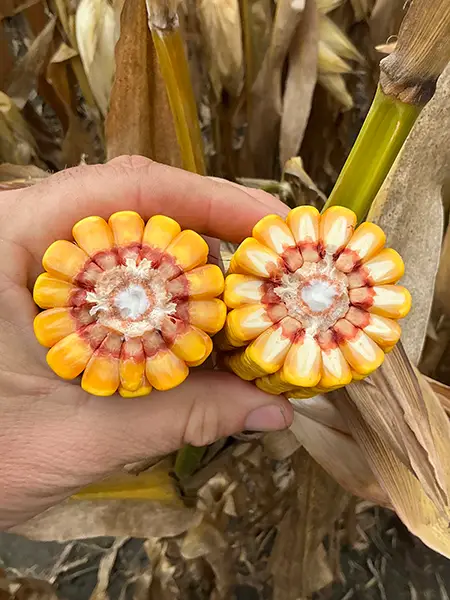
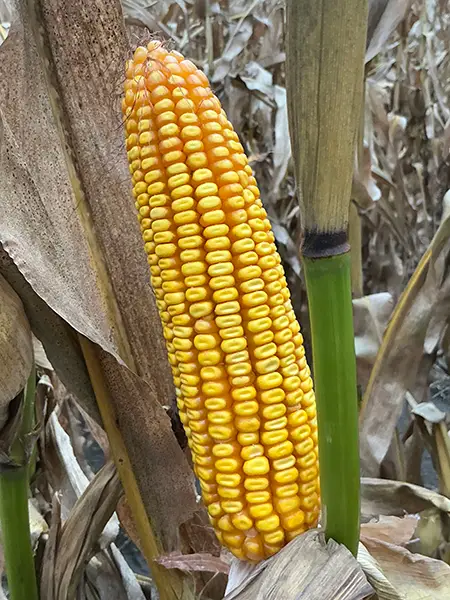
RK9601SSPRO is a new 116 RM SmartStax® PRO hybrid with excellent yield potential and grain-or-silage flexibility. It is a tall, wide-leafed, high-output product for full-season. In 2025 research, it averaged 257.5 bu/ac at 20.0% moisture across 16 locations and ranked second in its test set. It also recorded 57.5 lb/bu test weight, 0.30% stalk lodging, and 0.82% root lodging.
The recommended population range is 32,000–36,000 seeds per acre. The product has good emergence, vigor, stalks, roots, greensnap, drydown, test weight, and stay-green ratings, all at 8.
The 2026 observations show an attractive, substantial plant type with good grain quality and ear potential. In stronger environments, notes describe large, girthy ears, a more consistent ear set, and favorable husk cover. It also shows the plant stature expected from a full-season grain-or-silage option.
Some locations experienced root lean, variable root support, and late-season stalk concerns after the season shifted from stress to substantial late rainfall. This is an important management observation, but it should be balanced against the hybrid’s strong multi-location research performance and official 8 ratings for both stalks and roots. Tar spot is rated 6 and southern rust 7, while fungicide response is 8—making disease protection a logical tool where pressure is expected.
Best fit: High-yield, full-season grain or silage acres and select corn-on-corn fields.
Management focus: Use 32,000–36,000 population, keep it on favorable-pH ground, scout tar spot and southern rust, and protect its high yield potential with fungicide where field risk warrants it.
RK9601TRE — 116 RM
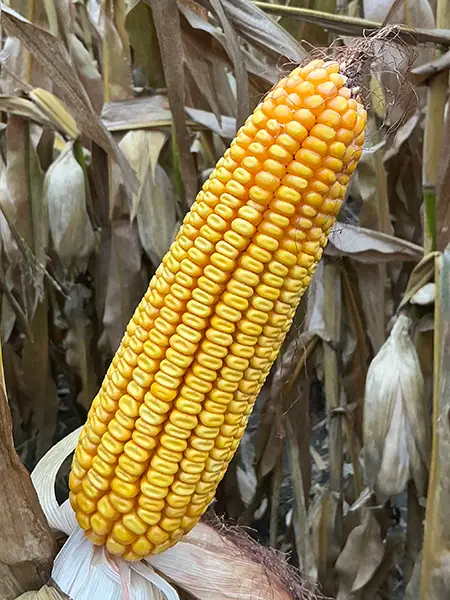
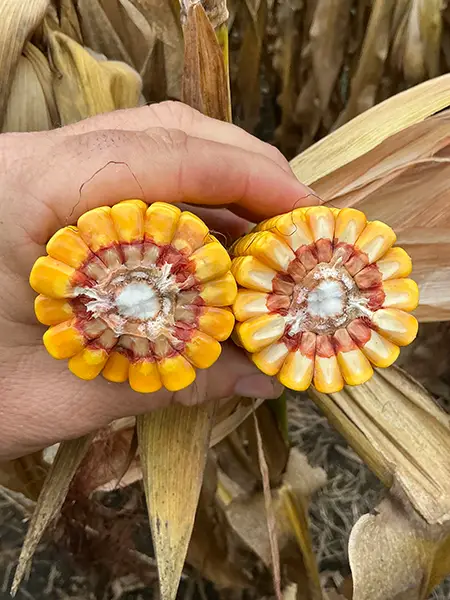
RK9601TRE brings the same high-yielding RK9601 genetic platform in a TRECEPTA® trait package. It is a full-season, 116 RM option for Zones 6–7, built for grain or silage use. In 2025 research, it averaged 255.5 bu/ac at 19.5% moisture across 17 locations and ranked fourth in its set. It produced a 56.6 lb/bu test weight, with low measured stalk lodging and no reported root lodging in that research set.
This hybrid fits high-yield environments particularly well, with a 9 rating in that category, and also carries 8 ratings for medium- and low-yield environments. It is best positioned on fine soils, favorable-pH ground, and rotated acres. Its corn-on-corn rating is 6, so rotation and residue management should be part of placement decisions. Recommended population is 32,000–36,000 seeds per acre.
2026 observations note consistent ear development, strong ear potential, and 18- to 20-row ears in some of the better environments. Several locations also note good row appearance and tighter husks. Under the most difficult late-season conditions, some fields show crown-root stress, ghosted plants, reduced stalk integrity, and more variable plant health. These are meaningful observations, but the weather pattern was unusually demanding, and the results varied by location. They should be used to direct field selection and harvest planning—not to overshadow the strong yield and agronomic foundation shown in multi-location research.
Best fit: Full-season, especially rotated acres with favorable pH, strong fertility, and good moisture-holding capacity.
Management focus: Use 32,000–36,000 population, favor rotated fields, avoid high-pH ground, monitor tar spot, and plan timely harvest when late-season conditions favor crown-root or stalk stress. Its fungicide-response rating of 8 provides another useful management lever on disease-prone fields.
Looking Ahead to 2027
The opportunity for 2027 is to match these high-yielding products to the acres where they can express their full potential. The 2026 season tested late-maturity corn with summer stress, disease pressure, and a sharp shift to wet conditions in many areas. Even with those challenges, the group demonstrated strong ear quality, grain quality, plant type, and yield potential.
Use these observations to strengthen placement, prioritize disease management where appropriate, and build
a harvest plan that protects performance through the finish.