RK4696SSPRO — 95 RM
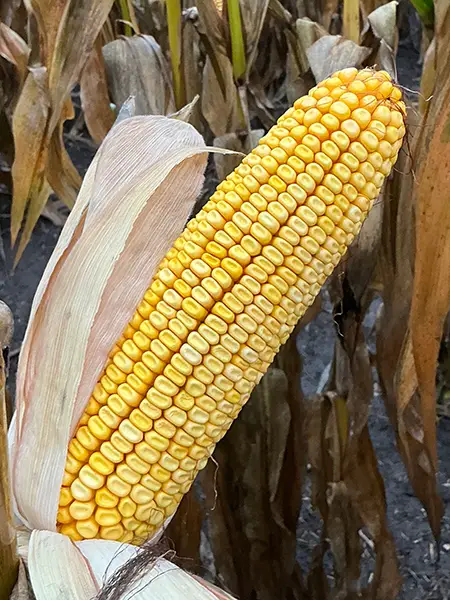
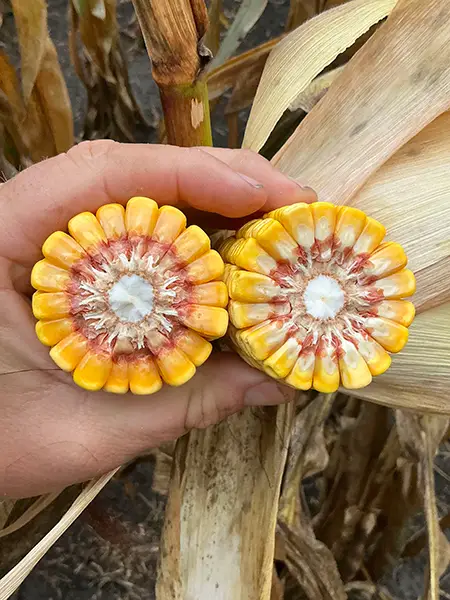
RK4696SSPRO is a new 95 RM SmartStax® PRO RIB Complete® corn blend with strong yield potential, good ear flex, and a balanced agronomic package. Stalks, roots, emergence, vigor, and drought tolerance are rated 8. Its strongest fit is productive acres, with high-yield environments rated 9 and fine soils rated 8. Corn-on-corn fit is rated 8, and it also offers grain-and-silage flexibility. Recommended population is 32,000–36,000 plants per acre.
The 2026 notes highlight a substantial plant with good ear-size potential. Several locations show large, girthy ears and good ear flex, with recorded kernel rows commonly ranging from 16 to 20. Observations include a sharp appearance under stress at Hankinson, ND, and a strong overall look at Olivia, MN. Plants often express a taller stature and higher ear placement than the medium-tall description might suggest, with some willowy appearance in certain environments.
Late-season response varied by location. Some sites show declining tops or reduced intactness, while
individual locations note some crown rot, causing some weaker stalks. These observations reinforce the value
of monitoring the taller plant through the finish rather than changing its placement based on isolated concerns.
Tar spot is rated 5 and southern rust 6, with fungicide response rated 8, supporting a timely disease-management plan on risk acres.
Best fit: Productive grain or silage acres, especially finer-textured soils, including select managed corn-on-corn fields.
Management focus: Use 32,000–36,000 plants per acre, plan tar spot management where risk is known, and monitor late-season stalk integrity and harvestability.
RK5652PCE / RK5652 — 96 RM
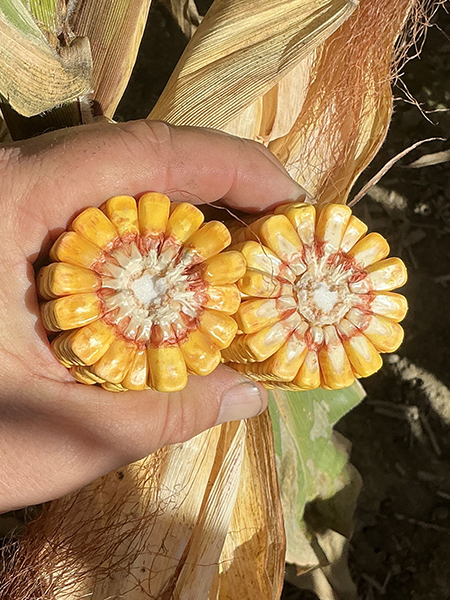
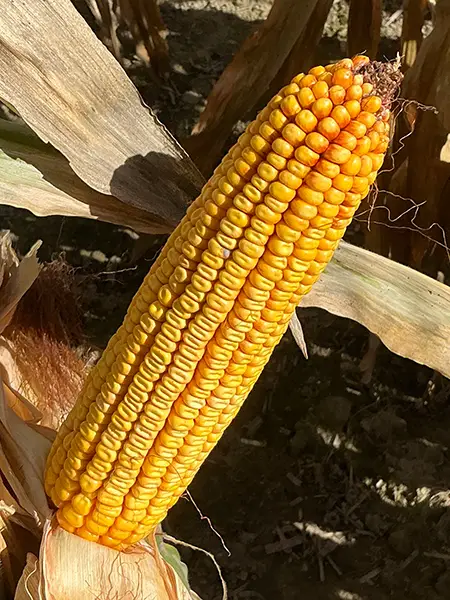
RK5652PCE and RK5652 bring excellent top-end yield potential and good ear flex to the 96 RM range, available as a PowerCore® Enlist® Refuge Advanced® hybrid or conventional hybrid. A moderate plant with lower ear placement supports population flexibility. High-yield environments are rated 9, fine soils 8, and Goss’s wilt tolerance 8. Greensnap tolerance is a strength at 9. Recommended population is 30,000–34,000 plants per acre.
The 2026 observations support the ear-flex and attractive-plant story, particularly for RK5652PCE. Several locations note favorable plant height, lower ear placement, large or girthy ears, and good late-season appearance. Hayfield, MN, has large ears and a decent overall plant look, while Olivia, MN, and Columbus, WI, have strong visual notes.
Ear size varied across environments, with some tip-back, zippering, or shorter plants under stress.
Establishment was another useful lesson from this season. Emergence is rated 7 for both offerings, supporting attention to seedbed conditions. Southern rust is rated 6 and fungicide response 8, while the high-pH rating of
5 reinforces favorable-pH placement.
Best fit: Productive rotated grain or silage acres, especially finer-textured soils with favorable pH, where either
a PowerCore® Enlist® or conventional offering fits the operation.
Management focus: Use 30,000–34,000 plants per acre, plant into a fit seedbed, verify establishment, and match population to field potential. Scout disease and monitor ear finish and late-season plant condition.
RK5670VT4PRO — 99 RM
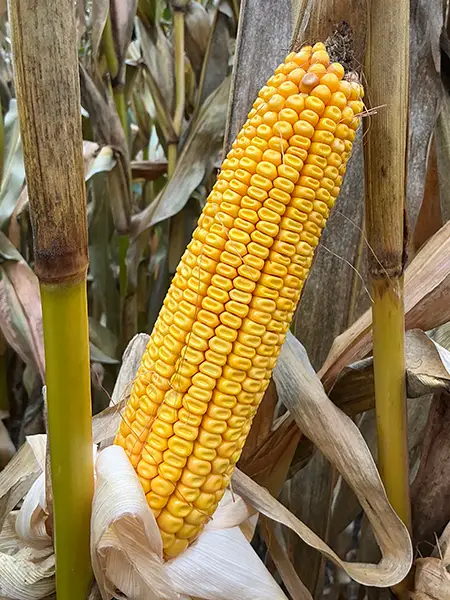
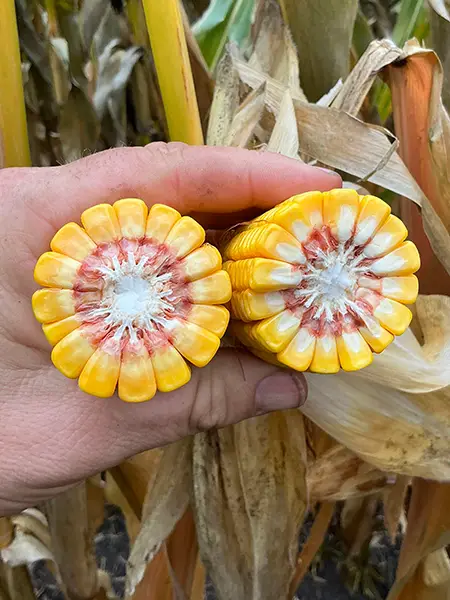
RK5670VT4PRO is a new 99 RM VT4PRO® RIB Complete® corn blend with strong yield potential, broad east-to-west adaptability, and a substantial plant type. High-, medium-, and low-yield environments are all rated 8, supporting flexible placement. Emergence, vigor, stalks, and drydown are rated 8, with corn-on-corn fit also rated 8. Southern rust tolerance is a notable strength at 9. Recommended population is 30,000–34,000 plants per acre.
The 2026 notes repeatedly describe a tall plant with higher ear placement and commonly 16-row ears. Several locations show good ear size or consistent ear development, including Hayfield, MN, while Grafton, IA, highlights a sharp appearance in a challenging location. At some stress locations, the product maintained ear development but showed smaller or shallower kernels, illustrating how ear expression changed with the environment.
The season reinforced the importance of managing late-season plant health and harvestability. Some locations show root leaners, declining tops, weaker late stalk strength. These observations should be balanced against the broader product profile and differences among locations. Tar spot and stay-green are rated 6, with fungicide response rated 8, supporting a deliberate disease-management plan where pressure warrants protection.
Best fit: Managed grain or silage acres across a range of yield environments, especially finer-textured soils and select corn-on-corn fields within its adaptation zone.
Management focus: Use 30,000–34,000 plants per acre, favor favorable-pH fields, scout tar spot, and monitor roots, stalks, and ear retention. Maintain a timely harvest plan where late-season condition begins to decline.
RK5699TRE — 100 RM
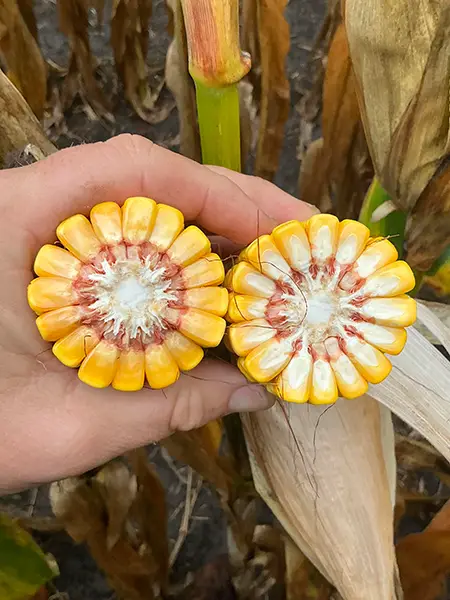
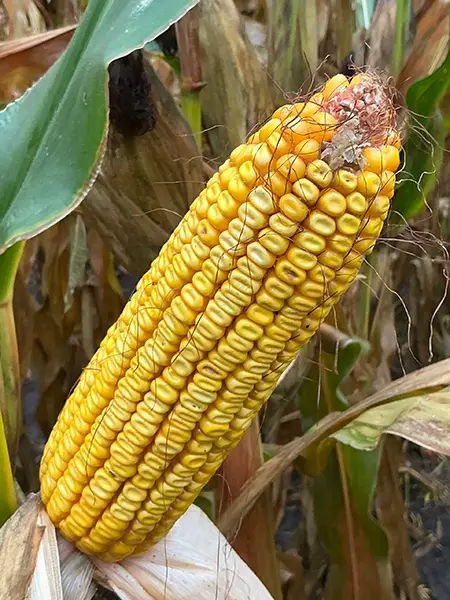
RK5699TRE is a new 100 RM Trecepta® RIB Complete® corn blend with high yield potential, large, girthy ears, and useful ear flex. In 2025 research, it averaged 238.8 bu/ac at 19.9% moisture across 24 locations and ranked first in its set, with low measured stalk and root lodging. High-yield environments are rated 9, while coarse and fine soils are both rated 8. Recommended population is 30,000–34,000 plants per acre.
The 2026 observations support its big-ear profile, with multiple notes on girthy or blocky ears and large kernels. Several locations show consistent ear development or a favorable overall look. Bryant, SD, highlights very good late health, large blocky ears, and lower ear placement. Kernel rows were frequently 16 to 18, with variation in ear size and expression across environments.
Late-season plant integrity is an important management consideration. Some locations show crown rot, declining stalk strength, or root leaning, while others maintain better health and held stalks. These observations add perspective to placement and harvest planning without replacing the strong multi-location research foundation. Tar spot is rated 5 and fungicide response 8, supporting timely leaf-disease management on risk acres, alongside continued checks of crown and stalk condition.
Best fit: Productive rotated acres across coarse and fine soils, especially favorable-pH fields with sound fertility and a practical harvest plan.
Management focus: Use 30,000–34,000 plants per acre, prioritize rotated and favorable-pH fields, plan tar spot management where needed, and move fields forward in the harvest order if crown or stalk integrity declines.
Looking Ahead to 2027
These four product options give growers distinct choices for building a balanced lineup in the 95–100 RM range. The opportunity is to combine the product profile and research foundation with this season’s field observations to place each hybrid where it can express its potential.
Use the 2026 learnings to refine population, target disease management, and plan harvest around field conditions. One difficult season adds perspective—it does not replace the broader placement picture.