Ear Molds in Corn: Identify the Risk, Protect Grain Quality
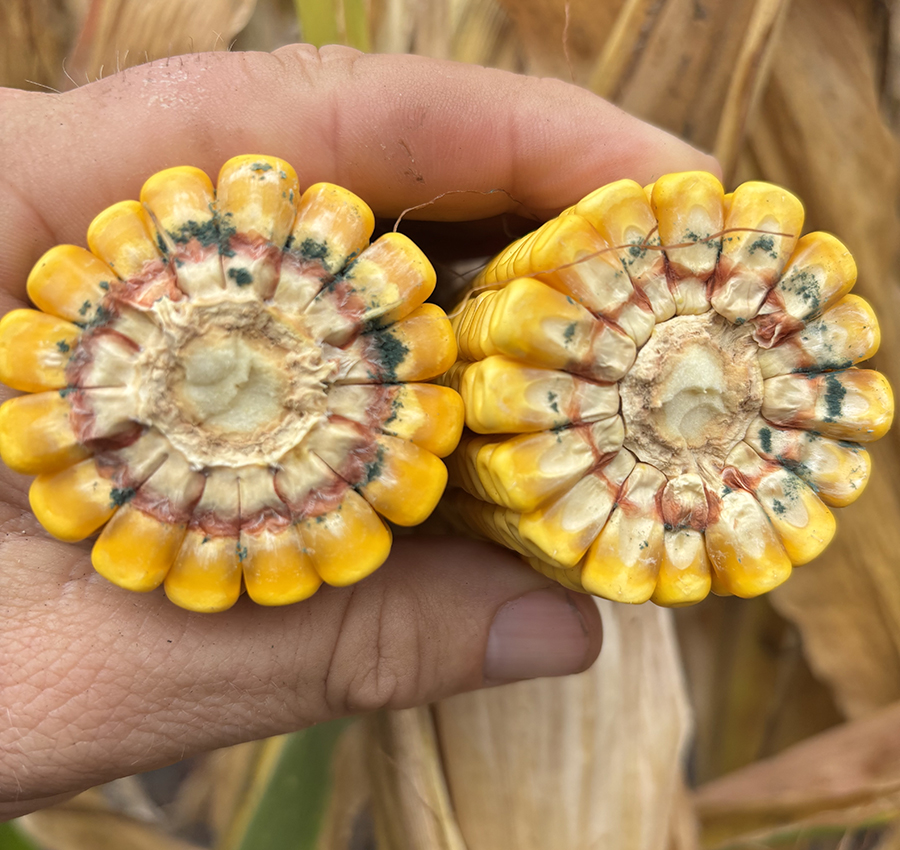
A few moldy ears can be easy to dismiss. They should not be.
Ear-rotting fungi can reduce test weight, create harvest and storage challenges, and—depending on the organism—produce mycotoxins that affect grain marketing and livestock feed use. The practical question is not simply, “Is there mold?” It is: “Which ear mold is present, how widespread is it, and how should harvest and storage change?”
Late-season weather, hybrid response, residue, insect injury, and crop stress all influence ear-mold risk. There is no curative treatment once mold is present at this stage. The immediate work is to scout accurately, prioritize affected fields, segregate suspect grain, dry it promptly, and test representative grain when toxin-producing ear rots are possible.
Ear mold | Field clues | Conditions and entry points | Primary toxin concern |
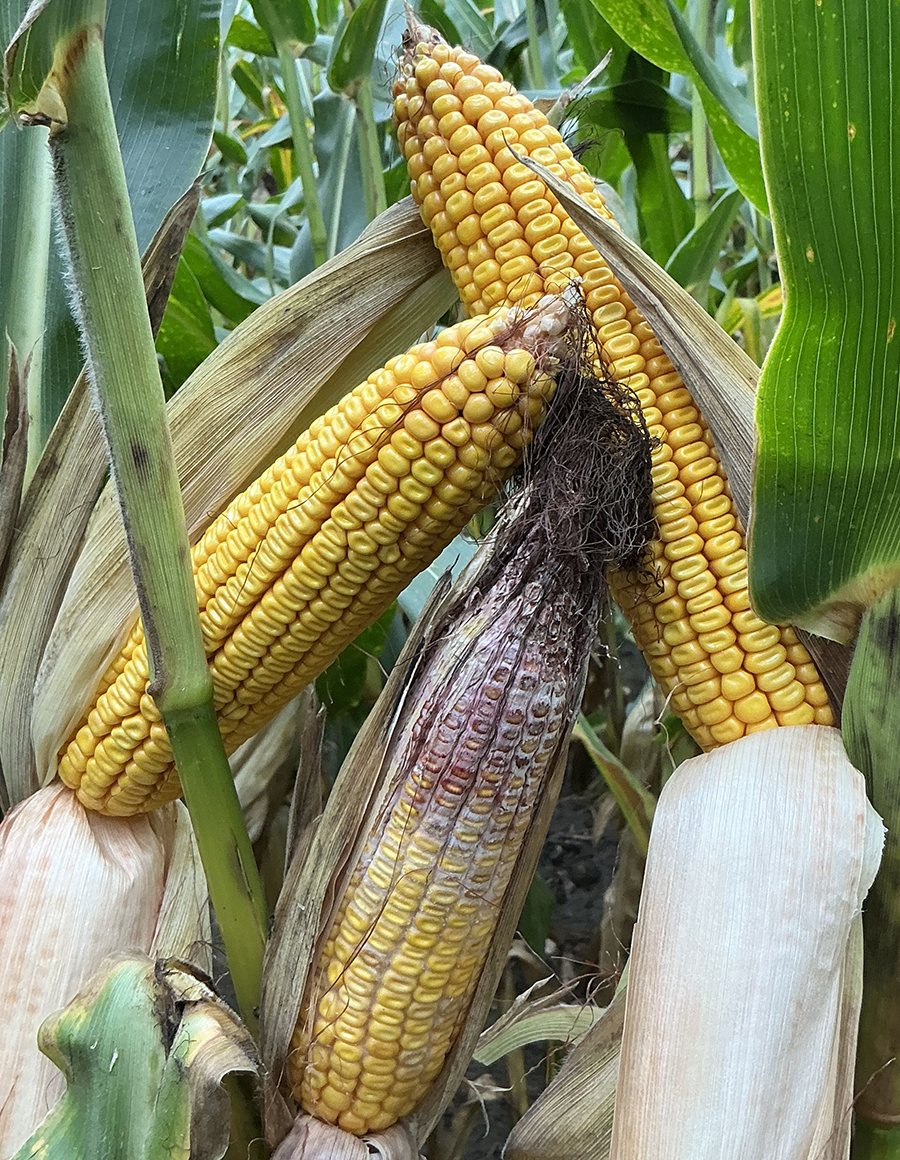
Gibberella ear | Pink to red mold, commonly beginning at the ear tip and moving toward the base; husks may stick tightly to severely affected ears | Cool, wet conditions during early silking; inoculum survives in corn and small-grain residue. Risk is often greater in continuous corn or where Fusarium head blight has occurred in wheat | DON (vomitoxin) and zearalenone; particularly important for swine |
Fusarium ear rot | Scattered or patchy tan, brown, purple, white, or pink kernels; white “starburst” streaks can radiate from the silk attachment point | Warm conditions, especially with ear injury from insects, birds, hail, or other damage | Fumonisins; important concern for horses and swine |
Diplodia ear rot (Stenocarpella spp.) | Dense white to gray mold often begins at the ear base and moves toward the tip; black, embedded pycnidia may occur on kernels, cob, husks, or shank | Dry weather before silking followed by wet conditions; corn residue, continuous corn, and susceptible hybrids increase risk | No mycotoxins currently associated with Diplodia ear rot in the United States and Canada, but grain quality and test weight can suffer |
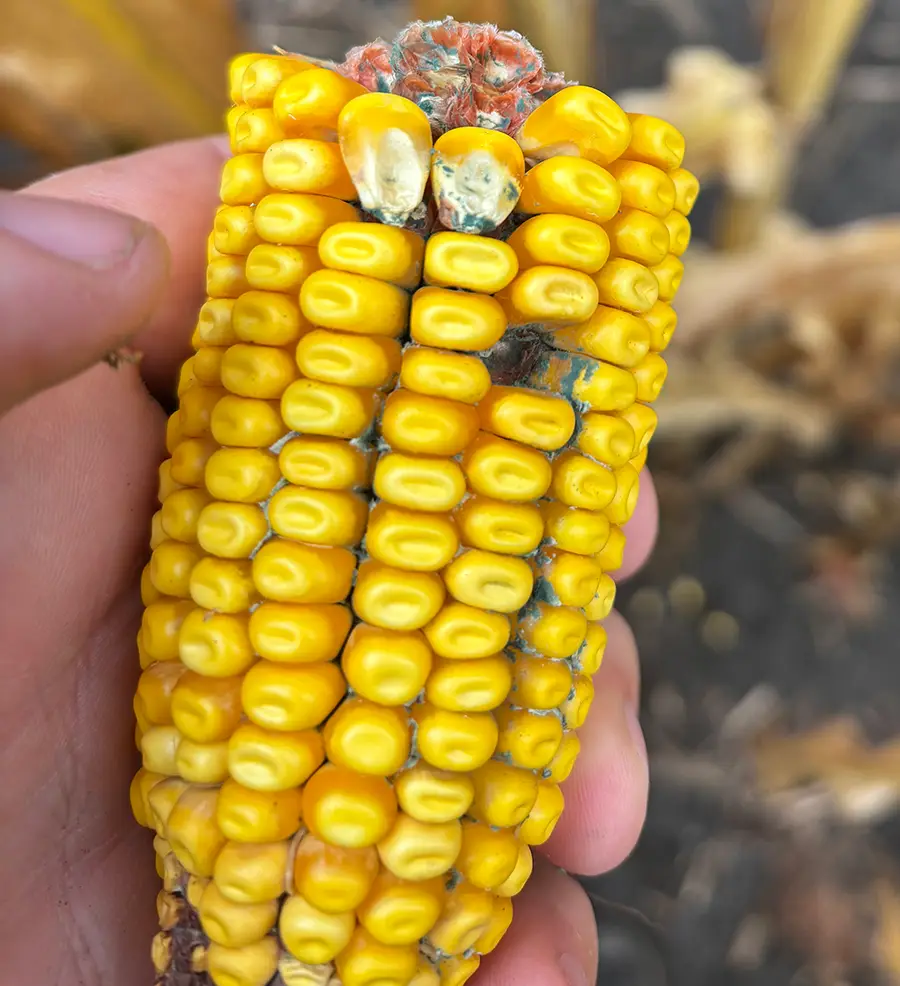
Aspergillus ear rot (Aspergillus flavus) | Powdery olive-green mold, often at the tip or near an injury site | Hot, dry stress; insect, bird, hail, or other ear injury can increase risk | Aflatoxin |
Know What You Are Seeing
Peel husks back completely. Mold color, where it begins on the ear, and whether it occurs in patches or as a dense mat are useful field clues. Field diagnosis is a screening tool—not proof of a particular mycotoxin level.
Why It Shows Up
Ear molds begin with a susceptible ear and a favorable infection window. Spores can come from crop residue, soil, or wind. They infect through silks, the ear shank, or wounds. Insect feeding, bird damage, hail, and mechanical injury provide openings for pathogens and often worsen a moderate mold problem.
Weather drives which mold gains the advantage:
- Cool, humid weather around silking favors Gibberella.
- Warm conditions and ear injury favor Fusarium.
- A dry period before silking followed by wet conditions afterward favors Diplodia.
- Hot, dry stress—especially with damaged ears—favors Aspergillus and aflatoxin risk.
Continuous corn, surface residue, uneven stress, nutrient limitations, drainage issues, and delayed harvest can add to risk. Mold development and toxin accumulation can continue when grain remains wet in the field or in storage. Drying stops additional fungal activity; it does not remove toxins already present.
What To Do Now
Put affected fields first
Harvest fields with significant ear mold early. Waiting for additional field drydown can increase mold severity, toxin risk, dropped ears, and quality loss. In a high-risk field, taking corn a few points wetter and drying it promptly is often the lower-risk decision.
Set the combine to remove poor material
Work with the operator to minimize kernel breakage and use settings that remove lightweight, damaged kernels and fines where practical. Those fractions may carry disproportionately more mold and mycotoxin. Balance cleaning against excessive grain loss and monitor the sample at the combine and delivery point.
Dry and cool immediately
Dry affected grain to below 15% moisture as soon as possible to limit further fungal growth and toxin production.
For longer-term storage, dry to 13% moisture or less and cool grain; Crop Protection Network identifies 30°F as a long-term storage target for contaminated grain when feasible.
Avoid slow handling of warm, wet grain. Monitor bins closely for crusting, heating, odor, insects,
or worsening mold.
Remember: heating, freezing, and drying do not destroy mycotoxins that are already in the grain.
Take Home
Ear mold is a harvest-management issue first and a next-season placement issue second. Identify the pattern, scout enough ears to understand the field, harvest affected acres early, keep suspect grain separate, dry and cool it quickly, and test grain whenever toxin-producing molds are possible. A clean, representative sample and a deliberate harvest plan are far more valuable than guessing from mold color alone.
References
- Crop Protection Network. 2024. An Overview of Ear Rots (CPN-2001, updated).
https://cropprotectionnetwork.org/publications/an-overview-of-ear-rots - Smith, D. L., and Goeser, J. 2019. Corn Stalk Rots and Ear Rots: A Double Whammy for Wisconsin Corn Farmers Again This Year. University of Wisconsin–Madison Integrated Pest and Crop Management.
https://ipcm.wisc.edu/blog/2019/10/corn-stalk-rots-and-ear-rots-a-double-whammy-for-wisconsin-corn-farmers-again-this-year/ - Murillo-Williams, A., Collins, A., and Esker, P. 2025. Corn Ear Rots and Mycotoxins. Penn State Extension.
https://extension.psu.edu/corn-ear-rots-and-mycotoxins - Ohio State University Extension. Corn Ear Rots: Identification, Quantification and Testing for Mycotoxins.
https://agcrops.osu.edu/newsletter/corn-newsletter/2016-32/corn-ear-rots-identification-quantification-and-testing