2026 Midseason Crop Outlook: Getting In Your Fields Before Harvest
Season 2, Episode 4
2026 Mideason Crop Outlook: Getting In Your Fields Before Harvest
The growing season is entering one of its most important stages and the decisions we make now can have a lasting impact come harvest.
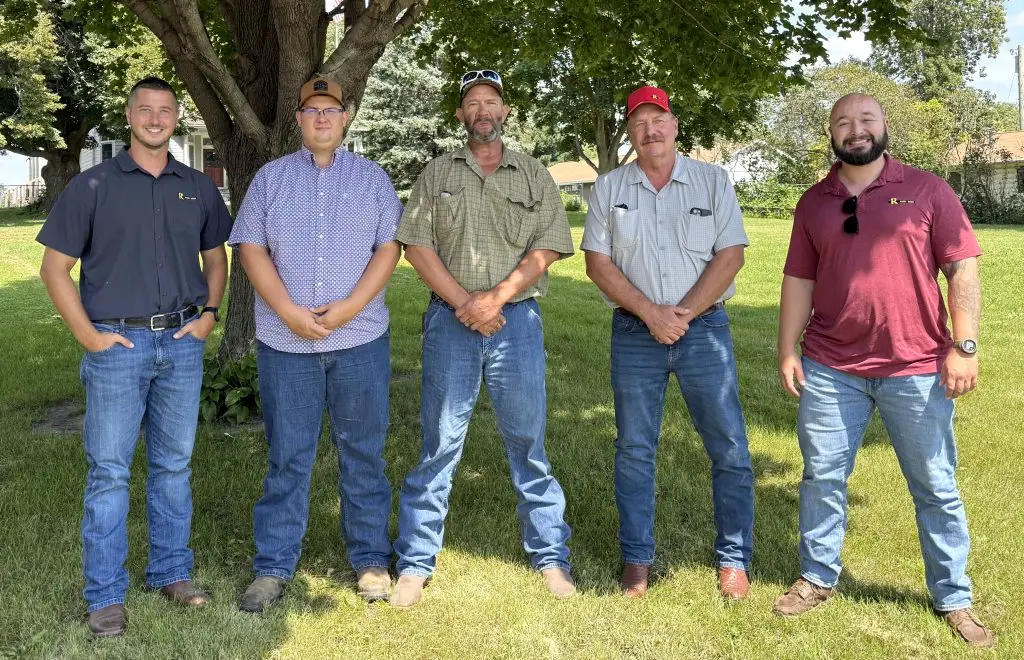
In this episode, Max is joined by Karl Bobholz, our Corn Product Manager, and Jim Torkelson, our Western Sales Lead, for a midseason report. Together, they discuss how this year’s planting conditions, weather patterns, and growing environment are shaping crops across the Midwest.
Fast Planting—Except Michigan!
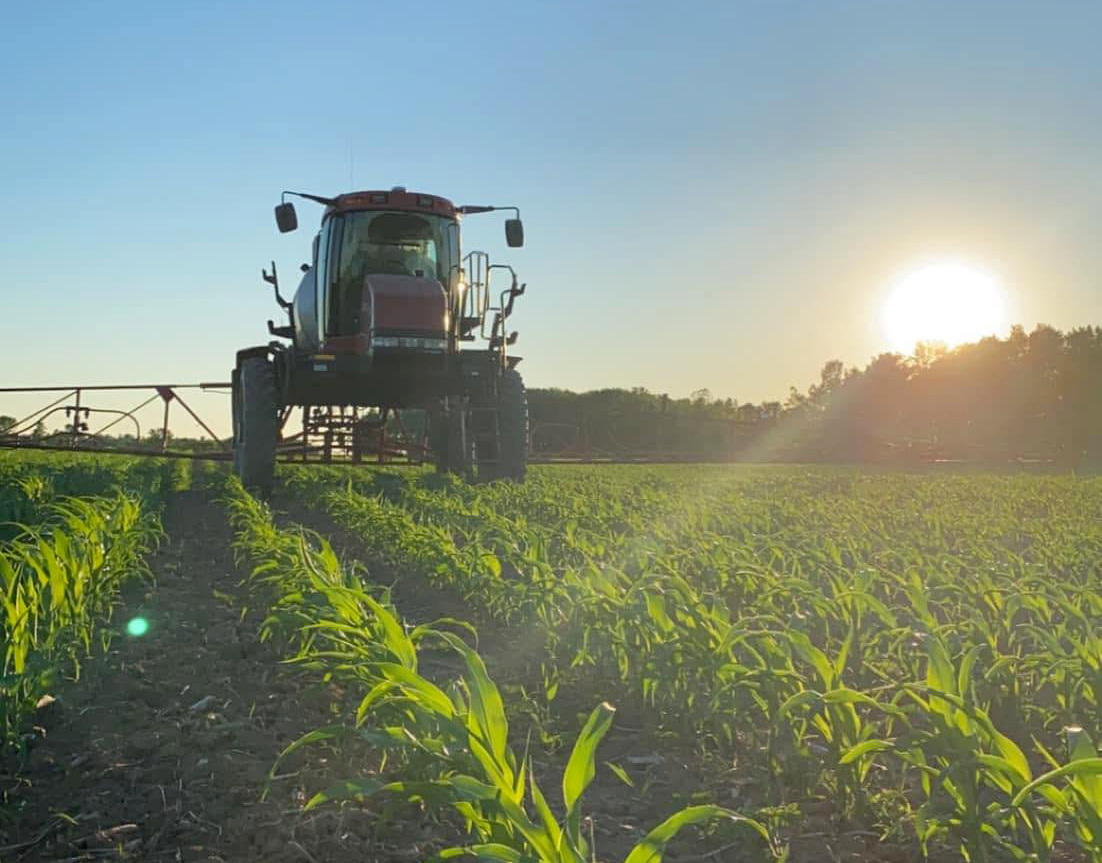
Across the Midwest, planting was off to a fast start thanks to a stretch of great spring weather and big equipment getting the job done quickly. Every state was ahead of schedule except Michigan, which lagged slightly behind. Both corn and beans hit the ground in record time, but simultaneous planting of beans and corn might have led to some replanting in areas with cool, wet soil.
Weather: A Game of Extremes
Spring brought a mix of dry and wet conditions, and the weather continued to play a major role as the season progressed. Corn crops saw stretches of cool and hot weather, uneven emergence due to dry soils, and rapid vegetative growth outpacing root development. Recent heavy rains in some regions have led to further variability, with some fields getting up to seven inches of rain in a single night.
Spring brought a mix of dry and wet conditions, and the weather continued to play a major role as the season progressed.
Crop Progress and Challenges
- Corn: Generally looking good from the road, but nitrogen deficiency and uneven stands are showing up inside the fields. Fast mineralization this year means nutrients were released quickly, but heavy rains have moved them deeper into the soil, challenging root systems to catch up.
- Soybeans: Beans prefer warmer soils at planting. Cool temperatures and crusted soils led to some replanting, but beans are known to compensate for early setbacks better than corn.
Disease Watch
- Southern Rust: Not expected to be a major problem this year due to lack of inoculum and prevailing wind patterns.
- Tar Spot & Northern Leaf Blight: Present at low levels, especially in areas with irrigation or recent hail damage. Hot weather has slowed disease development, but vigilance is key.
- White Mold & SDS in Beans: White mold risk is up in fields with dense canopies and ample moisture. Sudden Death Syndrome (SDS) could appear in compacted, wet fields later in the season.
Insect activity has been relatively quiet, but oddities like slugs and swarms of June bugs have popped up in isolated areas.
Pest Pressure
Insect activity has been relatively quiet, but oddities like slugs and swarms of June bugs have popped up in isolated areas. No-till fields have seen more slug activity, while grub damage has drawn attention in some cornfields.
Actionable Insights for Growers
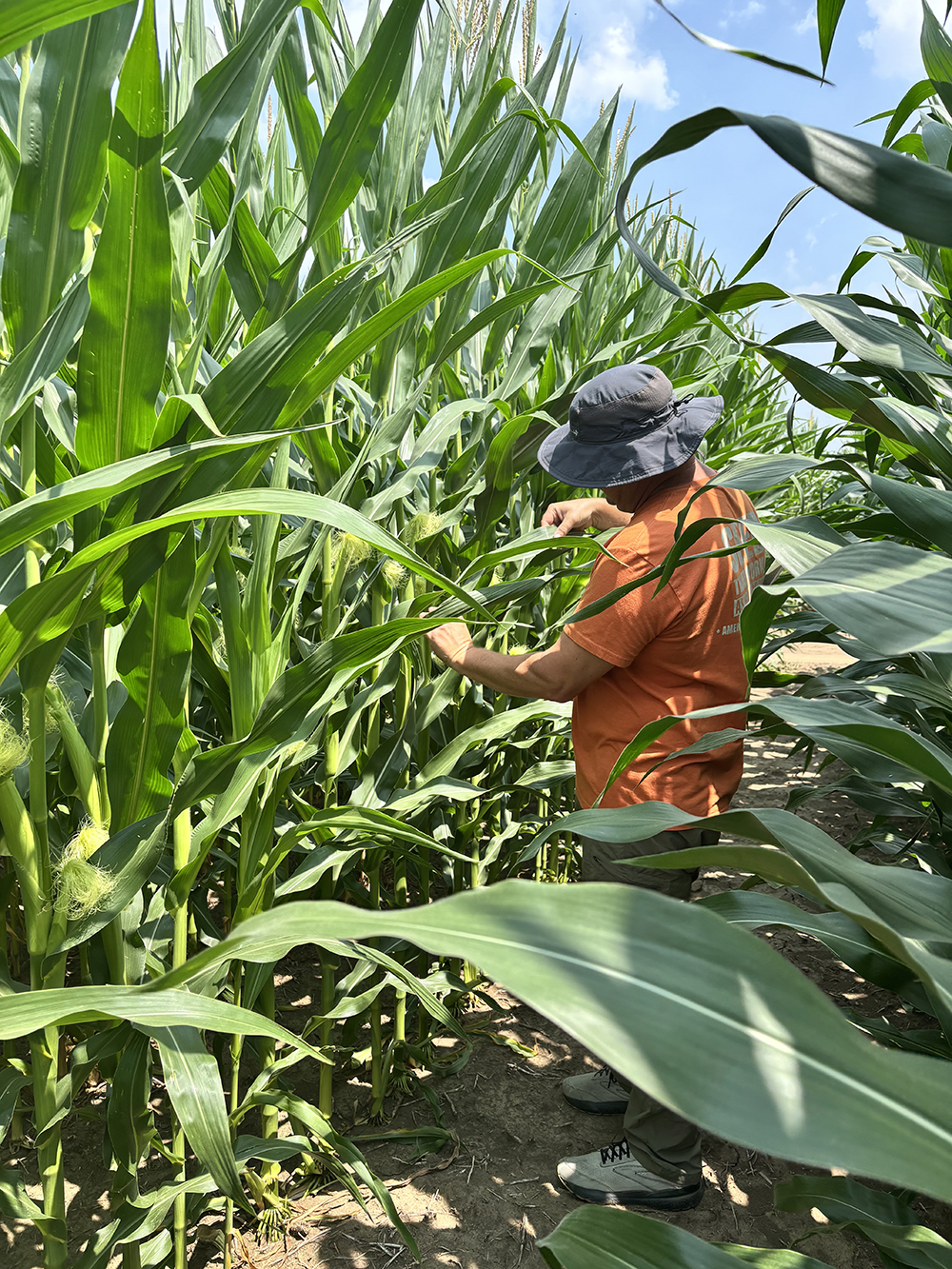
- Scout, Scout, Scout: Walking your fields is the best way to spot early issues and separate top performers from the rest. Look for nutrient deficiencies, disease symptoms, and pest pressures.
- Targeted Treatments: Apply fungicides only where economically justified—focus on diseases above the ear leaf and fields with hail or wind damage.
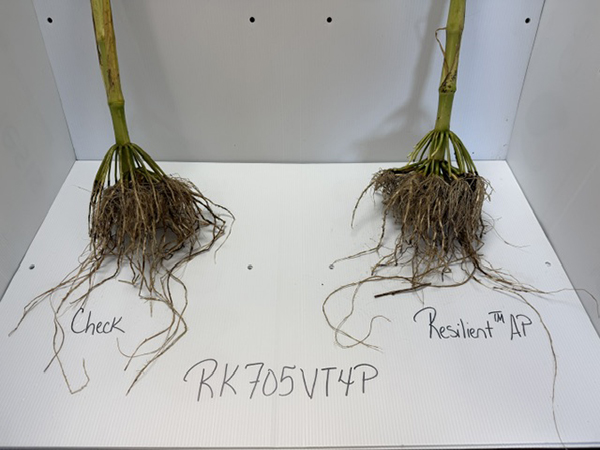
- Planter Innovations: New biological seed treatments like ResilientTM AP offer added protection against crown rots and can enhance emergence and vigor.
- Harvest Planning: Prioritize fields showing crown rot or white mold for early or late harvest, respectively, to preserve yield and prevent future problems.
Takeaways from the Field
Jim reminds growers: “You can’t fix a nitrogen deficiency with an overtop application if it’s a root problem. Economics matter—What’s my ROI on this?” Karl adds: “Growers are out there scouting the fields, understanding what the corn, the soybeans are telling them and managing to that – [those] are the ones that are separating themselves from being just good.”
You can’t fix a nitrogen deficiency with an overtop application if it’s a root problem...
Final Word
From nutrient availability and disease pressure to crop scouting and insect activity, Karl and Jim shared what they’re seeing in the field and what growers should be paying attention to as harvest approaches. Along the way, they shared practical recommendations for prioritizing field visits, evaluating risk, and making management choices that can maximize your return on investment. One thing is for sure: a successful crop isn’t just about the work you do from the tractor seat. It’s about walking your fields, understanding what your crop is telling you, and making informed decisions for a strong yield.
Thanks for reading! Tune in to the full episode, Renk Seeds of Innovation to hear the full update—and keep walking those fields!
Subscribe to the Renk Seeds of Innovation podcast and follow along as we celebrate the people in agriculture. You can find us on one of our social media channels: FB, Insta, X or LinkedIn. And, listen to the full episode on whichever streaming platform you prefer.
A Generational Legacy: The Johaneks Balance Evolving Tech & Grounded Family Values
Season 2, Episode 3
A Generational Legacy: The Johaneks Balance Evolving Tech and Grounded Family Values
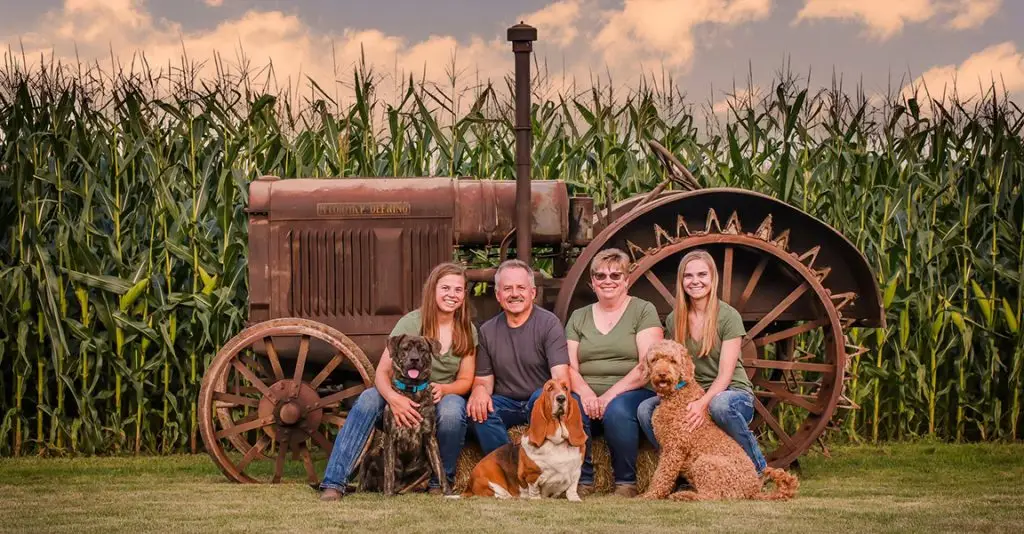
For more than a century, the Johanek family has owned and operated a dairy near Green Bay, Wisconsin. They have grown from a small 50-cow dairy into a 500-cow operation managing nearly 2,000 acres, all while building a trusted reputation as longtime Renk Seed dealers and continuing a family legacy largely passed down through the women of the family. In this episode of Renk Seeds of Innovation podcast, Max sits down with father-daughter duo Mark and Alyssa Johanek to discuss the realities of multi-generational farming, balancing tradition with innovation, and preparing the next generation to lead.
What makes their story compelling isn’t just their longevity, but how they’re redefining what it means to be a modern farm family.
A Farm Rooted in History
Mark and Alyssa Johanek represent two generations working side by side. Mark and his daughters, Alyssa and Ariel, are taking on different roles that keep the wheels turning.
Alyssa grew up on the farm but never felt pressured to stay. Her passion for animals and machinery drew her back, and she’s now taken over much of the herd management and crop spraying, bringing new energy and fresh ideas to the operation. “It’s a lifestyle,” she says, describing how her responsibilities have grown over time.
It’s a lifestyle.
Tradition Meets Technology
Like many family farms, the Johaneks have had to adapt to changing times. What sets them apart is how they’ve embraced innovation without losing sight of their roots. Over the past few years, Alyssa has introduced GPS technology to their equipment, improving efficiency and reducing fatigue during long planting seasons. But the real game-changer has been the farm’s adoption of an activity monitoring system for their cows—a tiny bolus that tracks each cow’s health, temperature, and movement in real time.
It’s just another tool in the toolbox.
This tech allows the family to spot issues early, improve breeding outcomes, and make better management decisions. “It’s just another tool in the toolbox,” says Alyssa, emphasizing that while technology helps, it never replaces the hands-on knowledge passed down through generations.
Passing the Torch
One of the most insightful moments is the discussion of generational transition—a challenge for many farms today. Mark recalls starting with 50 cows in a stanchion barn, growing steadily over the years, and facing tough choices about land and labor. Mark is beginning to step back, giving Alyssa and Ariel more leadership in the operation. “I went through enough problems running my life while getting a larger land base. Now that’s there for them.”
Alyssa, for her part, is eager to continue the legacy, hoping to build a new barn and eventually pass the farm on to her children. “We’ve made it six generations. I’d like to give my kids that opportunity in the future.”
We’ve made it six generations. I’d like to give my kids that opportunity in the future.
The Power of Community
The Johaneks’ story is also a testament to the strength of rural communities. Whether it’s hosting Breakfast on the Farm events for thousands of visitors or volunteering with local fire and ambulance services, they’re committed to bridging the gap between farm and city. As fewer Americans grow up on farms, these connections—and the willingness to educate—are more important than ever.
Looking Ahead
When asked about the future, both Mark and Alyssa see continued evolution. Robotic dairies and smarter equipment are all on the horizon. But the core values remain the same: hard work, adaptability, and a deep respect for the land and animals.
Their advice for the next generation? Get involved, find what you love, and don’t be afraid to bring new ideas to the table. Because on this Wisconsin dairy farm, innovation is just another word for family tradition.
Want more stories about the innovative families shaping the future of agriculture? Subscribe to the Renk Seeds of Innovation podcast and follow along as we celebrate the people in agriculture.
You can find us on one of our social media channels: FB, Insta, X or LinkedIn. And, listen to the full episode on whichever streaming platform you prefer.
Drone Application in Agriculture: Where Timing, Efficiency, and Opportunity Meet
Season 2, Episode 2
Drone Application in Agriculture: Where Timing, Efficiency, and Opportunity Meet
Drone technology is quickly becoming a bigger part of agriculture, but its real value comes down to how it performs in the field.
In this episode of Renk Seeds of Innovation, Max sits down with farmers and drone users Ryan and Matt, along with drone application business owner and operator Michelle, to discuss what drone application looks like in practice. From getting started and navigating the learning curve, to managing acres and building out service-based operations, they share firsthand experiences using drones across different setups.
As the conversation unfolds, they highlight where drones are creating real advantages, especially when it comes to timing, flexibility, and efficiency during critical application windows. At the same time, they also touch on the realities of the technology, including limitations, logistics, and the details that go into doing the job right.
What Are Drones Doing on Farms?
Drones are changing the way farmers care for their crops. Instead of relying only on big machines or manual labor, drones can spray fields, monitor plant health, and even help plant cover crops—all with increased precision and flexibility.
“Aerial is going to be your best coverage in making sure you get that propwash and get everything pushed down into the canopy. And, really get that dispersion of the product” professes Michelle Bork, Renk Seed District Sales Manager and Drone Application Specialist.
Aerial is going to be your best coverage...
How Drones Make a Difference
- Efficient Spraying: Drones can quickly cover fields, reaching areas that are hard for tractors, helicopters or planes to access.
- Flexible Applications: Weather not cooperating? Drones can be deployed on short notice, making them a handy backup.
- Data Collection: With cameras and sensors, drones provide up-to-date information about crop health.
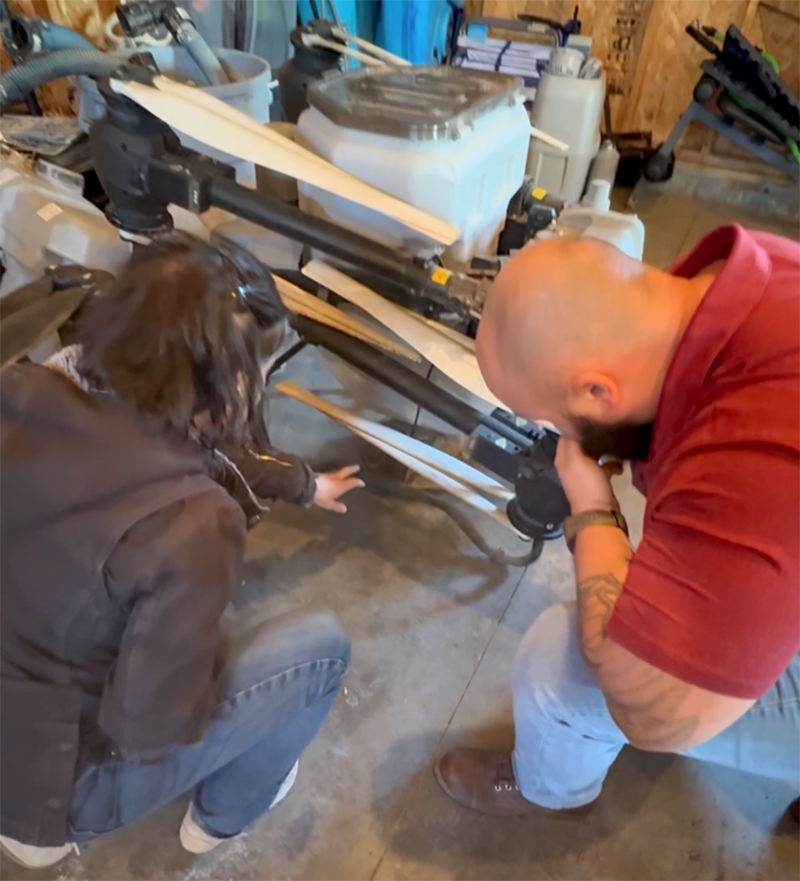
“The biggest efficiencies we’ve gained is just the timing.” Matt Hatcher, Terraplex Great River owner continues to explain, “[We’re] able to get in when we want to do it and be the most effective with our application.”
[We’re] able to get in when we want to do it and be the most effective with our application.
Getting Started
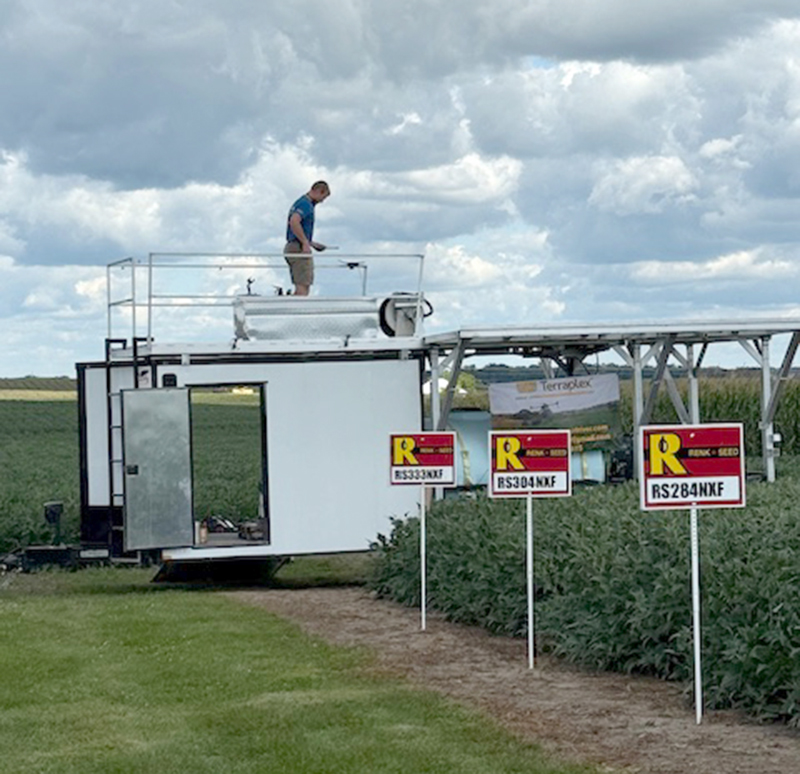
Starting with drones might seem overwhelming, but many farmers share that it’s easier than it looks. Michelle’s family bought their first drone at a farm show, and now they operate a whole fleet! Ryan and Matt followed an operator around their own operation the first year and then decided to try their hand at it. Now, Matt runs a Terraplex dealership for eastern Iowa that is focused on both sales and service.
Ryan Oberbroeckling shares how their drone involvement has evolved, “At first, just buying the drones, doing the application yourself. And then we evolved a couple of years later.” He continues, “Terraplex asked us if we wanted to be the eastern side of Iowa, the sales and service, so we agreed to that.”
Tips from the Field
- Check local regulations, especially near airports
- Network with other farmers when flying drones on their acres to share tips
- Start small and grow your fleet as you gain confidence
Looking Ahead
Drones are becoming more advanced every year, with features like heavier payloads and more precise application. While challenges remain, such as weather and legal restrictions, the benefits are clear.
There are opportunities out there beyond just the row crop applications of the drones.
“There is, also, opportunity from a custom applicator side.” Matt Hatcher goes on to say, “There are opportunities out there beyond just the row crop applications of the drones.”
Already in the drone space? Share with us your story. Ready to see how drones can help your farm grow? Join the movement and explore what’s possible!
Thanks to Ryan Oberbroeckling, Matt Hactcher, and Michelle Bork for sharing their expertise. Catch the full conversation on the Renk Seeds of Innovation Podcast anywhere you listen to podcasts.
Alfalfa Winter Kill & Injury: What to Check and How to Evaluate Your Stand
Season 2, Episode 1
Alfalfa Winterkill & Injury: What to Check and How to Evaluate Your Stand
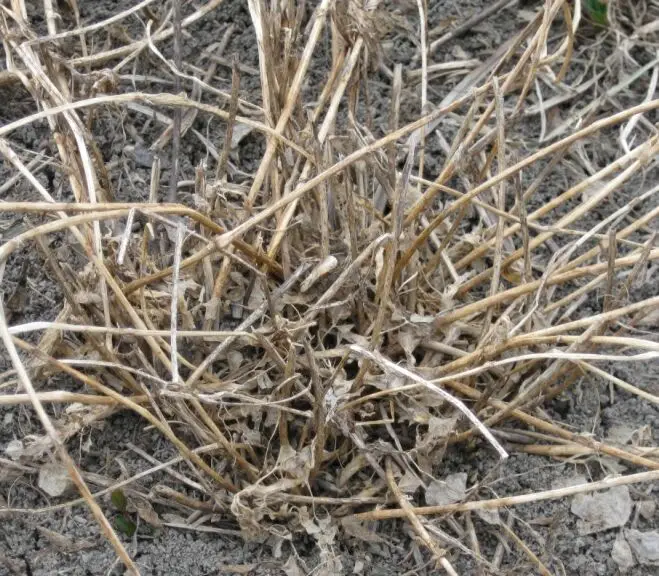
Winter can take a toll on alfalfa, and early spring is when the damage starts to show.
In this episode of the Renk Seeds of Innovation podcast, Max is joined by Alex Renk and Bob Wilms to talk through the difference between winterkill and winter injury; what causes each, and what growers should watch for as fields begin to green up.
They cover the role of snow cover, dormancy, ice sheeting, and heaving, along with how to evaluate root and crown health, assess shoot counts, and decide whether a stand is worth keeping, rotating, or managing another way.
The conversation also touches on alfalfa’s role in dairy systems, variety considerations, and the management decisions that can help protect stand longevity from one season to the next.
If you’re assessing alfalfa this spring, this episode offers a practical look at what to watch for and how to think through your next steps.
Why Alfalfa Still Matters
Let’s start with the basics — why should you care about alfalfa in the first place? Alfalfa is the fourth most profitable crop in the United States, and for good reason. Here’s the quick rundown of why dairy farmers keep it in their rotation:
Alfalfa is the fourth most profitable crop in the United States...
- Nutritional powerhouse: Alfalfa clocks in at 18–24% crude protein on a dry matter basis, compared to just 6–8% for corn. More quality feed = more milk.
- Nitrogen credit: After a rotation, you can bank up to 200 lbs/acre of nitrogen credit for your following corn crop. Not exactly free nitrogen, but pretty close.
- Soil health: Those deep taproots break up compaction from heavy equipment and boost organic matter when the stand is terminated.
- Disease cycle break: Continuous corn? You’re building up disease pressure. A 3-year alfalfa rotation gives your ground a serious reset — and may even help with newer headaches like tar spot.
Most growers run a 3-year stand, and as Bob put it, “some keep it a little bit longer and it would be a disappointment if they had to take it out before three years.”
The Four Culprits of Winterkill or Winter Injury
Alex broke down the main culprits behind winter injury and kill. Here’s what’s working against your stand when temps drop:
- Extreme Cold Without Snow Cover
This one hit close to home in early 2026 — minus 8 to minus 9°F for several days with minimal snow. Snow acts as insulation; without it, survivability takes a real hit. (Silver lining: extreme cold does knock back a lot of insects). - Early Dormancy Break
In the fall, alfalfa stores carbohydrate reserves in its roots to fuel spring regrowth. If a warm streak tricks the plant into breaking dormancy too early, it burns through those reserves — and then struggles when real spring arrives. - Ice Sheeting
Sheets of ice over your alfalfa fields can literally suffocate the plants. Even though alfalfa is dormant in winter, it’s still running biological processes, and ice blocks the gas exchange it needs to survive. Wet falls and poorly tiled fields are especially at risk. - Frost Heaving
Rapid freeze-thaw cycles can physically pull roots apart. The frozen soil heaves upward, and if the swing is severe enough, it breaks the taproot. As Alex noted, “you can have cold nights of five degrees, but then solar radiation warms the soil surface” — that combination is what triggers heaving.
Setting Up for a Healthy Winter
The best defense against winter injury starts in the fall. Key management practices include:
- Aim for 8 inches of growth before the stand goes dormant — this maximizes root reserve storage.
- Leave it alone in September. That’s when the plant is loading up carbohydrates for next year. Cutting in September is one of the fastest ways to shorten stand life.
- A late October cut is generally fine, as long as root reserves are already built up.
- Taller stubble going into winter is actually a good thing — it catches snow and provides insulation.
- Keep fertility dialed in heading into fall. A well-fed plant has everything it needs to survive winter and come roaring back in spring.
Scouting in the Spring
Don’t rush out the moment snow melts. Wait for 4–6 inches of regrowth, then head to the field and start digging roots. Here’s what to look for:
Don't rush out the moment snow melts. Wait for 4–6 inches of regrowth...
- Healthy roots: White and firm — think uncooked potato or a raw french fry.
- Symmetrical shoot growth all the way around the crown.
- Red flags: Black discoloration, ropey vascular tissue, soft or rotting roots, or shoot growth only on one side of the crown.
Shoot count benchmarks (per square foot):
- 55+ — You’re in great shape.
- 40–55 — Marginal; monitor closely.
- Under 40 — Strongly consider terminating the stand.
With land rents running $250/acre or more, a subpar stand simply doesn’t pencil out. Most growers under 40 shoots per square foot are already planning their transition to corn.
Options When the Stand Is Struggling
If you’re in that 40–55 range — or dealing with patchy winter injury — you’ve got a few options:
- Interseeding grasses into the existing stand can help carry you through the season.
- Annual rye clipped at boot stage can provide high-protein feed as a bridge crop.
- BMR or sorghum-sudan grass planted after first cutting (when soils are warm) can fill the tonnage gap.
If you want to reseed alfalfa, you'll need to start fresh, in a different field.
One important caveat: you cannot interseed alfalfa into an established second- or third-year stand. Older alfalfa plants release toxins that prevent younger alfalfa seeds from germinating — a phenomenon called autotoxicity. If you want to reseed alfalfa, you’ll need to start fresh, in a different field. The only exception is within the first year of a stand’s establishment.
A Word on Variety Selection
Alfalfa breeding has come a long way. Twenty-five years ago, fall dormancy and winter survival ratings were essentially the same number. Today, they’ve been separated — meaning you can plant higher-yielding, less dormant varieties without sacrificing winter hardiness.
Key things to look for in a variety:
- Strong disease package — aim for 30/30 on the Multi-Pest Index
- Fall dormancy rating of 4 or 5 (vs. the 2s and 3s growers used to rely on)
- Proven winter survival — don’t just trust the marketing
As Bob put it: “You want something that will build up good root reserves and then start up again next spring.”
The Bottom Line
There’s no magic bullet for winterkill — Mother Nature always gets the final vote. But growers who follow a disciplined process give themselves the best shot:
Select a quality variety → Prepare a firm seedbed → Manage fertility throughout the season → Respect the September window → Scout early in spring and make data-driven stand decisions.
As Bob summed it up: “It’s a process that begins before you even start.” Take care of the crop, and it’ll take care of you.
It's a process that begins before you even start.
Thanks to Bob Wilms and Alex Renk for sharing their expertise. Catch the full conversation on the Renk Seeds of Innovation Podcast anywhere you listen to podcasts.
Precision Farming in 2026: How Precision Spraying and Planting Can Cut Costs and Save Time
Season 1, Episode 12
Precision Farming in 2026: How Precision Spraying and Planting
Can Cut Costs and Save Time
Precision technology in agriculture is rapidly changing how growers manage inputs, labor, and efficiency on every acre. In this episode, Max Renk sits down with Matt Greenough and Holden Cauffman, two farmers in the Midwest, to discuss their experience with adding precision tools to their own operations.
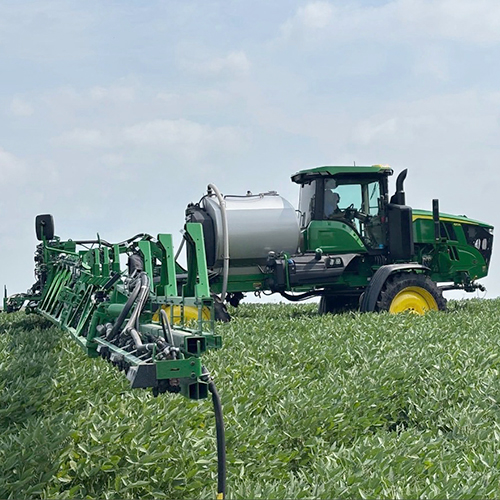
Matt brings us along as he recaps his first full season using John Deere’s See & Spray™ technology, including how camera-based weed detection, individual nozzle control, and automation features delivered an average 68% reduction in chemical usage on his farm. Holden dives into how his Precision Planting SymphonyNozzle™ setup, turn compensation, and boundary mapping helped him reduce overlap, increase accuracy, and save time in the field.
Together, Max, Matt, and Holden break down several aspects of precision farming. From how camera-guided spot spraying works in corn and soybeans to the ROI potential of precision spraying systems, they uncover the realities of how modern technology is applied on real farms. At Renk Seed, we’re passionate about finding innovations that deliver real, measurable value in the field. This conversation highlights how precision technology helps farmers reduce input costs and operate more confidently in today’s agricultural landscape.
At Renk Seed, we’re passionate about finding innovations that deliver real, measurable value in the field.
Real-World Results
On both farms, the impact is clear: big chemical savings and major time savings. Matt is seeing around 68% less chemical use on post-emerge passes while still keeping fields clean, plus far fewer refills and less labor. Holden has almost eliminated overlap, applies more consistent rates on curves and hills, and knows that if he mixes for 50 acres, he actually sprays 50 acres—this really pays off in odd-shaped and challenging fields.
Unforeseen Benefits
The benefits go well beyond spraying. With mapped boundaries and waterways, autosteer, and turn automation, both farms are running more efficiently across planting, spraying, and harvest. They’re seeing less crop damage, less operator stress, and even yield bumps—Matt’s checks showed about 3 extra bushels per acre where See & Spray™ was used, likely because crops aren’t stressed by unnecessary herbicide.
...precision spraying and automation help them cover more acres, in less time, with fewer people—while keeping fields cleaner and crops healthier.
Economics: Do the Numbers Pencil Out?
While subscription and hardware costs are real, both growers say the technology pays for itself through chemical savings, reduced labor, and potential yield increases. Looking ahead, they’re excited about what’s coming next—like AI cameras that can handle stand counts, rock mapping, variable-rate herbicide, and dual-boom systems that combine residual and targeted sprays. Their bottom line: precision spraying and automation help them cover more acres, in less time, with fewer people—while keeping fields cleaner and crops healthier.
Already using precision technology on your fields? Considering adopting these tools? We’d love to hear from you to share experiences and find answers to questions. You can contact us on one of our social media channels: FB, Insta, X or LinkedIn. Listen to the full episode on whichever streaming platform you prefer or right here on our website.
Seeing Whole Fields: How Scouting Drones Help Growers Make Smarter Decisions
Season 1, Episode 11
Seeing Whole Fields: How Scouting Drones Help Growers Make Smarter Decisions
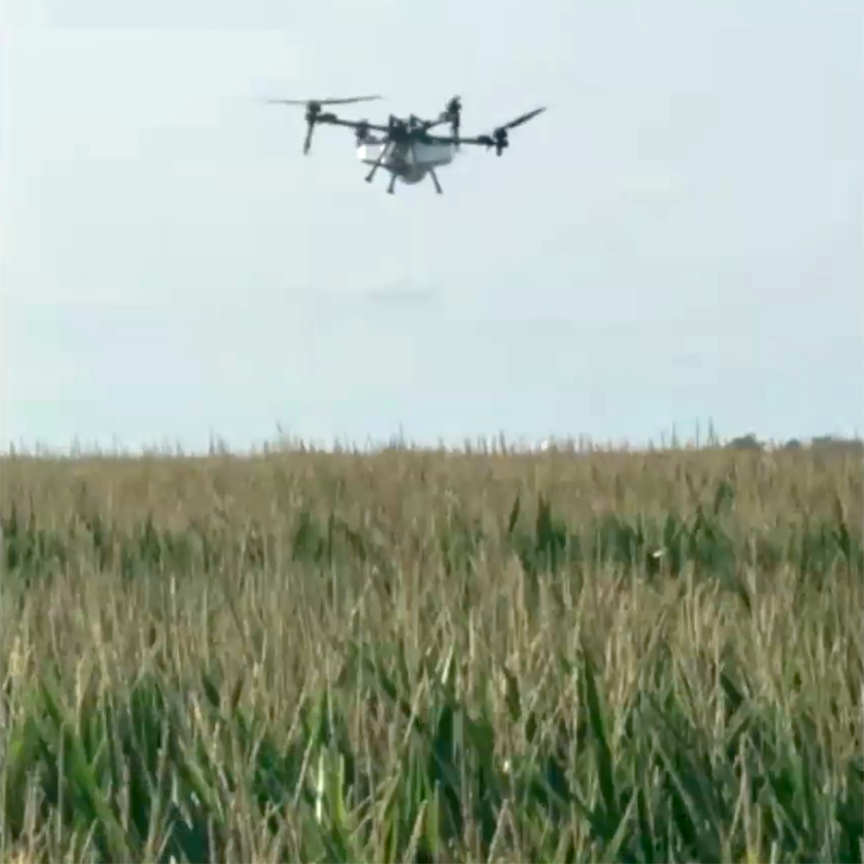
Drone technology is an innovative, powerful management tool in modern agriculture, but its value goes far beyond spraying. In this episode of Renk Seeds of Innovation, Max Renk sits down with Karl Bobholz and Tucker Johansen to explore how scouting drones are changing the way fields are evaluated, managed, and understood.
Their conversation explores how our team at Renk Seed uses scouting drones throughout the growing season to monitor emergence, plant health, weed pressure, and field variability across entire fields, not just a few visible areas. Karl and Tucker also discuss how repeated drone flights and NDVI imagery provide consistent, reliable information that supports smarter agronomic decisions, reduces unnecessary input costs, and helps improve ROI for growers.
Max, Karl, and Tucker reveal why Renk Seed believes in using and sharing these tools with growers. We want our growers to succeed in the fields. Using scouting drone technology can give growers the confidence and clarity to manage their acres more efficiently, helping them see stronger yields season after season.
Spray drones vs. Scouting drones
Tucker Johansen explains the difference between the two types of drones currently being used in the agriculture industry. A spray drone, in his mind, is like an extension of a farmer’s hands. It puts down the spray application the farmer has chosen and solves an issue. On the other hand, Tucker thinks about a scouting drone as an extension of a farmer’s brain. It gathers data to help make educated decisions allowing farmers to implement various solutions for potential increase in yields at harvest.
Power of early-season scouting and whole field coverage
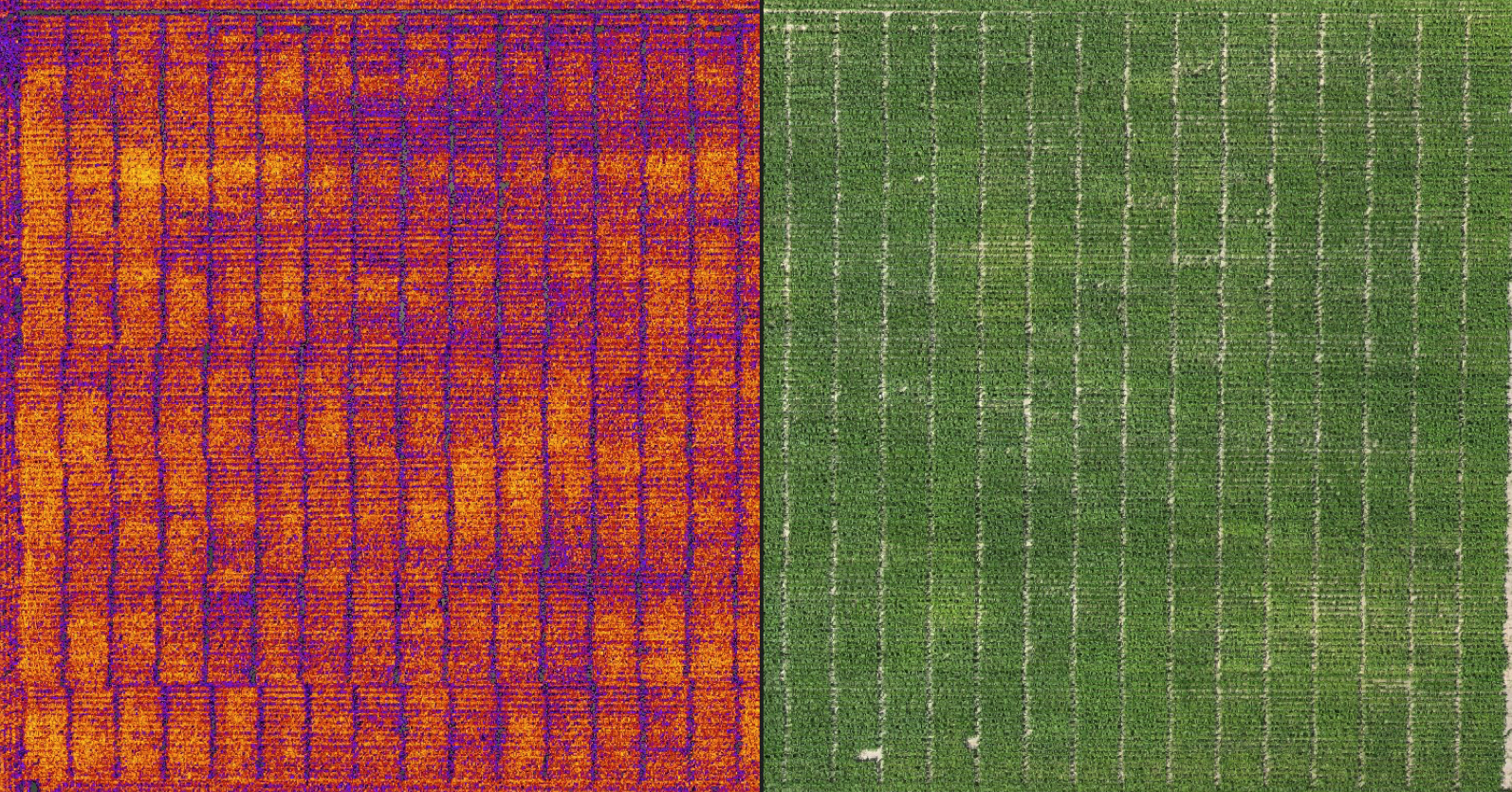
Max Renk asks Tucker about early season scouting and “why that’s important to us with our drone?” In response, Tucker shares that scouting drones do a really good job showing stands. Renk Seed has used compatible software such as Pix4D Fields and Drone Deploy Processing to provide detailed maps revealing misses, bad emergence, or compaction areas. The software stitches together the hundreds of pictures taken during flight and combines them into a map. This gives the grower an overall picture of the field as a whole.
Drone data and software make field analysis easier and precise
In Karl Bobholz’s experience, drone data is a tool for better acre management. By having good data come into the pipeline, he explains, you then have a better understanding of product performance. Through the use of a scouting drone you can capture plant health and see agronomics such as green snap, root lodging, and stalk strength.
Another area many of the new drone technology includes is weed management. This allows growers to take the scouting information and turn it into an actionable plan. Most growers currently spray twice: pre-emergence and post-emergence. Typically, post-emergence is about weed patches that show up or high weed banks in a known area. “This technology allows you to reduce the spray across the whole field,” Karl notes. He continues, “Drone technology assists in reducing costs of post-emergence spray across the whole field.”
Drone technology assists in reducing costs of post-emergence spray across the whole field.
Micronutrients or fertility needs are other insights a grower can gather from the scouting drone data. Karl mentions that you have to know what’s happening first, then you can create the precise spraying plans. Max observes that by taking stock of what you have on the acres during the season, you can potentially save on the cost of your chemistry.
NDVI imagery value for crop health
In the middle of the season, V5 stage for corn, is where Renk Seed begins to utilize NDVI or VARI to scout smarter. In layman’s terms, Tucker explains, this technology gathers all the invisible reflected light from the plants and puts it into a measure of crop vigor and health. The software creates a color scale making the differences easier to see through gradual changes. You can set the color scale to indicate vigor and the health of the plants. This knowledge is very valuable at the V5 stage.
The eye in the sky helps manage acres
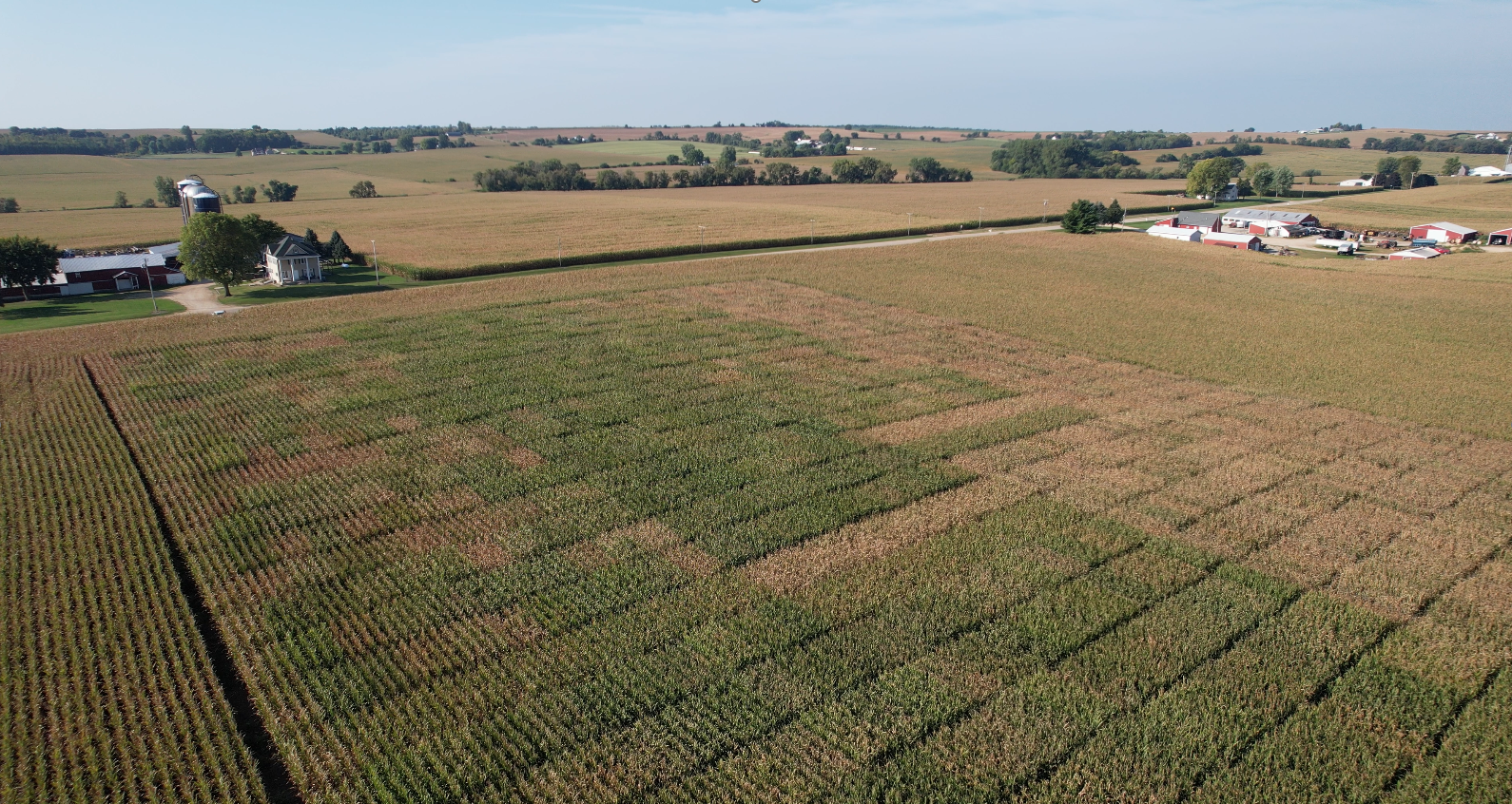
The scouting drone allows you to add another layer to your acre management. Karl highlights the current uses of data inside and out of planters. The scouting drones compliment the work by helping create spray maps, finding tile lines during wet spring times, and spotting areas that could benefit from tile.
He mentions that if you think about this as a long term investment for your operation you can better understand how products are performing on your acres. It doesn’t matter which product you planted. But it does matter how that product is reacting to stress and allows a farmer to manage more effectively for the stresses that show up.
Also, as autonomous becomes more commonplace within the equipment, the scouting drones can help. The new scouting drones have RTK built into them, which allows you to create the RTK boundaries for your acres and equipment.
Having this data at your disposal will allow you to compare season to season at the critical growing stages.
Repeatable flights increase data reliability
Flight missions can be saved easily, according to Tucker. By repeating that same flight, you create much more reliable data sets to evaluate the current season and for seasons to come. He lists the timeline for a single season as emergence, weed eruption, V5 and after tassel (for corn), and end of season right before you combine it off. Having this data at your disposal will allow you to compare season to season at the critical growing stages.
Instead of spending hours upon hours walking your acres, Tucker points out that you can see about 160 acres in a matter of 30 minutes. We think everyone can agree that this is a better use of time than windshield farming at 55 mph or only walking your favorite spots.
Conclusion
Renk Seed is a data-driven company. We rely on cooperative growers to help us build the data we share with you on our website for head-to-head comparisons. Sharing our knowledge on scouting drones is an example of the value we place on our relationship. We want you to farm stronger and grow with us in knowledge.
Are you already using drones or advanced scouting tools on your fields, or is it something you’re curious about exploring this year? We’d love to hear from you and answer any questions you may have. You can find us on one of our social media channels: FB, Insta, X or LinkedIn. And, listen to the full episode on whichever streaming platform you prefer.
Inside the Processing Plant: How Precision Equals Performance
Season 1, Episode 10
Inside the Processing Plant: How Precision Equals Performance
Before our seed reaches your planter, it passes through an intensive process designed to protect its integrity, consistency, and performance. In this episode of Renk Seeds of Innovation, Max and Brett Renk sit down to bring listeners into the seed processing plant, walking through what happens between harvest and planting season.
From cleaning, sizing, and grading, to seed treatments, Brett explains how each step is engineered to remove risk and protect seed quality, giving growers like you more confidence in the seed you plant. As they mention, seed processing isn’t about being “good enough.” It’s about managing every variable so you can walk into planting season knowing it’s the highest quality of seed built to weather even the most challenging conditions.
As the conversation comes to a close, Max and Brett reflect on why seed processing at Renk Seed is more than just equipment and technology. It’s a responsibility shared by the team. Because at Renk, putting our name on the bag means standing behind every seed that goes into the ground.
The Seed Production Process at Renk Seed: A High-Level Flowchart
As a review, from Episode 7: Seed Craftsmanship – Producing Seed That Farmers Can Trust, Steps 1 – 6 were discussed. Here’s how corn seed goes from field to storage bin at Renk Seed.
In episode 9: Inside the Processing Plant – How Precision Equals Performance, Max and Brett discuss Steps 7 – 9. This is how the loose grain moves from the storage bins into a bag, then onto your acres.
Think of it like a relay race: each step hands off to the next, and every detail along the way adds up to the quality in every bag of Renk seed.
Listen to the full episode on whichever streaming platform you prefer.
Stories Across the Midwest: Five Farmers on 2025 Harvest and Challenges
Season 1, Episode 9
Stories Across the Midwest: Five Farmers on 2025 Harvest and Challenges
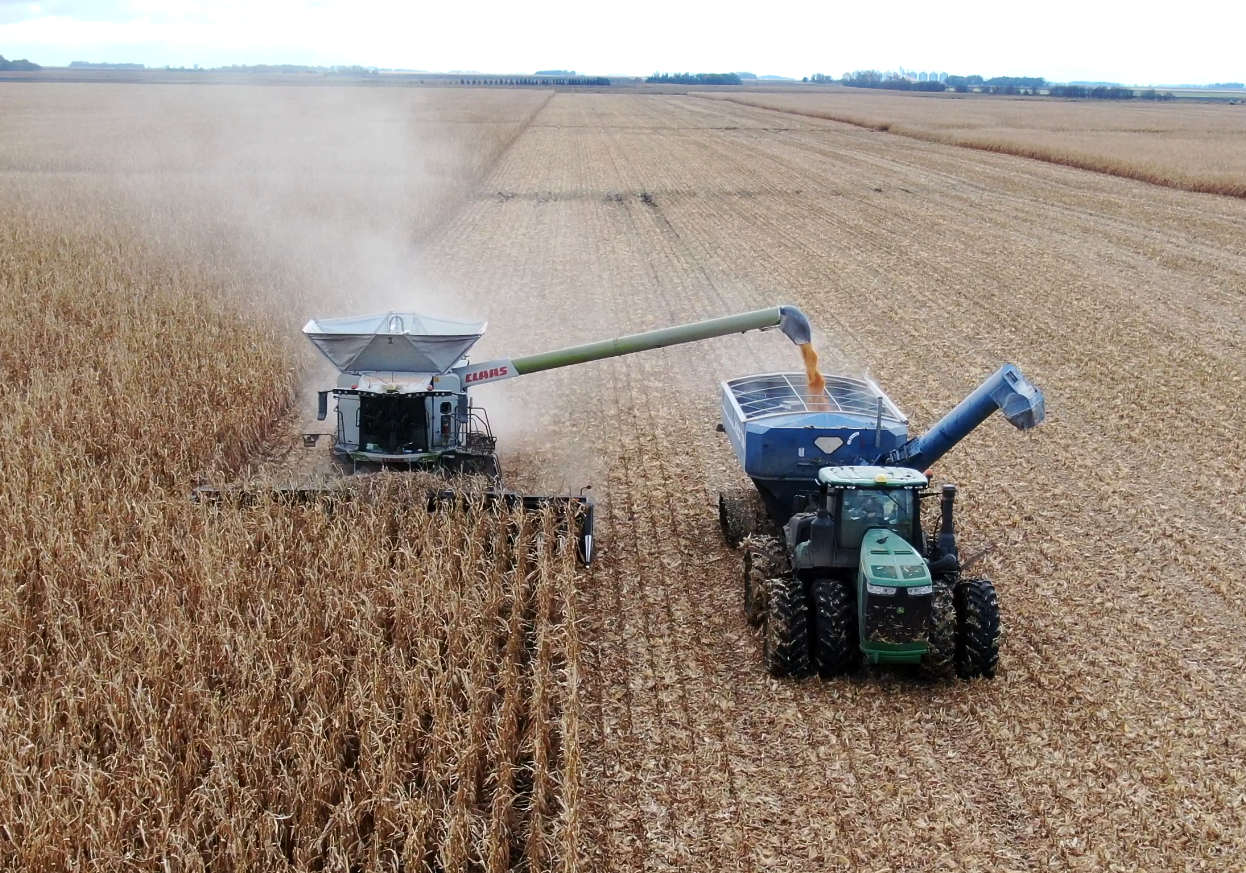
These farmers saw it all: from tornado damage and heavy rains to top yields, hail recovery, and stories of how communities rally together at harvest. Max sits down with five growers across the Midwest to capture their real, raw stories from the 2025 growing season.
Join us and Marty, Robbie, Kyle, Tom, and Joe for conversations centered around what this year taught us, how it challenged us, and what farming looks like across state lines in Wisconsin, Minnesota, Michigan, and Iowa. As we turn the microphone over to men out in the fields each day—both Renk growers and dealers—we see that no two farms or seasons are ever the same.
Together, their stories show us just how unpredictable and resilient farming is—and how people are at the center of it all.
What was your expectation going into this past year’s crop growing cycle? What was the reality? Dear Reader, does your story involve severe climate challenges, perhaps an animal “gone wild” or maybe even disease pressure tolerated by your wise seed choice? Let’s take a quick look at what our host, Max Renk, found out when he checked in with five of our farmer-dealers to hear their unique stories.
- Marty Luther
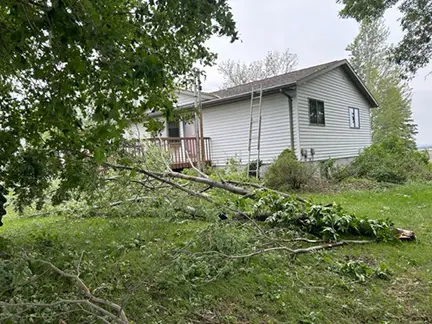
Max spoke with Marty Luther from Gillett, WI, which is northwest of Green Bay. Marty’s seen a lot of growing seasons in his life and shares just how much mother nature influenced his crop outcome this year. In his lifetime, Marty moved about 1 mile from the old house to the new house. Relatable? Find out what happened when his family land was visited by a tornado this summer. You’ll hear not only how his family fared, but also what happened with his crop in the end. - Robbie Uhlenhake
Robbie Uhlenhake, professionally farming for over two decades in Northeast Iowa, has a raccoon story post-harvest that sums up how ag life can turn on a dime. One minute you are on top of the world because despite disease pressure from Southern Rust you pull off one of your top 3 or 4 yields. Then the next minute you find a raccoon shot through the combine at the end of your harvest. - Kyle Kedroske
Kyle Kedroske, a Kewaskum, WI native, just enjoyed his first full solo year as a Renk Seed dealer who sold both corn and beans. Kedroske’s infectious enthusiasm for farming allows him to cultivate relationships. We find out from him just how important those relationships are when you find yourself in a bind at the end of harvest with the finish line in sight. - Tom Smaglinski
Over in Port Hope, MI, Tom Smaglinski is proud to farm with two of his sons and has been a Renk dealer for over three decades. His upbeat story has a punchline about a competitor’s seed in his test plot that even our marketing department could not have scripted!
- Joe Serbus
Joe Serbus is an active member in his ag community and a professional crop adjuster. Find out how his expertise helped shape his decisions after a hailstorm in early June severely damaged both his corn and bean crop. Plus, he recalls a similar event from his childhood and compares yields from then to now.
While their stories are unique to them, we know every farmer has a story or knows one about a neighbor from each growing season. Let’s keep the conversation going! Share your story with us on one of our social media channels: FB, Insta, X or LinkedIn. And, listen to the full episode on whichever streaming platform you prefer.
Harvest Insights: Lessons, Data, and Disease Takeaways from 2025
Season 1, Episode 8
Harvest Insights: Lessons, Data, and Disease Takeaways from 2025
The 2025 growing season is wrapping up but the learning never stops here at Renk Seed. In this episode of Renk Seeds of Innovation, Max Renk is joined by Karl Bobholz, Alex Renk, and Jeff Renk to share what they saw across the Corn Belt this year.
As Alex mentioned, “this year was all about top-end yield,” while last year was all about stress. And together, they tell the story of what stable genetics can really do.
From Southern Rust and Sudden Death Syndrome to nitrogen management and emerging biologicals, the Renk team breaks down the wins, surprises, and lessons shaping seed performance. They also unpack what plot data reveals about hybrid performance, product selection, and stress-year testing—and how we can turn these insights into smarter decisions for your acres in 2026.
A Season of Stability—With a Few Surprises
This year, many Midwest growers experienced what could be called a “normal” season, with less weather drama than previous years. However, there were notable disease outbreaks—Southern Rust and Tar Spot—especially in the Corn Belt. Karl noted that fungicide timing made all the difference: fields sprayed too early ran out of protection, while products like RK773TRE and RK8585TRE stood out for their disease resilience and yield in trials. Another new product, RK4545AV, shows strong promise in Wisconsin and Minnesota.
...fungicide timing made all the difference: fields sprayed too early ran out of protection, while products like RK773TRE and RK8585TRE stood out for their disease resilience and yield in trials.
Disease Pressure and the Importance of Timing
Jeff recounts his “windshield farming” travels across the region, observing that disease was the year’s defining story. Additionally, he calls for urgency in harvesting the crop in a timely manner given the large crop hanging on the stalks. The main advice: “Get it in before it’s on the ground.”
On the soybean side, Alex recounted high rainfall resulting in solid yields—some topping 100 bushels—but sudden death syndrome (SDS) arrived late to remind everyone that not all varieties can overcome every challenge. Curiously, white mold was less of an issue, likely due to a hot and wet summer, an environment in which the fungus doesn’t thrive.
Karl and Jeff emphasized that both the timing and method of fungicide application were critical.
Lessons in Fungicide Application and Nitrogen Management
Karl and Jeff emphasized that both the timing and method of fungicide application were critical. Many growers sprayed early to protect their best fields, but this left them exposed later in the season. Equipment limitations and reliance on custom applicators resulted in not all acres receiving timely treatment. Spray drones, while promising for targeted rescue applications, aren’t a full replacement for ground or aerial rigs—especially when large acres are at stake.
Nitrogen management also played a role, with some growers cutting back due to rising costs. This added stress to the plants, leading to more stalk issues. We can all agree that balancing input costs and plant health is a delicate act.
Plot Data: Two Years, Two Extremes
Looking at plot data, Alex and the team emphasize the importance of comparing products across both stressful and high-yielding years. Last year’s stress tested genetic resilience; this year’s favorable conditions revealed yield potential. Combining both datasets helps identify varieties that are not only top performers but also reliably stable—ideal for building a robust lineup for growers.
Product Selection: Balancing Yield, Disease, and Grower Needs
The team agreed that product selection is about more than just chasing the highest yield. Disease package, stress tolerance, and fit for specific environments all matter. Renk Seed’s decision to keep or cut a variety depends on consistent performance across years and growing conditions, as well as, the practicalities of storage and production.
Breeding and Genetics: Learning from History
Jeff and Karl discussed the long game in breeding—great hybrids emerge only every five to ten years. DroughtGard®, for example, became a staple because it delivered both stability and yield, particularly in challenging conditions. The lesson: look for products that perform not just in good years but also when times are tough.
...look for products that perform not just in good years but also when times are tough.
Beyond Seed: Value-Biological Innovation
Karl shared some behind-the-scenes research into biological seed treatments and their potential to unlock soil fertility and reduce input costs. Early data is promising, but repeatability and consistency are key before recommending these products broadly. The team is also evaluating how such treatments impact disease resistance, particularly for stalk rot.
Scout and Act: Monitor fields for disease and harvest in a timely manner to prevent losses.
Fungicide Strategy: Prioritize correct timing and coverage, avoid relying solely on new tech like drones for large-scale application.
Genetic Diversity: Choose your seed from products proven effective over multiple seasons and various stress environments.
Input Management: Balance cost-saving measures with the need for plant health and resilience.
Stay Curious: Follow ongoing research into biologicals and other value-added practices that may soon benefit your operation.
Final Thoughts
Every season offers new lessons. By combining plot data, field observations, and a willingness to try new approaches, both Renk Seed and our growers are better positioned for success—whatever next year may bring.
For more insights and updates, follow Renk Seeds of Innovation.
Seed Craftsmanship: Producing Seed That Farmers Can Trust
Season 1, Episode 7
Seed Craftsmanship: Producing Seed That Farmers Can Trust
Producing seed that our farmers rely on is more than just planting. It’s a craft built on precision and care. In this episode of Renk Seeds of Innovation, Max Renk sits down with Brett Renk to share how we ensure every seed you plant meets the highest quality standards.
As Brett shares, “almost right” isn’t good enough in seed production. From planting rows with precision to managing pollination and detasseling, every step is critical. And it starts right when it goes into the ground. Max and Brett also explore how harvest timing, handling, and the drying process protect seed quality to make sure you have the highest performance potential for the year ahead.
Whether you’ve driven by our corn fields or wondered what goes into the seed you buy from Renk Seed, this episode dives into why we believe craftsmanship is the key to confidence in the field.
The Foundation: Planting for Success
Planting may sound simple, but as Brett points out, it’s the foundation of the entire seed production process. Unlike typical corn crops, seed production relies on meticulous detail. Seed fields are planted with both female and male rows—four rows of females to one male row—to ensure proper hybridization. Precision is critical; even with modern GPS, mistakes can happen, so Renk Seed uses detailed checklists, much like airline pilots, to ensure every step is followed. As Brett says, “Doing it almost all right isn’t the same as doing it all right.” Every detail, from planting depth to row alignment, impacts the quality and yield down the line.
Doing it almost all right isn’t the same as doing it all right.
The Challenge of Inbreds
Seed production uses inbred lines, which naturally yield far less than commercial hybrid corn. Where a typical cornfield might produce high bushels per acre, inbred lines are finicky. When Brett began his seed production career, yields were about 40 bushels per acre. Modern breeding has pushed that number higher, and our farm now considers yields under 65 bpa unviable. Good pollination is key, but even the best practices can only do so much; the ceiling on inbred yield is set by genetics, while poor management can quickly make things worse.
Timing is everything: cut too early and you risk removing essential leaf area right at pollination, impacting yield.
Detasseling: Precision and Timing
Detasseling is one of the most crucial and delicate steps in the process. Since corn plants have both male (tassel) and female (ear) parts, detasseling prevents self-pollination and ensures the right hybrids are created. Timing is everything: cut too early and you risk removing essential leaf area right at pollination, impacting yield. Brett describes a 3-part process. First, a machine cuts the advanced tassels. Then, a couple of days later, a machine pulls tassels that have emerged in the meantime. Finally, a team walks the field to catch any stragglers. The goal is to do enough to ensure purity, but not so much that the plant is damaged, as every leaf counts towards yield.
Harvest: It’s All About the Seed
Harvesting seed corn is very different from harvesting grain. Seed is picked on the ear, and ideally while it is still a bit wet (around 32-40% moisture) to maintain quality. Any off-type or low-quality ears are culled—a local farmer even collects these for use as cattle feed, ensuring nothing goes to waste. Each ear is husked and dried slowly with low-temperature air to avoid damaging the embryo. Brett’s philosophy is “slow and steady”: drying too fast or at too high a temperature risks damaging the seed, so Renk Seed opts for a conservative approach. Using a two-step drying process to evenly and gently bring moisture down allows Renk Seed to aim for about 11% moisture so the seed can be safely stored long-term.
Storage and Processing
Once dry, the seed is shelled gently to avoid damage, then cleaned and sorted. The storage facility is designed to keep the seed cool and dry, minimizing risk of spoilage or mold. Before sale, the seed is treated with protective products, which adds a bit of moisture back, so starting with very dry seed is key to maintaining quality throughout the process.
Quality, Every Step of the Way
From planting to harvest, every step in the seed production process at Renk Seed is managed with care and attention to detail. As Brett notes, “Every little piece of the puzzle adds up.” It’s this commitment to quality and precision that ensures farmers can trust what’s in the bag when they plant Renk Seed.
Every little piece of the puzzle adds up.
Our 2025 seed corn harvest is complete. That means the corn is now in the storage phase. Tune in to Part II to learn what happens next here at Renk Seed.