Season 2, Episode 2
Drone Application in Agriculture: Where Timing, Efficiency, and Opportunity Meet
Drone technology is quickly becoming a bigger part of agriculture, but its real value comes down to how it performs in the field.
In this episode of Renk Seeds of Innovation, Max sits down with farmers and drone users Ryan and Matt, along with drone application business owner and operator Michelle, to discuss what drone application looks like in practice. From getting started and navigating the learning curve, to managing acres and building out service-based operations, they share firsthand experiences using drones across different setups.
As the conversation unfolds, they highlight where drones are creating real advantages, especially when it comes to timing, flexibility, and efficiency during critical application windows. At the same time, they also touch on the realities of the technology, including limitations, logistics, and the details that go into doing the job right.
What Are Drones Doing on Farms?
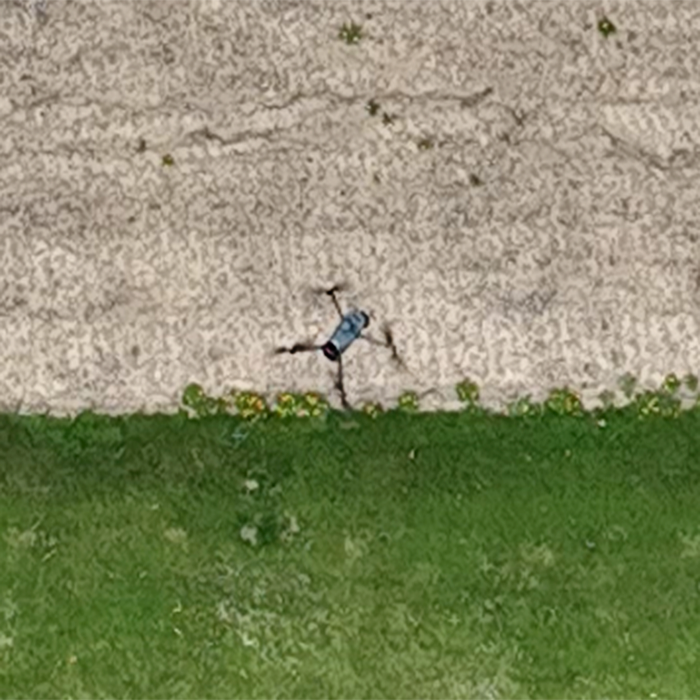
Drones are changing the way farmers care for their crops. Instead of relying only on big machines or manual labor, drones can spray fields, monitor plant health, and even help plant cover crops—all with increased precision and flexibility.
“Aerial is going to be your best coverage in making sure you get that propwash and get everything pushed down into the canopy. And, really get that dispersion of the product” professes Michelle Bork, Renk Seed District Sales Manager and Drone Application Specialist.
Aerial is going to be your best coverage...
How Drones Make a Difference
- Efficient Spraying: Drones can quickly cover fields, reaching areas that are hard for tractors, helicopters or planes to access.
- Flexible Applications: Weather not cooperating? Drones can be deployed on short notice, making them a handy backup.
- Data Collection: With cameras and sensors, drones provide up-to-date information about crop health.
“The biggest efficiencies we’ve gained is just the timing.” Matt Hatcher, Terraplex Great River owner continues to explain, “[We’re] able to get in when we want to do it and be the most effective with our application.”
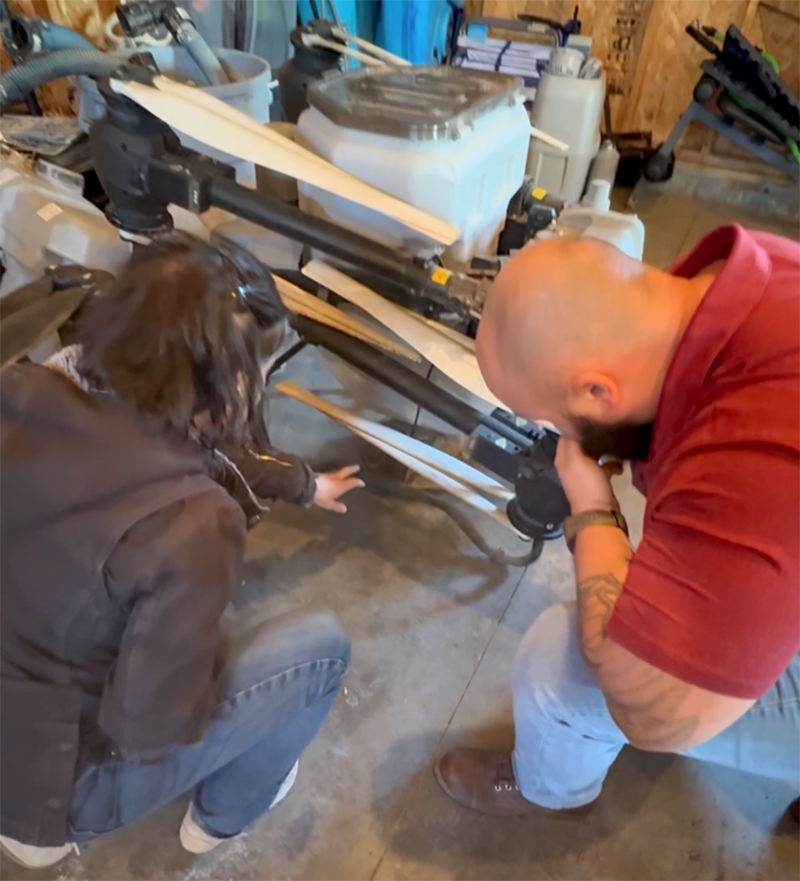
[We’re] able to get in when we want to do it and be the most effective with our application.
Getting Started
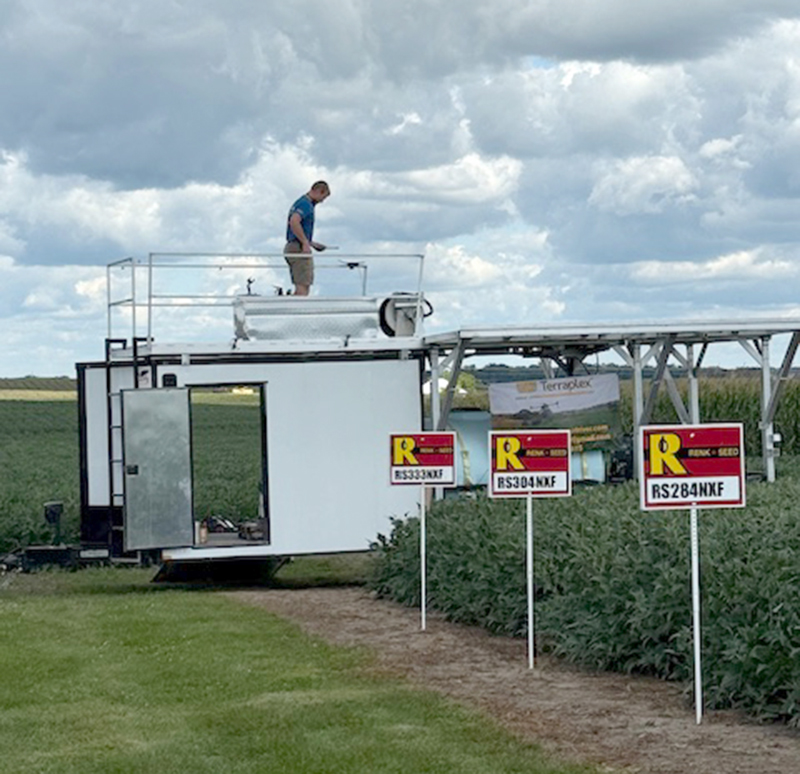
Starting with drones might seem overwhelming, but many farmers share that it’s easier than it looks. Michelle’s family bought their first drone at a farm show, and now they operate a whole fleet! Ryan and Matt followed an operator around their own operation the first year and then decided to try their hand at it. Now, Matt runs a Terraplex dealership for eastern Iowa that is focused on both sales and service.
Ryan Oberbroeckling shares how their drone involvement has evolved, “At first, just buying the drones, doing the application yourself. And then we evolved a couple of years later.” He continues, “Terraplex asked us if we wanted to be the eastern side of Iowa, the sales and service, so we agreed to that.”
Tips from the Field
- Check local regulations, especially near airports
- Network with other farmers when flying drones on their acres to share tips
- Start small and grow your fleet as you gain confidence
Looking Ahead
Drones are becoming more advanced every year, with features like heavier payloads and more precise application. While challenges remain, such as weather and legal restrictions, the benefits are clear.
There are opportunities out there beyond just the row crop applications of the drones.
“There is, also, opportunity from a custom applicator side.” Matt Hatcher goes on to say, “There are opportunities out there beyond just the row crop applications of the drones.”
Already in the drone space? Share with us your story. Ready to see how drones can help your farm grow? Join the movement and explore what’s possible!
Thanks to Ryan Oberbroeckling, Matt Hactcher, and Michelle Bork for sharing their expertise. Catch the full conversation on the Renk Seeds of Innovation Podcast anywhere you listen to podcasts.


