
ARTICLES

Alfalfa Winter Kill & Injury: What to Check and How to Evaluate Your Stand

Season 2, Episode 1 
Alfalfa Winterkill & Injury: What to Check and How to Evaluate Your Stand

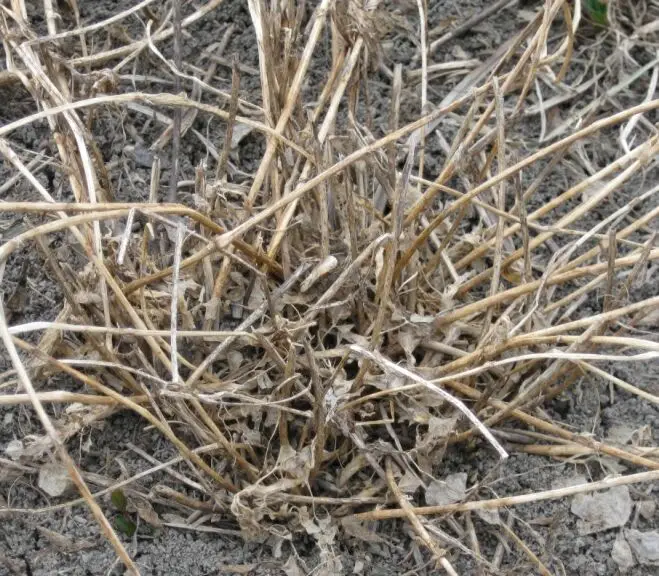
Winter can take a toll on alfalfa, and early spring is when the damage starts to show.

In this episode of the Renk Seeds of Innovation podcast, Max is joined by Alex Renk and Bob Wilms to talk through the difference between winterkill and winter injury; what causes each, and what growers should watch for as fields begin to green up.

They cover the role of snow cover, dormancy, ice sheeting, and heaving, along with how to evaluate root and crown health, assess shoot counts, and decide whether a stand is worth keeping, rotating, or managing another way.

The conversation also touches on alfalfa’s role in dairy systems, variety considerations, and the management decisions that can help protect stand longevity from one season to the next. 

If you’re assessing alfalfa this spring, this episode offers a practical look at what to watch for and how to think through your next steps.

Why Alfalfa Still Matters
Let’s start with the basics — why should you care about alfalfa in the first place? Alfalfa is the fourth most profitable crop in the United States, and for good reason. Here’s the quick rundown of why dairy farmers keep it in their rotation:

Alfalfa is the fourth most profitable crop in the United States...


  • Nutritional powerhouse: Alfalfa clocks in at 18–24% crude protein on a dry matter basis, compared to just 6–8% for corn. More quality feed = more milk.
  • Nitrogen credit: After a rotation, you can bank up to 200 lbs/acre of nitrogen credit for your following corn crop. Not exactly free nitrogen, but pretty close.
  • Soil health: Those deep taproots break up compaction from heavy equipment and boost organic matter when the stand is terminated.
  • Disease cycle break: Continuous corn? You’re building up disease pressure. A 3-year alfalfa rotation gives your ground a serious reset — and may even help with newer headaches like tar spot.

Most growers run a 3-year stand, and as Bob put it, “some keep it a little bit longer and it would be a disappointment if they had to take it out before three years.”

alfalfa winterkill

The Four Culprits of Winterkill or Winter Injury
Alex broke down the main culprits behind winter injury and kill. Here’s what’s working against your stand when temps drop:

  1. Extreme Cold Without Snow Cover
    This one hit close to home in early 2026 — minus 8 to minus 9°F for several days with minimal snow. Snow acts as insulation; without it, survivability takes a real hit. (Silver lining: extreme cold does knock back a lot of insects).
  2. Early Dormancy Break
    In the fall, alfalfa stores carbohydrate reserves in its roots to fuel spring regrowth. If a warm streak tricks the plant into breaking dormancy too early, it burns through those reserves — and then struggles when real spring arrives.
  3. Ice Sheeting
    Sheets of ice over your alfalfa fields can literally suffocate the plants. Even though alfalfa is dormant in winter, it’s still running biological processes, and ice blocks the gas exchange it needs to survive. Wet falls and poorly tiled fields are especially at risk.
  4. Frost Heaving
    Rapid freeze-thaw cycles can physically pull roots apart. The frozen soil heaves upward, and if the swing is severe enough, it breaks the taproot. As Alex noted, “you can have cold nights of five degrees, but then solar radiation warms the soil surface” — that combination is what triggers heaving.
Setting Up for a Healthy Winter
The best defense against winter injury starts in the fall. Key management practices include:

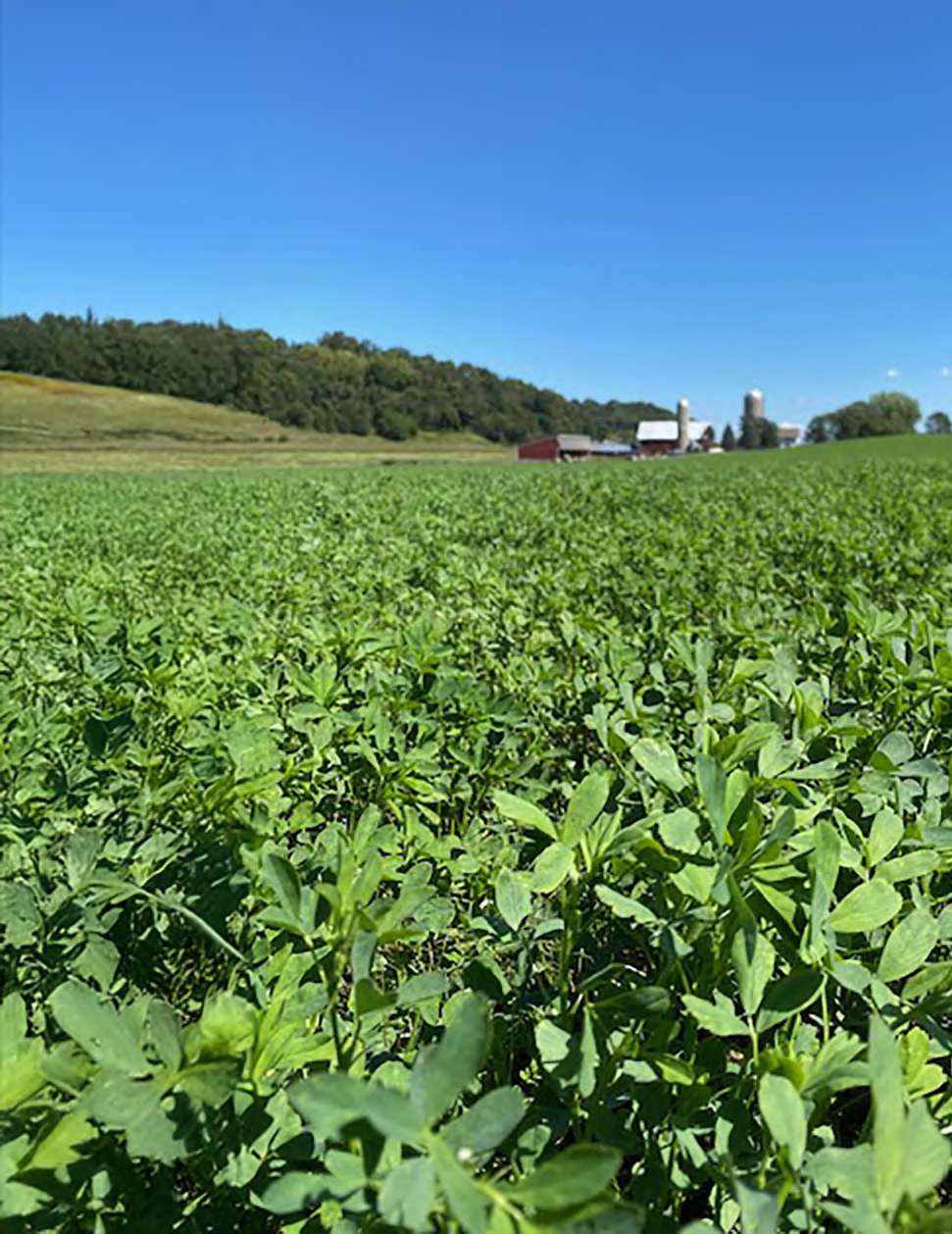
  • Aim for 8 inches of growth before the stand goes dormant — this maximizes root reserve storage.
  • Leave it alone in September. That’s when the plant is loading up carbohydrates for next year. Cutting in September is one of the fastest ways to shorten stand life.
  • A late October cut is generally fine, as long as root reserves are already built up.
  • Taller stubble going into winter is actually a good thing — it catches snow and provides insulation.
  • Keep fertility dialed in heading into fall. A well-fed plant has everything it needs to survive winter and come roaring back in spring.

Scouting in the Spring
Don’t rush out the moment snow melts. Wait for 4–6 inches of regrowth, then head to the field and start digging roots. Here’s what to look for:

Don't rush out the moment snow melts. Wait for 4–6 inches of regrowth...

  • Healthy roots: White and firm — think uncooked potato or a raw french fry.
  • Symmetrical shoot growth all the way around the crown.
  • Red flags: Black discoloration, ropey vascular tissue, soft or rotting roots, or shoot growth only on one side of the crown.

Shoot count benchmarks (per square foot):

  • 55+ — You’re in great shape.
  • 40–55 — Marginal; monitor closely.
  • Under 40 — Strongly consider terminating the stand.

With land rents running $250/acre or more, a subpar stand simply doesn’t pencil out. Most growers under 40 shoots per square foot are already planning their transition to corn.

Options When the Stand Is Struggling
If you’re in that 40–55 range — or dealing with patchy winter injury — you’ve got a few options:

  • Interseeding grasses into the existing stand can help carry you through the season.
  • Annual rye clipped at boot stage can provide high-protein feed as a bridge crop.
  • BMR or sorghum-sudan grass planted after first cutting (when soils are warm) can fill the tonnage gap.

If you want to reseed alfalfa, you'll need to start fresh, in a different field.

One important caveat: you cannot interseed alfalfa into an established second- or third-year stand. Older alfalfa plants release toxins that prevent younger alfalfa seeds from germinating — a phenomenon called autotoxicity. If you want to reseed alfalfa, you’ll need to start fresh, in a different field. The only exception is within the first year of a stand’s establishment.

alfalfa

A Word on Variety Selection
Alfalfa breeding has come a long way. Twenty-five years ago, fall dormancy and winter survival ratings were essentially the same number. Today, they’ve been separated — meaning you can plant higher-yielding, less dormant varieties without sacrificing winter hardiness.

Key things to look for in a variety:

  • Strong disease package — aim for 30/30 on the Multi-Pest Index
  • Fall dormancy rating of 4 or 5 (vs. the 2s and 3s growers used to rely on)
  • Proven winter survival — don’t just trust the marketing

As Bob put it: “You want something that will build up good root reserves and then start up again next spring.”

The Bottom Line
There’s no magic bullet for winterkill — Mother Nature always gets the final vote. But growers who follow a disciplined process give themselves the best shot:

Select a quality variety → Prepare a firm seedbed → Manage fertility throughout the season → Respect the September window → Scout early in spring and make data-driven stand decisions.

As Bob summed it up: “It’s a process that begins before you even start.” Take care of the crop, and it’ll take care of you.

It's a process that begins before you even start.

Thanks to Bob Wilms and Alex Renk for sharing their expertise. Catch the full conversation on the Renk Seeds of Innovation Podcast anywhere you listen to podcasts.