The Earfull August 24, 2026
Pro Farmer Crop Tour Recap 2026
The Pro Farmer Crop Tour is officially in the books, and if you’ve been hearing insight from this tour on TV or social media, you already know the story: corn backed off last year’s record pace, but soybeans are hanging tough and could still set a new high. Here’s what we’re seeing, why it’s shaking out this way, and what it means as we start turning the page toward harvest.
What the Tour Found
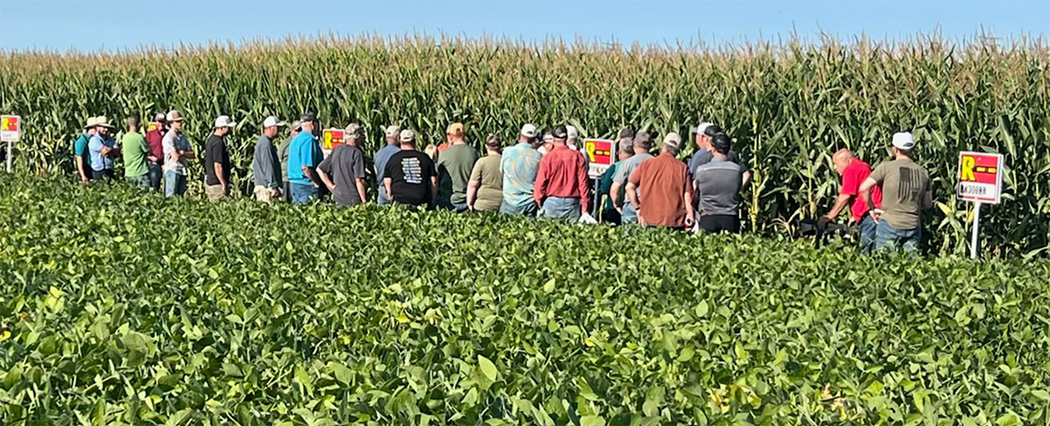
Scouts wrapped their seven-state run in Rochester, Minnesota, and the takeaway was pretty simple — corn is down from 2025 almost across the board, while beans are holding up well and might still notch a national record. Pro Farmer’s national corn number came in at 173.2 bu/acre, about 7.5 bushels below USDA’s 180.7 estimate, for a crop of roughly 15.344 billion bushels. Soybeans are pegged at 53.3 bu/acre nationally, good for a 4.572-billion-bushel crop — above USDA’s own number and a potential record if it holds through harvest. Tour leader Chip Flory summed it up well: “Everything is down from a year ago… except for Minnesota soybean pod counts.”
Why This Year Looks Different
Early-season stress is really the story here. Cool, wet conditions and delayed planting set corn back on ear counts and grain length, and that kind of early-season hit doesn’t get made up later. Soybeans had an easier path — with more time to fill pods once conditions improved later in the summer, which is why beans are outperforming corn relative to both last year and the recent average. South Dakota took the hardest hit of the tour, with real heat stress showing up in both crops. Illinois stood out as one of the few areas down from both 2025 and its own three-year trend — a tougher combination than most states saw. Iowa and Minnesota corn, by contrast, came in below last year’s record but still landed above their three-year averages, so there’s real quality in those fields even without a repeat of 2025.
Worth mentioning to growers who might be going off USDA’s numbers alone: the Tour’s actual field counts and USDA’s survey-based estimates don’t always agree. Ohio’s USDA number implied a slight increase from last year, but the Tour’s pod counts showed a 7% drop, and South Dakota had a similar gap between the two data sets. If you are working off USDA’s more optimistic figures, it’s a good time to walk and see what is showing up in your fields.
What This Means for Renk Growers
This is shaping up to be a year where hybrid and variety selection really show their value — the fields that held up best through early stress were the ones with strong stress tolerance and root development going into pollination. It’s a good reminder heading into fall plot walks and next year’s seed conversations that genetics built for resilience, not just top-end yield in a perfect year, are what separate a good year from a great one when the weather doesn’t cooperate.
Heading Into Fall – What We’re Watching
- Get out and walk fields now, before harvest: ear counts and stand checks in-season help you understand what your crop looks like, and you can start to create your fall plan (yes, a plan never is perfect, but it’s a start).
- Lean into what your crop is telling you; both for corn and soybeans, there is some late-season disease and moisture stress showing, both dry and wet conditions, and what does that mean at the end?
- Pay extra attention to fields in areas that lagged their three-year average – worth digging past “just weather” to see if disease, fertility, or drainage played a role too. The role of fertility is an area that one can question: What is the true cost of cutting back? [2027 looks to be another higher-than-average cost.]
- Start pulling yield and moisture checks, especially if you are planning on chopping corn for silage, as many reports of whole plant moisture are below 70%, which is “Go Time!” (Reminder: especially in stress fields, that moisture will change greatly across that field.)
- Keep notes now on what performed above expectation this season – this is exactly the kind of insight that shapes next year’s product recommendations but should not be the only part of the recommendation. One-year wonders also happen in the stress years.
References
- “Corn Falls Short of Last Year’s Record, But Soybeans Eye New Highs.”
- Pro Farmer. “Pro Farmer Estimates 2026 U.S. Corn Crop at 15.344 Billion Bushels, Soybeans at 4.572 Billion Bushels.”
- Pro Farmer. “First Thing Today: Crop Tour Finds Lower Yields in Ohio, South Dakota.”
The Earfull July 27, 2026
When Heat Stops Being “Just Weather”: Stress Degree Days, and Warm Nights
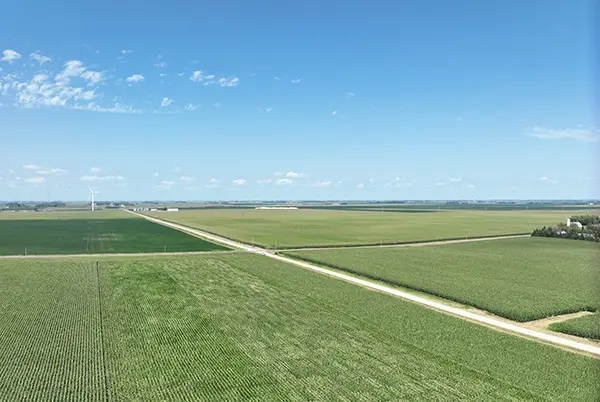
By late July, most growers expect some heat. What we are seeing now across much of the Renk footprint is more than that – it’s an extended stretch of high temperatures, sticky nights, and another strong ridge of high pressure building for the week across much of our area.
The crop has already worked through one major heat wave earlier this month. Now parts of the western and central Corn Belt are stacking another round of highs in the 90s and warm overnights as corn moves deeper into grain fill and late pollination pockets finish up. This week’s EARFULL focuses on when that heat stops being “just weather” and starts becoming measurable stress in the form of Stress Degree Days (SDDs), what warm nights over 70°F are doing inside the plant, and how to think about this week’s forecast for both dryland and irrigated acres.
Stress Degree Days:
Earlier issues have talked about heat and humidity around tassel and how corn manages stress by moving water. SDDs give us a simple way to measure how often the crop has been pushed past its comfort line.
For Midwest corn, 86°F is the key threshold. Each day the high exceeds 86°F, the “extra” degrees above 86 are added to a running SDD total. Iowa State work showed that under typical rain‑fed Iowa conditions, corn reaches incipient water stress more than half the time when air temperatures hit 86°F.
This matters because long‑term yield work suggests that when seasonal SDD totals stay below roughly 140, many rain‑fed crops can still finish at or above trend yield. Once totals push beyond that 140 mark, it becomes “tough to find corn yield above trend,” even with solid management. Your recent heat‑stress analysis shows some locations already carrying 80–90 SDDs, with another 50‑plus units possible if next week’s high‑pressure ridge holds together, which would move portions of the western and central Corn Belt into or past that 140‑SDD zone.
The main agronomic message is simple: isolated hot days are not the story anymore. The story is accumulated stress.
Warm Nights:
The other half of this heat stretch and the part growers often feel most is warm nights. The corn plant runs day and night. During daylight, plants make sugars; around the clock, they burn some of those sugars through respiration. High nighttime temperatures in the 70s and 80s increase respiration, which means more of the day’s sugars get burned off instead of ending up in kernels. Extension and industry summaries emphasize that above‑average night temperatures during reproductive growth can reduce yield by cutting both kernel number and kernel weight.
Overnight lows staying near or above 70°F for several nights in a row mean the crop is never fully resetting. Plants are starting each day with less cushion, which raises the odds that the combination of high daytime SDDs and warm nights quietly trims grain fill, even in fields that still look reasonable from the road.
Dryland vs. Irrigated:
The next ridge of high pressure will not treat all fields the same. The difference between dryland and irrigated acres is not whether they will feel hot – it is how much margin they have to ride through it.
In rain‑fed systems, SDD totals and warm nights are strong signals that the crop’s stress budget is tightening. As SDD totals approach or cross the 140 mark, long‑term data says it becomes much harder to finish above trend yield unless the field has had unusually good moisture luck. Fields that already rolled hard in earlier heat, carry shallow roots, or sit on lighter soils are the most vulnerable as this next ridge sets in.
Irrigation changes how plants experience the same air temperature. A full soil profile allows corn to keep stomata open longer, maintain transpiration, and keep the canopy cooler internally even when air temperatures exceed 86°F. That means irrigated fields generally tolerate higher SDD totals before showing the same level of yield penalty, because water is available to support photosynthesis instead of forcing the plant to shut down.
However, irrigation does not fully erase the impact of warm nights. Canopy cooling from irrigation is helpful, but it does not pull nighttime air temperatures back out of the 70s and 80s. Respiration “tax” from warm nights still applies under irrigation, so kernel weight can still be trimmed in sticky night patterns – just usually less severely than in fields that are stressed for moisture.
What to Watch:
Given the forecast for another strong ridge and high‑heat pattern across much of the region, the best use of scouting time over the next 7–10 days is to sort fields by stress response rather than by headline temperatures.
Watch warm nights as closely as highs. Note fields where overnight lows stay above 70 °F for several nights in a row, especially where pollination is wrapping up and grain fill is underway. Those are the acres most likely to see subtle yield drag from respiration even if daytime stress looks manageable.
Separate dryland and irrigated risk. On dryland, focus on lighter soils, uneven emergence pockets, and fields with shallow rooting that already showed stress earlier in the month. On irrigated acres, focus on timing and adequacy of sets around tassel and early grain fill; fields that slipped behind in irrigation timing may show more kernel number loss than neighbors.
References
- Iowa State University Extension and Outreach. “Water Stress in Corn: Estimating from Stress Degree Days (SDD).” Integrated Crop Management.
- Midwestern Regional Climate Center / Purdue University Extension. “About the Modified Stress Degree Day Product for Corn.”
- Ohio State University Agronomic Crops Network. “Hot Night Temperatures Can Decrease Corn Yield.”
The Earfull July 6, 2026
As We Head into the First Full Week of July
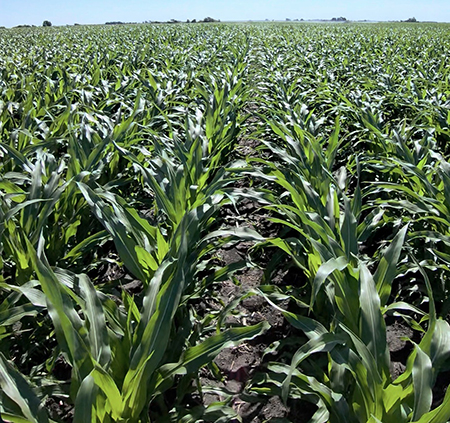
This week’s EARFULL takes a step back from the noise and looks at what early July heat and humidity mean for pollination, how to think about good-to-excellent crop ratings, and what is worth scouting in your own fields over the next 10 to 14 days.
Early July heat
Forecasts point to a hot, humid start to July across much of the central and eastern United States. Not to overstate it, but heat index values frequently topping 100 degrees and warm nights offering limited recovery. That lines up with what many growers are seeing in the field as corn begins to show stress faster on lighter soils and more exposed ground.
From an agronomy standpoint, the key questions are timing and duration. Corn is most vulnerable when high heat overlaps the pollination window, especially when nights stay warm and soil moisture is already drying out. A brief burst of heat with decent subsoil moisture is usually a stress test. A longer stretch of heat, wind, and limited rainfall is when real concern starts building around kernel set.
A few field checks matter this week:
- Flag fields that are within 10 days of tassel and already showing stress on lighter soils.
- Monitor overnight lows alongside daytime highs, as warm nights reduce crop recovery.
- Note when leaf rolling begins. Corn that rolls by mid-morning and stays there all day is signaling that the moisture profile is getting short.
The goal is not to overreact to a single hot forecast, but to identify which fields could become vulnerable if the pattern holds.
Crop condition
USDA reporting showed U.S. corn with 67 percent rated good to excellent and soybeans at 65 percent good to excellent as of late June. This reflects generally favorable conditions across much of the Midwest, helping explain why market commentary can sound calm even while individual farms are dealing with drowned-out spots, uneven stands, or short-term moisture stress.
Both views can be true at the same time. Broad ratings capture the region, but they do not highlight field-to-field variability. University and federal climate resources for Midwest agriculture also point to greater weather variability and uneven rainfall patterns as ongoing management challenges for corn and soybean systems.
That makes local field evaluation more valuable than ever. Scouting tips at this critical stage:
- Walk beyond the end rows before judging stand and vigor.
- Rate fields as solid, borderline, or concerning based on stand, color, root development, and soil moisture.
- Pay close attention to areas that either ponded in June or consistently missed rainfall, because those zones may react very differently under this early July heat.
By early July, field reality usually tells more than a statewide average.
Soybeans still have runway
Soybeans have generally progressed well so far this season, and early condition ratings have stayed favorable in many key states. This has encouraged some early-season optimism, but soybeans still have a long way to go before final yield is set.
Beans can compensate better than corn if they catch moisture during flowering and pod set, but they remain sensitive to stress during reproductive development. Iowa State’s late-June regional crop update noted that soybeans were generally in the V3 to V5 range while much of the corn crop was in the V5 to V7 window, reinforcing that both crops were still moving through important vegetative stages heading into July.
A practical soybean checklist for the next two weeks includes:
- Check growth stages in the fields carefully so you know which acres are moving into flowering under stress.
- Prioritize weed escapes, especially where late competition can rob moisture and sunlight.
- Watch denser canopies, where continued humidity could raise disease risk.
Strong-looking beans in late June are encouraging, but they are not a finished crop.
As the calendar turns into July, the conversation should stay centered on timing. Heat alone does not necessarily mean yield loss, and strong early ratings do not guarantee the rest of the season. Pollination, flowering, soil moisture, and field variability are the real story right now.
The best move this week is simple: scout the fields closest to tassel and first bloom, sort them by risk, and keep separating general talk from field-specific reality. This approach usually leads to better agronomy decisions than reacting to the loudest headline.
References
- Farms.com. (2026, June 28). July heat wave puts Midwest corn and soybeans under pressure.
https://www.farms.com/ag-industry-news/july-heat-wave-puts-midwest-corn-and-soybeans-under-pressure-822.aspx - USDA Climate Hubs. (n.d.). Agriculture in the Midwest. https://www.climatehubs.usda.gov/hubs/midwest/topic/agriculture-midwest
- Iowa State University Extension and Outreach. (2026, June 28). Regional crop update: June 15 – June 23, 2026. Integrated Crop Management. https://crops.extension.iastate.edu/post/regional-crop-update-june-15-june-23-2026
The Earfull June 22, 2026
What Needs Attention Right Now
By this point in June, the crop has usually settled enough that the overall story starts to look fairly positive from the road. A lot of corn has good color. A lot of soybeans are moving along. Most fields are far enough along that the season feels established rather than uncertain. This is the good news.
The other side of the story is that it’s also the time when averages become less useful. As a whole, the field can still look decent and yet have enough stress pockets, stand variation, root issues, or weed escapes to quietly trim yield potential before anyone fully realizes it. This is why the better agronomy conversations right now are shifting away from broad planting progress and toward a much more practical question: where is the crop beginning to separate inside the field?
Nationally, the crop remains in a generally workable position. USDA condition ratings suggest both corn and soybeans are still holding together reasonably well as we move deeper into June. That is encouraging. But those ratings do not tell the full local story, especially in areas where compaction, variable rainfall, sidewall effects, crusting, uneven emergence, or herbicide timing are now becoming more apparent.
Corn
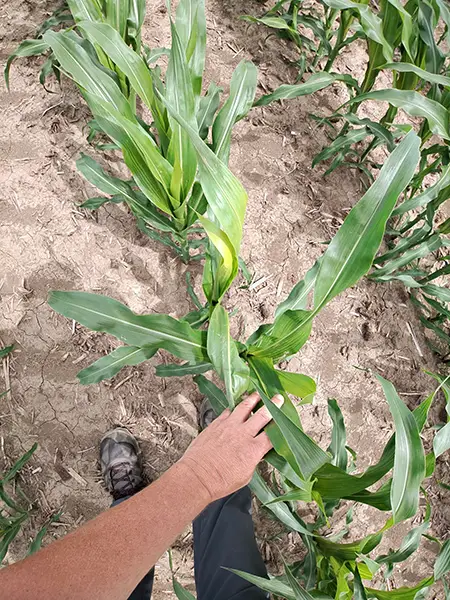
Corn is moving fast enough now that some early-season issues can get masked for a while. A field may have a strong green color from the road and still contain areas where root development is weaker than expected, growth is uneven, or nutrient uptake has been limited by early conditions. In many cases, these are the same places that tend to show up every year: sidehills, worked ends, low spots, compacted zones, or fields where planting conditions were just a little less forgiving than the grower thought at the time.
This is a good week to look beyond color alone. Pale or uneven corn does not always mean the same thing. Sometimes, it is a temporary response to cooler soils or saturated conditions that the crop will largely outgrow. Other times, it is a sign that the root system never fully established itself as it needed to. Or, it could be that nitrogen and sulfur uptake are lagging because the plant has not had ideal conditions to keep pace with rapid vegetative growth.
The main point is to identify whether the pattern is random or repeatable. If the issue lines up with wheel tracks, drainage patterns, soil changes, or known parts of the field, there is usually something useful to learn from it. Those are the fields worth digging. Pull some plants. Check root development. Look for sidewall restriction, shallow roots, crown health, and whether nodal roots are doing what they should at this stage.
Soybeans
Soybeans deserve the same kind of attention right now, even though they can be easier to overlook. A soybean field often has a way of appearing acceptable until you walk farther into it. Once you walk into it, things may begin to stand out more than they did from the road: thinner areas, uneven growth, crusted pockets, ponded spots, or delayed sections.
This is especially true in fields that were planted in less-than-ideal conditions or in those that had an uneven start. In June, soybeans can still compensate for a lot. They compensate best when the stand is more uniform than it first appears and when stress remains relatively limited from this point forward. Where populations have thinned or roots are restricted, the field may still be fine overall, but it deserves a closer look before writing it off as “good enough.”
This is also the point where weed pressure starts becoming more visible. Residual programs that looked solid earlier can begin to lose their edge, and escapes start showing up in the fields that were a little delayed, a little uneven, or simply stretched on timing. That does not mean every field has a major weed problem. It does mean this is the week to identify the acres where weeds are starting to win small battles before they become larger ones.
The Next 7 to 10 Days
For the next week or so, the best use of scouting time is probably not in the cleanest or most even fields. It is in places that feel just a little off. That could be corn that is not quite as uniform as the neighboring field. It could be soybeans that seem a little thinner than expected. It could be fields where the first pass looked good, but you are starting to wonder if weeds are slipping through.
In corn, keep the focus on stand consistency, root strength, and whether stress follows a clear pattern. In soybeans, count viable plants in weaker spots, look at root development, and ensure emerging weed escapes are identified while practical options are still available. This is also a good time to make notes that will matter later. Many of the best decisions in July and August come from observations made now.
There is still a lot of yield potential ahead for this crop. Most acres do not need a dramatic reaction. They need a careful eye, timely walking, and a willingness to investigate the areas that are easy to dismiss when the rest of the field looks fine. This is usually where the most useful answers are found at this time of year.
References
- USDA NASS Crop Progress and Condition https://www.nass.usda.gov/Charts_and_Maps/Crop_Progress_&_Condition/index.php
- USDA Crop Progress reports archive https://esmis.nal.usda.gov/publication/crop-progress
- Ohio State Agronomic Crops Network – C.O.R.N. Newsletter https://agcrops.osu.edu/newsletter/corn-newsletter/2026-16/full
The Earfull June 15, 2026
Heat and Wind: Regional Product Impacts
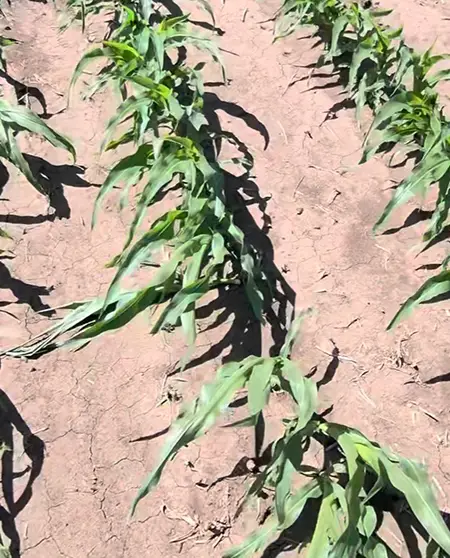
Corn is moving fast across the Renk sales area, and that fast growth is exposing two different structural issues in the same season: floppy corn and early greensnap, also called brittle snap. They can show up after the same weather pattern, and they can both be blamed on wind, but they are not the same problem. Floppy corn is mainly an anchorage issue tied to nodal root development, while early greensnap is a stalk failure issue tied to rapid growth and storm timing.
That distinction matters right now because some growers are seeing fields lean or flop after wind, while others are seeing plants actually break off in an earlier-than-normal snap window. This year’s crop has advanced quickly enough that both problems can be present at once, sometimes even within the same general geography.
Floppy Corn
Floppy corn, often called rootless corn syndrome, develops when nodal roots fail to anchor the plant well enough as it transitions out of dependence on seminal roots. The field symptom is familiar: corn may look green, healthy, and aggressive from the road, but after a windy day it leans badly or lays over because the crown root system did not establish enough hold in the soil.
This issue usually traces back to conditions around planting and early root establishment. Shallow planting, loose or fluffy seedbeds, rapid drying near the soil surface, crusting, erosion around the row, and compaction that interferes with nodal root development can all leave the plant under-anchored at the exact time it starts adding height quickly.
This is why floppy corn can show up even in fields that otherwise seem to have excellent color and above-average early vigor. In fact, the fast growth itself can make the problem look worse because a taller, rapidly expanding plant puts more leverage on a root system that is not yet fully secured.
In some areas, this season has created a good setup for floppy corn because growth has moved quickly while surface moisture has remained variable. Wisconsin Extension noted that rainfall patterns have been uneven. Stop-and-go moisture can leave the upper root zone unfavorable for nodal root establishment, even when the crop still looks good overall. On plants where the upper inch or two dried down quickly, nodal roots may have struggled to become fully grown and anchor before wind events tested them.
It is also important to remember that floppy corn is not always uniform across a whole field. It often shows up in lighter soils, sidehills, worked ends, compacted zones, or places where the crown area is effectively positioned too close to the soil surface. That patchiness is one reason the problem can be underestimated until a storm, high winds, or even a trip across the field makes the weak-rooted plants obvious.
Product differences may also influence how often floppy symptoms show up and how well plants recover after stress. Environment and planting conditions are still the main drivers, but field experience supports the idea that not every product responds the same way when root establishment is challenged. The encouraging side of floppy corn is that some plants can recover if they receive timely rainfall and are able to push a stronger nodal root system after the stress event.
Early Greensnap
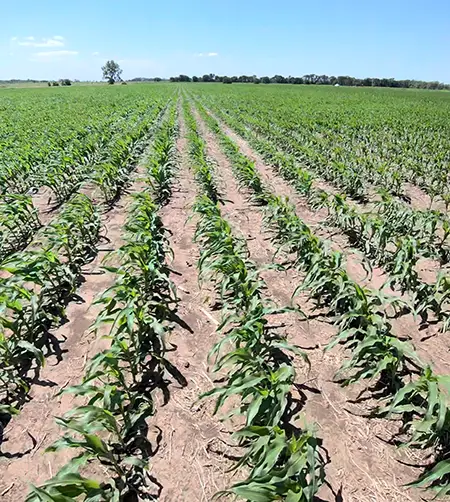
Alongside floppy corn, some growers are reporting early greensnap after major wind events. This is different from leaning or rootless corn because the stalk is actually broken, usually at or near a node, rather than simply tipping because roots failed to anchor the plant.
What makes this notable in 2026 is the concern is coming from an earlier window than typically thought about by many growers. Agronomy references describe an early greensnap risk period around V5 to V8. This lines up with reports from fields that were around V4 to V6 and entering a rapid structural change when storms came through. Most years, greensnap gets the attention later, from V8 toward tassel, because that is when corn is visibly tall and rapidly elongating.
Not every product responds the same way under the same weather event. Hybrid differences in greensnap susceptibility are real, which is why some fields, products, or placement zones may show more breakage than neighboring acres exposed to a similar storm.
Another part of the discussion is whether herbicide programs may have contributed to some of the early snap reports. The answer is yes. They can be part of the risk picture, especially where growth regulator herbicides were applied during the V5 to V8 period.
This is especially true in a year when crop growth has been so rapid. A field moving quickly through V5 to V8 can already be structurally tender, so any additional stress or hormonal affect from a growth regulator program may help explain why some acres were more brittle than expected when the storm arrived.
Takeaway
The main takeaway this week is that rapid early growth has exposed weak points in more than one way. Floppy corn remains a major part of the story because many plants are being tested before nodal root systems are fully secure, while early brittle snap is surfacing because storms are colliding with corn just as it enters a fragile growth window.
This is why the current season feels different: uneven surface moisture, fast development, high wind events, hybrid differences, and possibly growth regulator timing are all layering together. The best agronomy conversations right now are the ones that separate floppy corn from true stalk snap. Then, work backward through field conditions, product response, and management timing to understand each field’s reaction.
References
- Iowa State University Extension and Outreach, Rootless corn syndrome. Background on floppy/rootless corn, nodal root failure, recovery, and management.
https://crops.extension.iastate.edu/encyclopedia/rootless-corn-syndrome - Iowa State University Extension and Outreach, Greensnap. Early-season brittle snap, hybrid differences, and management considerations.
https://crops.extension.iastate.edu/encyclopedia/greensnap - University of Wisconsin-Madison Extension, June 4th, 2026 Weather Outlook. Wisconsin weather setup relevant to current crop growth and stress conditions.
https://cropsandsoils.extension.wisc.edu/june-4th-2026-weather-outlook/
No post found

No post found
No post found
No post found
No post found
No post found
No post found
No post found
No post found