As We Head into the First Full Week of July
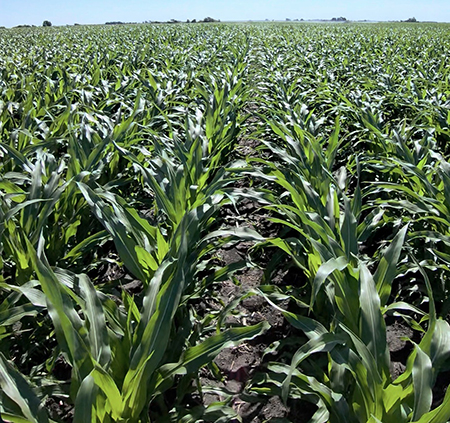
This week’s EARFULL takes a step back from the noise and looks at what early July heat and humidity mean for pollination, how to think about good-to-excellent crop ratings, and what is worth scouting in your own fields over the next 10 to 14 days.
Early July heat
Forecasts point to a hot, humid start to July across much of the central and eastern United States. Not to overstate it, but heat index values frequently topping 100 degrees and warm nights offering limited recovery. That lines up with what many growers are seeing in the field as corn begins to show stress faster on lighter soils and more exposed ground.
From an agronomy standpoint, the key questions are timing and duration. Corn is most vulnerable when high heat overlaps the pollination window, especially when nights stay warm and soil moisture is already drying out. A brief burst of heat with decent subsoil moisture is usually a stress test. A longer stretch of heat, wind, and limited rainfall is when real concern starts building around kernel set.
A few field checks matter this week:
- Flag fields that are within 10 days of tassel and already showing stress on lighter soils.
- Monitor overnight lows alongside daytime highs, as warm nights reduce crop recovery.
- Note when leaf rolling begins. Corn that rolls by mid-morning and stays there all day is signaling that the moisture profile is getting short.
The goal is not to overreact to a single hot forecast, but to identify which fields could become vulnerable if the pattern holds.
Crop condition
USDA reporting showed U.S. corn with 67 percent rated good to excellent and soybeans at 65 percent good to excellent as of late June. This reflects generally favorable conditions across much of the Midwest, helping explain why market commentary can sound calm even while individual farms are dealing with drowned-out spots, uneven stands, or short-term moisture stress.
Both views can be true at the same time. Broad ratings capture the region, but they do not highlight field-to-field variability. University and federal climate resources for Midwest agriculture also point to greater weather variability and uneven rainfall patterns as ongoing management challenges for corn and soybean systems.
That makes local field evaluation more valuable than ever. Scouting tips at this critical stage:
- Walk beyond the end rows before judging stand and vigor.
- Rate fields as solid, borderline, or concerning based on stand, color, root development, and soil moisture.
- Pay close attention to areas that either ponded in June or consistently missed rainfall, because those zones may react very differently under this early July heat.
By early July, field reality usually tells more than a statewide average.
Soybeans still have runway
Soybeans have generally progressed well so far this season, and early condition ratings have stayed favorable in many key states. This has encouraged some early-season optimism, but soybeans still have a long way to go before final yield is set.
Beans can compensate better than corn if they catch moisture during flowering and pod set, but they remain sensitive to stress during reproductive development. Iowa State’s late-June regional crop update noted that soybeans were generally in the V3 to V5 range while much of the corn crop was in the V5 to V7 window, reinforcing that both crops were still moving through important vegetative stages heading into July.
A practical soybean checklist for the next two weeks includes:
- Check growth stages in the fields carefully so you know which acres are moving into flowering under stress.
- Prioritize weed escapes, especially where late competition can rob moisture and sunlight.
- Watch denser canopies, where continued humidity could raise disease risk.
Strong-looking beans in late June are encouraging, but they are not a finished crop.
As the calendar turns into July, the conversation should stay centered on timing. Heat alone does not necessarily mean yield loss, and strong early ratings do not guarantee the rest of the season. Pollination, flowering, soil moisture, and field variability are the real story right now.
The best move this week is simple: scout the fields closest to tassel and first bloom, sort them by risk, and keep separating general talk from field-specific reality. This approach usually leads to better agronomy decisions than reacting to the loudest headline.
References
- Farms.com. (2026, June 28). July heat wave puts Midwest corn and soybeans under pressure.
https://www.farms.com/ag-industry-news/july-heat-wave-puts-midwest-corn-and-soybeans-under-pressure-822.aspx - USDA Climate Hubs. (n.d.). Agriculture in the Midwest. https://www.climatehubs.usda.gov/hubs/midwest/topic/agriculture-midwest
- Iowa State University Extension and Outreach. (2026, June 28). Regional crop update: June 15 – June 23, 2026. Integrated Crop Management. https://crops.extension.iastate.edu/post/regional-crop-update-june-15-june-23-2026