Corn Seedling Diseases: When Mother Nature Overwhelms Even the Best Treatments
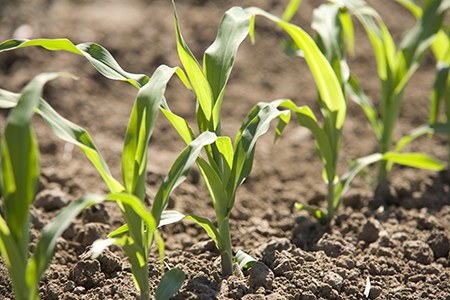
Renk Seed corn comes standard with industry-leading multi-mode seed treatment packages Metalaxyl, Fluoxastrobin, and Prothioconazole working together to protect your seedling from the moment it hits the soil. But some springs, Mother Nature tips the scales. Extended cold and wet soils after planting, or a warm saturated stretch right after emergence, can push disease pressure beyond what the seed treatment alone can fully hold back. That’s exactly why we introduced Resilient™ AP,
a planter box biological treatment designed to layer additional protection right at seeding, reinforcing root health and early vigor when conditions get tough.
The Three Main Corn Seedling Diseases
Pythium — The most common early-season threat. Thrives in cool, saturated soils (below 55°F) with standing or pooled moisture. Produces swimming spores that move through wet soil directly to the root. Infected seedlings have dark, slimy roots where the outer cortex peels away, leaving a white inner core. Seed that never emerged will be soft and rotted. Concentrated in low spots and poorly drained areas.
Fusarium — The opportunist. Covers a wider range of temperature and moisture conditions and follows plant stress, compaction, herbicide injury, temperature swings, or saturated soils. Shows up as tan to reddish-brown lesions on the mesocotyl and roots, sometimes with pink or salmon sporulation. Stressed plants invite it in; a clean planting environment keeps it at bay.
Rhizoctonia — The dry-side problem. Unlike the others, Rhizoctonia favors warmer, drier conditions and hits hardest in sandy or well-drained loam soils. Infected seedlings have firm, dry, reddish-brown lesions on the mesocotyl near the soil line, not mushy, not water-soaked. Often no obvious above-ground symptoms until the plant is stunted or chlorotic.
Resilient™ AP: Our planter box biological treatment adds beneficial microorganisms directly at seeding, colonizing the rhizosphere to compete with soilborne pathogens and support root development, extending your protection window beyond what the fungicide chemistry alone covers. In its launch year we will not have any additional supply for in-season needs.
How to Scout Corn Seedlings
Scout at emergence through V2, that’s your window before the plant either recovers or the evidence disappears. Walk problem areas and pull 10–15 plants where healthy plants transition into gaps or stunted ones.
- Examine the mesocotyl (stem between seed and soil surface) and root system after a light rinse.
- Healthy tissue is white and firm, any tan, brown, reddish, or black coloration is a red flag.
- Try peeling the outer cortex of the root. If it slides off leaving a white center, that’s Pythium.
- Firm, dry, reddish lesion at the soil line = Rhizoctonia. Mushy dark tissue = Pythium or Fusarium.
- Pythium concentrates in wet low spots. Rhizoctonia is more common on lighter, sandier soils.
Soybean Seedling Diseases: Why We Built the Defender Treatment Program
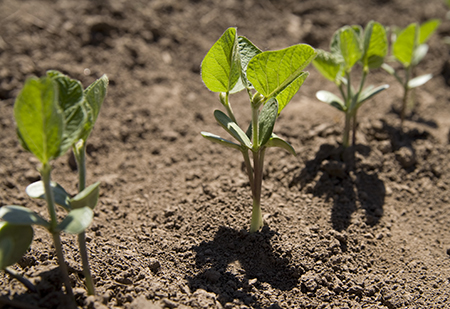
Soybeans can compensate for a lot, but they can’t compensate for plants that never made it. Soybean seedling diseases are one of the most common causes of stand loss in the Midwest, and the pathogen complex is more diverse than corn. That diversity is exactly why Renk offers the Defender treatment program. A single active ingredient isn’t enough when your field can throw Pythium, Phytophthora, Rhizoctonia, or Fusarium at you depending on soil temperature, drainage, and field history. Defender brings together the right chemistries to address these diseases.
The Four Soybean Seedling Diseases to Know
Pythium — Most common in the northern Corn Belt. Favors cool, saturated soils (50–77°F) and attacks quickly, before germination or right after emergence. Infected seeds are soft and rotted. Emerged seedlings have water-soaked lesions on the hypocotyl and cotyledons, pull from the soil with almost no resistance, and show poorly developed roots. Follows the wet spots in a field.
Phytophthora — Field-history-specific and warm-weather driven (>60°F soils + wet). Once it’s in a field, it comes back to the same low spots and high-clay areas when conditions repeat. The tell is a chocolate-brown discoloration that runs from the root up the stem, sometimes 6+ inches above the soil line, while the interior stays firm. After V2, this stem signature separates it cleanly from Pythium.
Rhizoctonia — Warm, drier conditions and sandy or south-facing soils. The lesions are firm, dry, and reddish-brown on the hypocotyl near the soil line, never mushy. Worth noting: a Rhizoctonia seedling infection that goes unnoticed in May can resurface as plant snap-off during summer wind events when the cortical rot weakens the stem base.
Fusarium — Follows stress, compaction, flooding, temperature swings, herbicide pressure. Causes brown to black root discoloration, but plants often stay standing with reduced vigor rather than dying outright. That makes it easy to miss and easy to blame on something else.
Quick Diagnostic Guide: Mushy, water-soaked tissue = Pythium or Phytophthora. Brown running up the stem above soil = Phytophthora specifically. Firm, dry reddish lesion on hypocotyl = Rhizoctonia. Brown-black root staining, plant still standing = Fusarium.
How to Scout Soybean Seedlings
Your scouting window is emergence through V2. After that, surviving plants are largely past the worst of the seedling disease risk, but the evidence of what happened is fading fast.
- Pull 10–15 plants from the edge of a problem area and examine the hypocotyl and roots.
- Check the soil line first, the classic Phytophthora brown line moves up the stem from the root.
- Mushy roots with no structure = oomycete. Firm reddish lesion on hypocotyl = Rhizoctonia. Brown-black lower root staining = Fusarium.
- After V2: Phytophthora shows stem discoloration above the soil line; Pythium damage stays at the hypocotyl and below.
- Count your stand, a final stand below 80,000 plants/acre (narrow rows) or 100,000 plants/acre (wide rows) costs yield. Run the math before replanting into June.
- Use a hand lens: Fusarium often shows pink-salmon tissue coloration. Phytophthora does not, it stays brown to tan.
Sources
- Crop Protection Network. “An Overview of Soybean Seedling Diseases.” cropprotectionnetwork.org (2026).
- University of Nebraska–Lincoln CropWatch. “Conditions Favor Seedling Diseases in Early Planted Corn and Soybeans.” cropwatch.unl.edu (2022).
- University of Wisconsin Extension. “Seed Treatment Fungicides — Corn and Soybean.” fyi.extension.wisc.edu (2010).