
Early Season Insects—What to Look For
Planting season moves fast. By the time a stand problem is obvious, the window to act — or to explain it — has already closed. Early-season insects are one of the most common causes of uneven emergence, skips, and replant decisions, and they’re easy to miss if you’re not scouting at the right time.
Risk isn’t tied to one type of spring. Cool, wet soils slow germination and leave seeds in the ground longer, giving soil-dwelling pests more time to feed. But warm soils with heavy crop residue, manure applications, or recently terminated cover crops create their own risk by drawing egg-laying insects and supporting larval populations. Both scenarios show up regularly across the Renk sales area. Walking fields at or shortly after emergence — not just at canopy closure — is when these problems are catchable and explainable. Let’s review the key pest offenders:
Seedcorn Maggot (Corn and Soybeans)
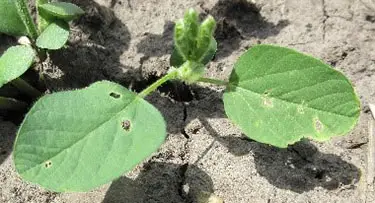
Seedcorn maggot is the larva of a small fly — pale yellow-white, legless, about ¼ inch long. Larvae feed directly on germinating seeds and young shoots before the plant ever breaks ground. Fresh organic matter is the main attractant. Fields with heavy residue, recent manure, incorporated cover crops, or freshly tilled green material carry the highest risk. Cool, wet soils compound the problem by slowing germination and extending the window larvae have to feed.
In the field, look for seeds that are hollowed out or show no viable shoot or root development. You’ll often find seedlings that started to emerge and then died at or just below the soil surface. Gaps and skips that don’t match planter performance data are a telltale sign, particularly in low-lying areas, field edges near manure application zones, or anywhere a cover crop was terminated late.
Wireworm (Corn and Soybeans)
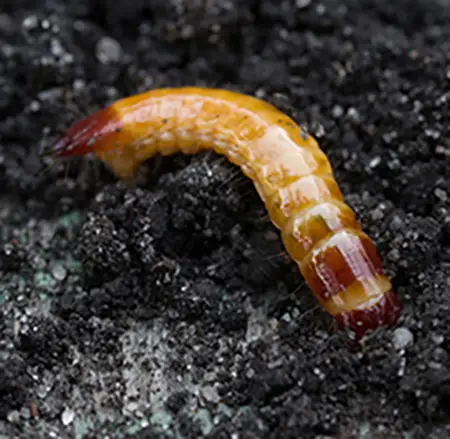
Wireworms are the larvae of click beetles — hard, shiny, orange-brown, and cylindrical, almost wire-like to the touch. They spend multiple years in the soil and feed on seeds and below-ground plant tissue. Sod ground is the classic red flag: former pasture, fields following small grains or perennial grasses, or any ground that’s been in long-term grass cover. First-year corn or soybeans after sod is the highest-risk scenario you’ll encounter.
Stand loss from wireworm tends to be patchy and irregular — not clean row skips, but odd sections or scattered holes in the field. Seeds will show entry holes or be hollowed out with the shoot or radicle chewed off. To confirm, dig 6 to 12 inches deep in problem areas; early in the season when soils are still cool, wireworms concentrate in the top few inches. Stunted, wilted, or dead seedlings where the underground stem is damaged, but the plant never fully emerged are a reliable indicator.
Black Cutworm (Primarily Corn; Occasionally Soybeans)
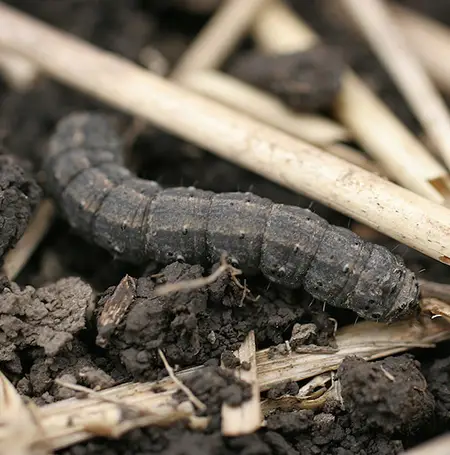
Black cutworm moths don’t overwinter in most of the Renk sales area — they migrate north on spring storm systems. Fields with winter annual weeds, heavy surface residue, or recently terminated cover crops are higher risk because they attract egg-laying moths. Corn from VE through V5 is the primary target. Soybeans can occasionally be clipped in a heavy year, but this is mainly a corn problem.
Watch for wilted or cut-off plants at or just below the soil surface, often in the first few rows from field edges or in weedy areas. Damage shows up in clusters or patches, not uniformly across the field. Before full cutting begins, you may see small, round feeding holes in leaves — that’s your early warning. When you find damage, dig in moist soil near the affected plants and look for the caterpillar itself: dark gray to black, curls into a C-shape when disturbed.
In soybeans, if pressure is unusually high, check for clipped stems or leaf feeding on early-emerged plants along field edges or in areas with residue. It’s uncommon, but worth a look in high-pressure years.
Quick Risk Overview:
No single field type has zero risk. The combination of field history — sod, cover crops, manure — residue levels, weed pressure, and spring weather determines where problems concentrate. Cool springs push seedcorn maggot and wireworm risk up. Warm springs with weedy fields and migrating storm fronts elevate black cutworm. Many fields carry more than one risk factor.
Take Home:
- Walk fields at emergence. Target fields with manure, high residue, cover crop history, sod ground, or known weed pressure first — these are your highest-risk acres.
- Dig before you diagnose. Skips and uneven emergence have many causes. Pull seeds and seedlings from problem areas and look for physical damage before attributing stand loss to cold stress or planter issues.
- Document what you find. Note field history, soil conditions, pest species observed, and estimated stand loss.
Early planting into cold soils increases seedcorn maggot and wireworm exposure. Late cover crop termination increases all three pest risks.
Sources:
- University of Wisconsin–Madison Extension — ipcm.wisc.edu
- Iowa State University Extension — crops.extension.iastate.edu
- Michigan State University Extension — canr.msu.edu/ipm