
When Corn and Soybeans Start Making Their Own Weather
In a lot of areas, the air does not just feel hot. It feels heavy. Part of that is the weather pattern itself, but part of it is the crop. As corn and soybean canopies move large amounts of water from the soil, through the plant, and out into the air, they help create the sticky field conditions many scouts are walking into this week.
That matters because a hot, humid stretch is not only a comfort issue for people in the field. It is also a real test of how efficiently plants can keep moving water, keep tissues cool, and hold reproductive timing together as corn reaches tassel and soybeans edge deeper into flowering.
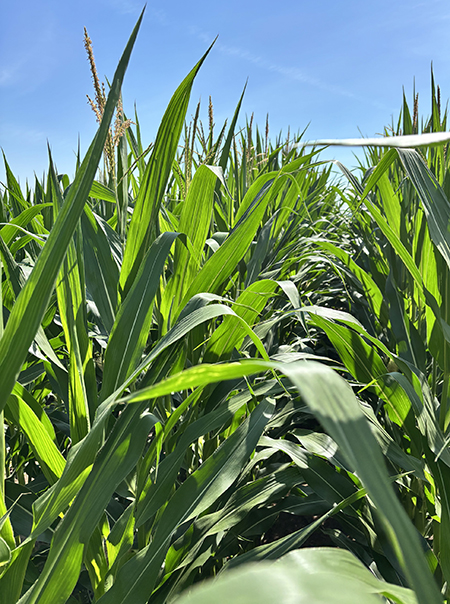
Corn is entering the key window
The main agronomic issue is not simply that highs may reach around 95-100 degrees. The bigger issue is that much of the crop is entering pollination, with some acres just beginning pollen shed and others likely several days into it. The forecast favoring above-normal temperatures across most of the country can be impacted by this growth stage. Here’s why.
Corn has one main way to manage heat: move water. When soil moisture and root function are still adequate, the plant can keep transpiring, which helps cool the canopy and supports continued silk growth and pollen movement. When that water pipeline starts to tighten, the plant shifts quickly from managing heat to conserving moisture, and that is when stress becomes more visible in the field.
This helps explain why two fields with similar calendar dates can respond very differently in the same weather pattern. Deeper soils, stronger rooting, and more even early-season development can give one field enough buffer to move through a hot week with modest impact, while lighter ground or compacted areas may begin to roll early, shorten silk growth, and raise concern about kernel set.
Humidity is an important part of this story. High humidity can reduce atmospheric demand compared with a hot, very dry wind event, but it also reflects how much water the crop is already pushing into the air. In other words, the same humidity that makes the day feel oppressive can also be a sign that the crop is working hard to cool itself.
The practical question is whether fields can keep that cooling system running through pollen shed. If plants still have access to moisture, the crop can often ride through several warm days. If moisture supply slips, especially on lighter soils or in uneven parts of fields, stress can show up first in delayed silk emergence, extended leaf rolling, and greater variability from one ear to the next.
What to watch during pollen shed
This is a good week to shift scouting from general appearance to reproductive function. A field can still look decent from the road and be less synchronized than expected once you move beyond the ends and start checking tassels, silks, and plant response through the middle of the day.
A few checks matter right now:
- Confirm actual pollen shed timing by field instead of relying on tassel visibility alone. A field that has tasseled is not necessarily shedding uniformly yet.
- Watch how early leaf rolling begins and how long it lasts. Brief afternoon rolling is different from leaves tightening by late morning and holding most of the day.
- Check silk emergence across multiple management zones, especially lighter soils, compacted areas, and places that ponded earlier in the season.
- Pay attention to warm nights. Limited nighttime recovery can leave plants starting the next day with less margin than they had before.
A useful way to describe this week’s risk is this: heat by itself is not automatically a yield loss story, but heat during pollen shed can become one quickly if it overlaps with uneven moisture supply or weak silk progression. That is why this stage deserves more than a windshield check.
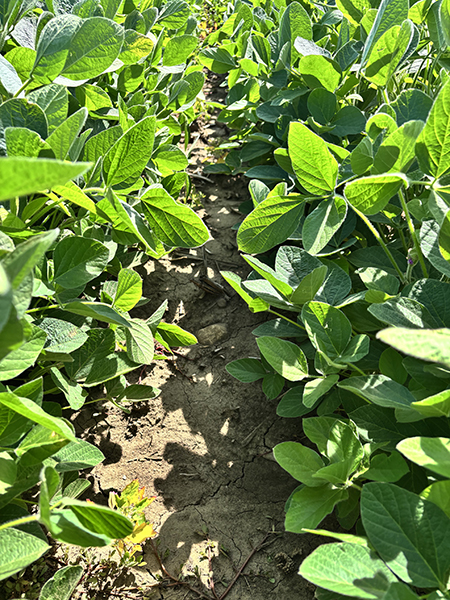
Soybeans are helping create the humidity, too
Soybeans are not at the same make-or-break stage as pollinating corn, but they are still part of the heat story. Many bean fields are building canopy, moving into flowering, and transpiring heavily, which contributes to the damp, heavy air many people are noticing around productive fields.
This does not mean soybeans are carefree under these conditions. If moisture remains available, beans can usually handle short stretches of heat better than corn and still retain strong yield potential. But warm nights, dense canopies, and prolonged humidity can raise respiration costs and increase the chance that disease risk starts to build in fields with a history of foliar pressure.
Soybeans also remind us why broad crop ratings only tell part of the story. A statewide number can look stable while individual fields differ sharply based on planting date, canopy closure, weed competition, compaction, and rainfall luck over the last few weeks.
Field reality over headline reality
Markets have been reacting to weather concerns, and forecasts continue to keep traders focused on the pollination window. That attention makes sense, but the best agronomic read this week still comes from separating field classes by actual stress response instead of by headline intensity.
References
- Purdue University Extension. (2022). Heat Stress and Drought Considerations for Corn.
https://extension.entm.purdue.edu/newsletters/pestandcrop/article/heat-stress-and-drought-considerations-for-corn/ - Iowa State University Extension and Outreach. (2025). Corn pollination: effect of high temperature and stress.
https://crops.extension.iastate.edu/encyclopedia/corn-pollination-effect-high-temperature-and-stress - Michigan State University Extension. (2020). Moisture stress and high temperature effects on soybean yields.
https://www.canr.msu.edu/news/moisture_stress_and_high_temperature_effects_on_soybean_yields