
What’s holding your soybeans back? In this episode, we sit down with Alex Renk, head of soybean selection and research at Renk Seed, to explore the full range of strategies to boost your yield. If you’re looking to push your crop to its full potential, this one’s for you.
Intro
When we want high yields in soybeans, we usually come at it by thinking about adding yield. That is probably not the right mindset. The proper way to think about soybeans is how to not lose yield.
Soybeans are pretty adaptable to conditions and they always try their best to produce the most seed. The plant doesn’t demand much up until flowering. At that point, it will try to put on as many flowers as possible. From these flowers, it will start putting on pods. Here is where things get crucial. With adequate nutrients and moisture, it will fill every pod it can with three or more beans. Any stresses with these will eat away at this ideal, either by aborting pods or beans inside the pods. The less stresses, the better the soybean will maintain its yield.
 Soil
Soil
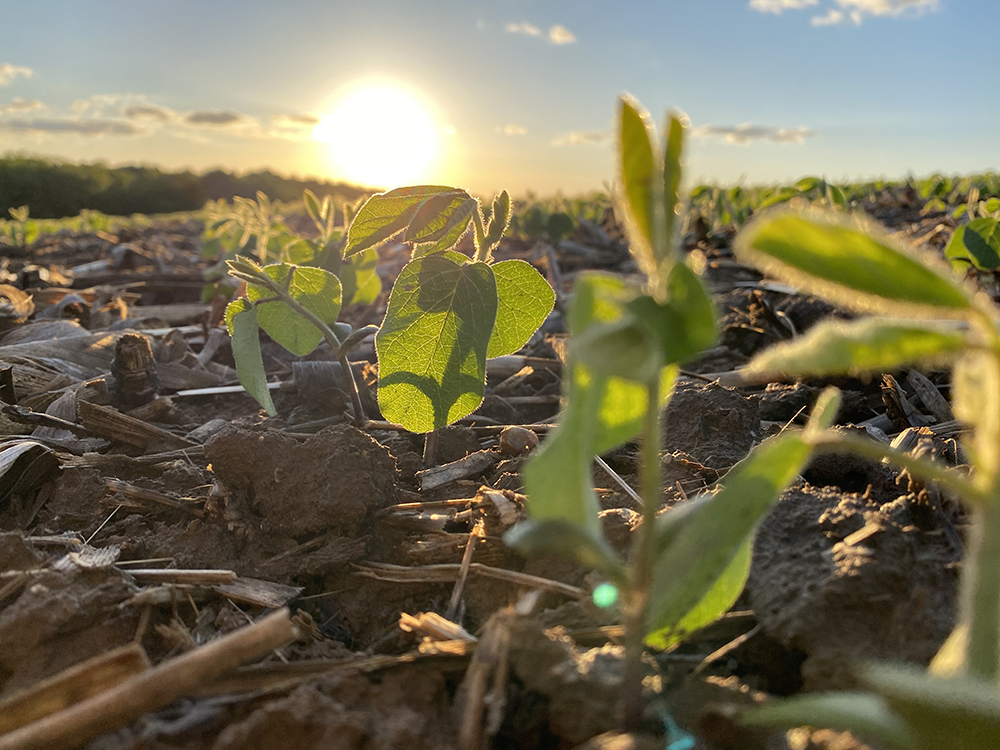
High-yielding soybeans want to be fed properly. Soybeans use a lot of phosphorous (P) and potassium (K). Nitrogen levels can be ignored, unless you have extremely high levels. You should be relying on nitrogen-fixing bacteria for your source of nitrogen. These little wonders can take atmospheric nitrogen and convert it for soybeans to use. If you remember your high school chemistry, then you know the atmosphere is made up of 78% nitrogen. When nitrogen levels are too high, this can suppress the nitrogen-fixing bacteria from colonizing the roots of the soybeans and will hurt yield.
Now that we have restricted sulfur dioxide coming from our energy production (the old acid rain), we are seeing a renewed need for sulfur (S) to be available for soybeans. Soybeans do respond well to sulfur, but sulfur takes time to be available for use by soybeans. In-season application will not be a benefit. It needs to be applied in prior years.
Regular soil sampling for P, K, and S levels is very important. Trying to make up for deficiencies through in-season banding or foliar feeding is a tough sled. The waxy protective coat on soybeans and the compact root mass restricts the plants’ ability to absorb large quantities of nutrients applied in season.
Micronutrient applications can work. For example, certain acres in Michigan can use a shot of magnesium. I would be looking at these applications only if you know you have known deficiencies.
Caution: planting early has increased risks. There is a much higher risk from Sudden Death Syndrome and white mold. An early spring freeze of soybeans will result in replanting. Factor this into your planting strategy.
 Seed does matter
With Renk being a seed company, we might be a little biased towards seed selection. Okay, a lot biased. There are very good reasons for this.
Some problems are best addressed through seed. Iron deficiency chlorosis in certain western acres can only be handled economically by variety tolerance. White mold tolerance in varieties can go a long way toward defusing potential white mold disasters. Having brown stem rot resistance takes out a subtle yield robber. Having varieties that carry the Peking gene for cyst nematodes can really help yield in high-infestation acres.
There can be huge differences in yield potential among varieties. Breeding has been marching forward and we commonly see 2-bushel gains with each new breeding class.
 Spraying
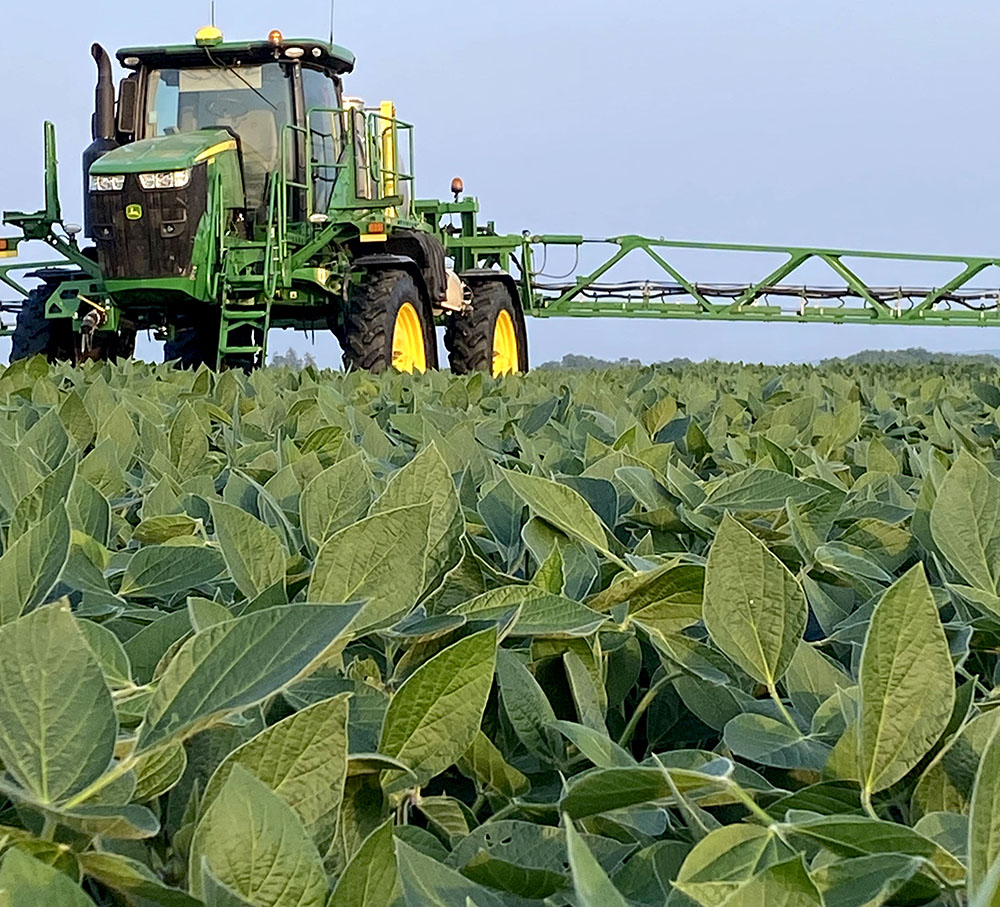
Weed control is always important. Any weed presence competes with soybeans for water, nutrients, and sunlight. Eliminate them with extreme prejudice.
White mold requires cool temperatures with moist conditions. You can skip fungicide for white mold control IF you don’t have these conditions in late June and early July. Spraying a fungicide for white mold can be very tricky. White mold infests plants through soybean flowers. Preventing white mold means that you need to spray right as the soybeans start to flower and follow up with another spray right before pod set. Once white mold is in the plant, it is too late.
You should look at spraying right before pod set with other diseases. Know that using fungicides can give a net benefit.
The elephant in the room: Do you know what the best part is about farming? Doing everything right and then either getting too much rain or not enough!
Soybeans in the Midwest need moisture at two key times during the growing season. Early on to germinate and get out of the ground. Then again during pod fill. Between those two times, as long as the plants survive, you should do just fine with yield. If moisture is plentiful, the plants will be taller but the number of nodes will be the same. Moisture during pod fill is the most crucial ingredient to deciding yield. Go to church. Buy a cloud seeder. Don’t sell your soul—it is not worth 10 extra bushels.
 Pushing the envelope
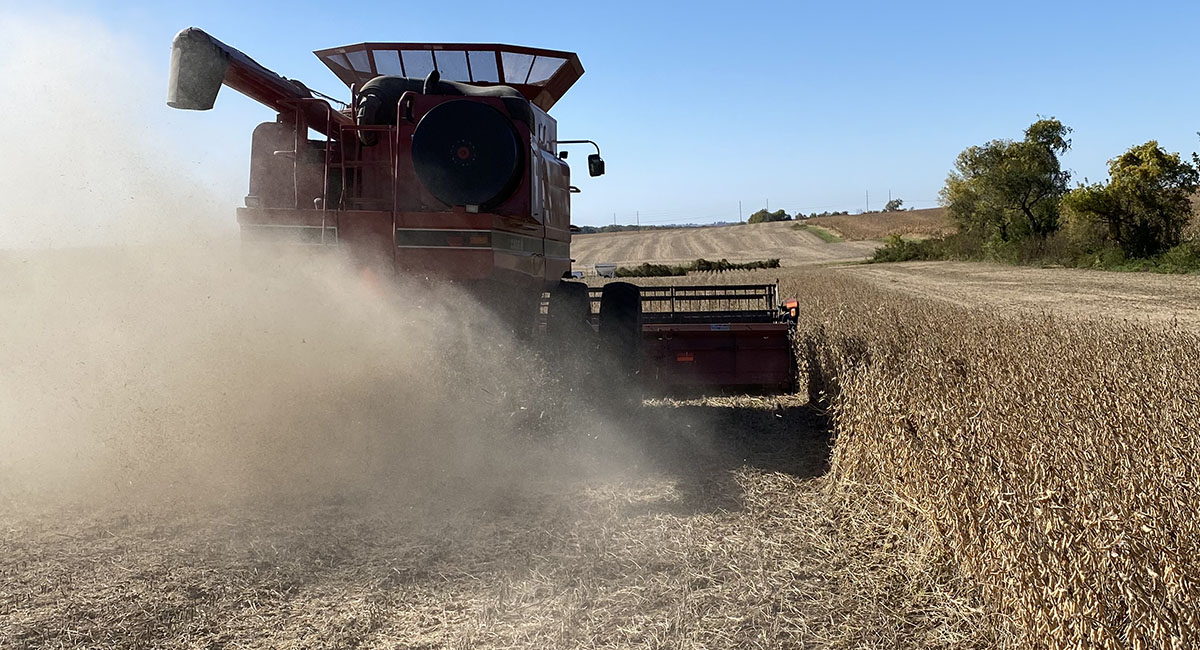
Although I am not going to recommend it myself, there is some evidence you can beat up the growing point of the soybean plant in hopes of causing the plant to branch. Thus, you increase the number of nodes. In turn, this could increase overall pod set. This is done by rolling soybeans and/or spraying them with an herbicide like Cobra. In addition to adding more nodes, you will delay maturity and maybe put the plants in a better moisture situation.
Rolling emerged beans is a delicate process. It is easy to do more harm than good. Same with spraying Cobra. While I know some can pull it off, I would still stick with the less risky options mentioned above for increasing soybean yields.
